 By
By 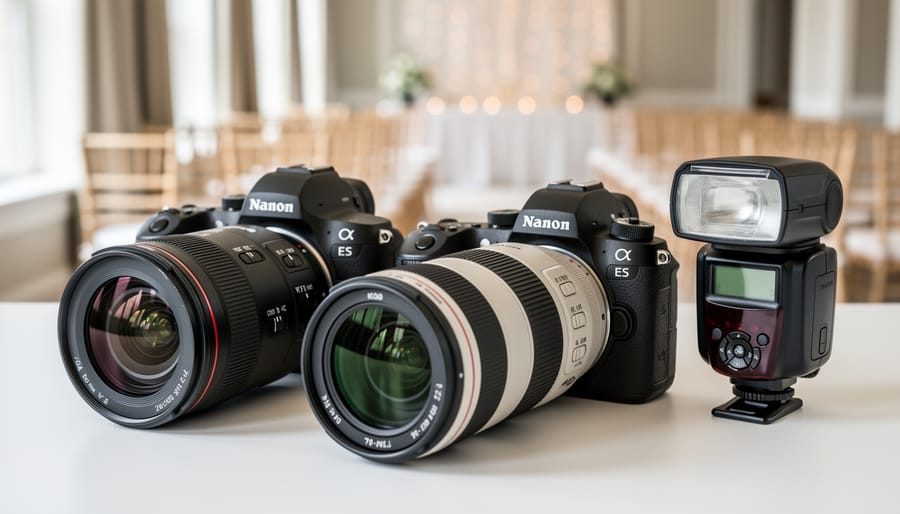
Renting wedding photography equipment lets you access professional-grade cameras, lenses, and lighting for a fraction of the purchase price, typically saving thousands of dollars while ensuring you have exactly the right gear for each unique wedding scenario. Whether you’re booking your first wedding or a seasoned pro expanding your toolkit for a destination ceremony, rental services like Lensrentals (which now includes BorrowLenses) offer nationwide shipping of Canon, Nikon, Sony, Fuji, and Leica equipment that arrives on your chosen date and returns in the same box when your shoot wraps.
The rental approach makes particular sense for weddings because these events demand redundancy (you need backup everything), versatility (ceremony lighting differs wildly from reception conditions), and often specialized glass you won’t use weekly. A fast 24-70mm f/2.8 zoom might be your workhorse, but that 70-200mm f/2.8 for ceremony coverage and a second body for seamless lens switching become essential rather than optional. Buying all three pieces outright runs $6,000 to $9,000, while a weekend rental for all of it typically costs a few hundred dollars.
This guide walks through the core equipment categories every wedding photographer should consider renting, explains why specific gear matters in real ceremony and reception scenarios, covers how the rental process actually works with verified providers, and highlights the mistakes that trip up first-time renters. You’ll learn which lenses handle low church light versus bright outdoor vows, why professional flash systems outperform your camera’s popup unit, and how to time your rental window so gear arrives with a day to spare for testing.
Why Renting Makes Sense for Wedding Photography
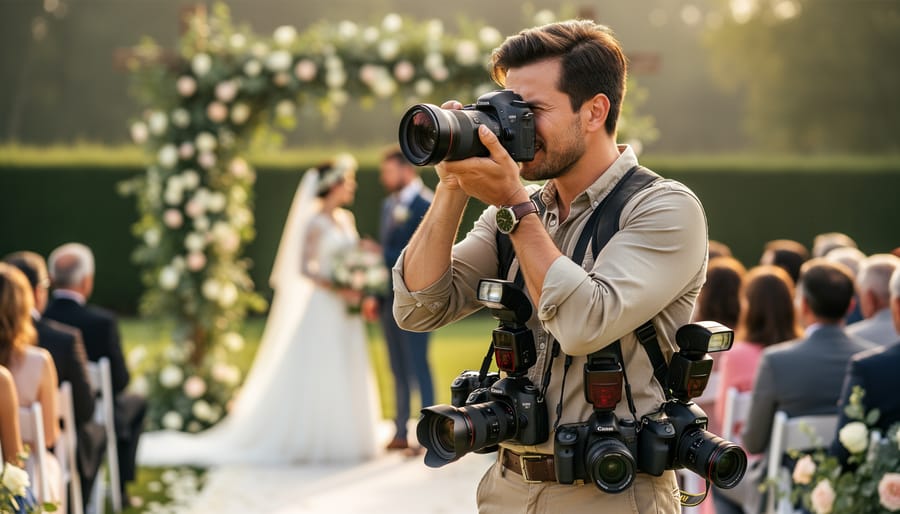
Wedding photographers face unique equipment challenges that make rentals particularly attractive. Unlike studio work or casual portrait sessions, weddings demand flawless execution with no second chances, often pushing gear to its limits across 8-12 hour days in unpredictable conditions.
The financial case for renting is straightforward. A high-end camera body and lens combination can cost $10,000 or more, a significant investment for equipment you might only need a few times per season. Emerging photographers building their client base benefit most from this flexibility, accessing professional-grade gear for specific bookings without depleting their startup capital. Even established shooters find rentals valuable for premium equipment they can’t justify owning year-round.
Testing before committing protects against expensive mistakes. That 70-200mm f/2.8 lens everyone recommends might feel too heavy for your shooting style after six hours of handheld work. Renting lets you evaluate whether a potential purchase actually fits your workflow during real wedding conditions, not just in a camera store. You’ll discover how a camera body handles mixed lighting during reception dancing, or whether a flash system integrates smoothly with your existing gear.
- Destination weddings requiring air travel, rent at your destination rather than risk checked baggage
- Multi-photographer coverage where a second shooter needs matched equipment
- Outdoor ceremonies in bright sun demanding specialty lenses you rarely need
- Last-minute equipment failures the week before a booking
- Peak season overlap when you’ve booked multiple weekend weddings
Backup equipment represents another compelling rental use case. Your primary camera body might work flawlessly for years, but wedding photographers know the value of having a second body ready when sensors fail or memory cards corrupt. Renting a backup for high-stakes bookings costs less than buying redundant equipment that sits unused most weeks.
Seasonal photographers face the strongest rental argument. If you shoot 15 weddings between May and October but only occasional portraits the rest of the year, why own specialized wedding gear for those quiet months? Rentals align your equipment costs with your revenue, improving cash flow when bookings slow.
Essential Wedding Photography Gear Categories
Camera Bodies: Your Primary Investment
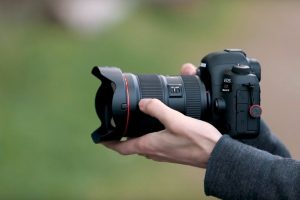
Your camera body is the foundation of your wedding photography kit, and choosing the right one to rent can mean the difference between capturing every crucial moment and missing the shot. When you choose a camera for rental, wedding work demands specific capabilities that go beyond everyday photography.
Fast, reliable autofocus is non-negotiable. Wedding moments happen once, the first kiss, the bouquet toss, emotional speeches, and you need a body that locks focus quickly in mixed lighting, from bright outdoor ceremonies to dim reception halls. Look for cameras with advanced autofocus systems that track subjects accurately, especially during the processional and dancing.
Dual card slots are essential for backup redundancy. Professional wedding photographers never risk losing a couple’s entire day on a single card failure, so any rental body you choose should write to two cards simultaneously. Low-light performance matters equally; you’ll shoot in churches with limited lighting, evening receptions, and candlelit moments, so high ISO capability without excessive noise is critical.
Always rent a backup body, even if you own one. Equipment failures at weddings create disasters you can’t fix with an apology. Having an identical or compatible backup means you can swap bodies instantly if something fails, without missing the next moment. Match your backup to your primary body’s system and battery type when possible, simplifying your workflow under pressure.
Lenses: The Core of Your Wedding Kit
Wedding lenses separate ordinary coverage from memorable images. Your lens choices determine what moments you can capture, how they look, and whether you can handle the day’s lighting challenges. Most photographers need three rental categories for complete wedding coverage.
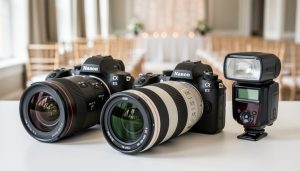
Fast zoom lenses form your primary toolkit. A 24-70mm f/2.8 handles ceremony wide shots, group portraits, and reception candids from a single position. The 70-200mm f/2.8 captures intimate ceremony moments, emotional reactions, and flattering portraits without crowding subjects. These all-purpose lenses deliver consistent f/2.8 apertures across their zoom ranges, critical for dim churches and reception venues where flash isn’t always appropriate.
Prime lenses add creative flexibility and low-light capability. A 35mm f/1.4 or 50mm f/1.2 captures getting-ready moments and reception details with beautiful background separation. The wide apertures let you shoot by window light or ambient venue lighting, creating natural-looking images that preserve atmosphere.
Specialty glass rounds out your kit. An 85mm f/1.4 produces stunning couple portraits with creamy bokeh, while a 16-35mm f/2.8 captures dramatic architecture and large group shots. These lenses rent well because they’re expensive to own but essential for specific wedding moments you can’t recreate.
Lighting Equipment: Capturing Every Moment
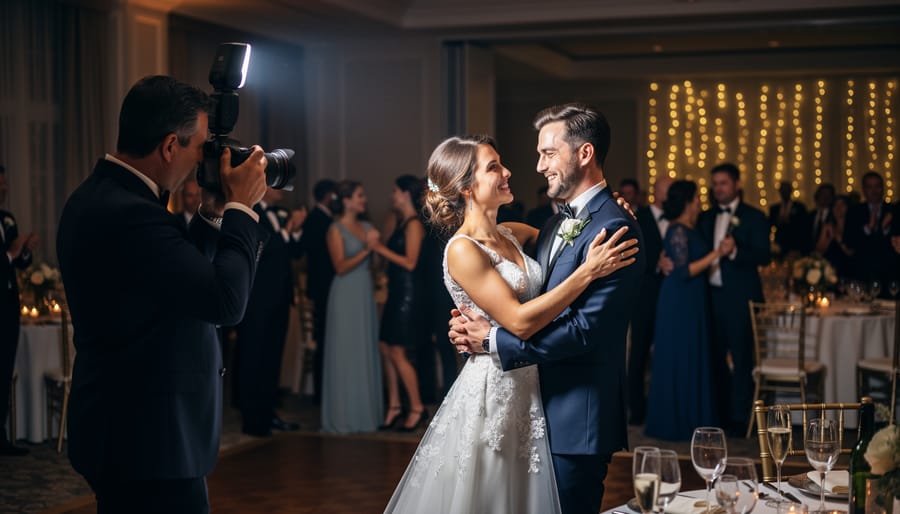
Weddings throw every lighting challenge at you, dim church ceremonies, outdoor golden hour portraits, and dark reception halls with unpredictable ambient sources. Quality lighting gear turns potential disasters into professional results. On-camera speedlights remain the wedding photographer’s workhorse, offering portability and quick recycling times for candid moments during receptions and dancing. Look for units with TTL capability to handle rapidly changing scenes, plus manual override when you need precise control for formal portraits. Off-camera flash setups with wireless triggers give you dimensional lighting for first dances and cake cutting, separating subjects from busy backgrounds. Don’t overlook modifiers, compact softboxes and bounce cards soften harsh flash for flattering skin tones during close-up moments. Battery-powered strobes provide the power needed for large reception spaces where ceiling bounce won’t reach, though their bulk makes them better suited for stationary setups than roaming coverage.
Key Factors When Choosing Rental Equipment for Weddings
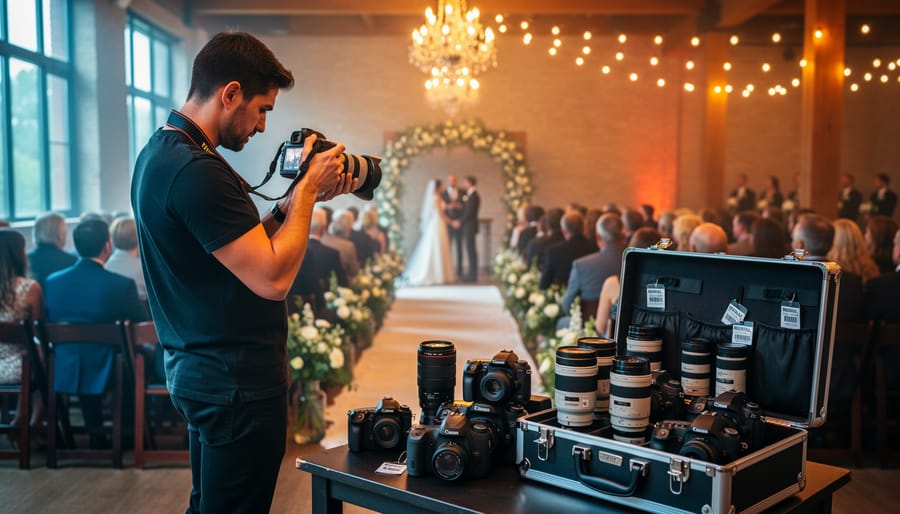
Renting the wrong equipment can turn a dream wedding assignment into a nightmare, so understanding what separates reliable rental choices from risky ones matters more than the gear list itself. The stakes are higher than typical photography work, weddings happen once, there are no reshoots, and your reputation rides on capturing moments as they unfold.
Reliability tops every consideration. Wedding days run twelve hours or longer, spanning cocktail hour through late-night dancing. Rental equipment needs proven durability under continuous use, not just impressive spec sheets. Look for gear with professional build quality, metal lens mounts, weather sealing, and robust battery systems. A camera body that overheats during video toasts or a flash that fails at the reception ruins coverage no manufacturer warranty can fix after the fact.
| Factor | Why It Matters for Weddings |
|---|---|
| Reliability | No second chances, equipment must perform flawlessly for 12+ hour days without overheating, battery drain, or mechanical failure |
| Low-Light Performance | Receptions, candlelit ceremonies, and indoor venues demand clean images at ISO 3200-6400 without excessive noise |
| Autofocus Speed | First kiss, cake cutting, and first dance happen in seconds, missed focus means missed shots that can’t be recreated |
| Weather Sealing | Outdoor ceremonies proceed rain or shine; moisture damage to rental equipment means financial liability beyond the event |
Compatibility deserves serious attention before clicking “reserve.” Verify lens compatibility with your existing camera bodies, especially when mixing camera systems or generations. An F-mount lens won’t mount on a Z-mount body without an adapter, and that adapter becomes another potential failure point. Check battery compatibility too, nothing disrupts a ceremony shoot faster than discovering your rental camera uses a different battery than your backup bodies.
Performance in mixed lighting conditions determines whether rental equipment truly works for wedding coverage. Churches combine window light with tungsten chandeliers and video spotlights. Receptions mix DJ uplighting with candlelight and ceiling fixtures. Your rental lenses need fast maximum apertures, f/2.8 or wider, and cameras require excellent high-ISO performance. Clean images at ISO 3200 or higher aren’t optional; they’re mandatory for professional wedding delivery.
Backup planning transforms from nice-to-have to essential when working with rented gear. Always rent a second camera body, even if budget requires compromising elsewhere. Include a lens hood for each lens to protect the front element and control flare in bright outdoor ceremonies. Build your rental package assuming something will fail, because eventually, something will.
Top Wedding Photography Equipment to Rent
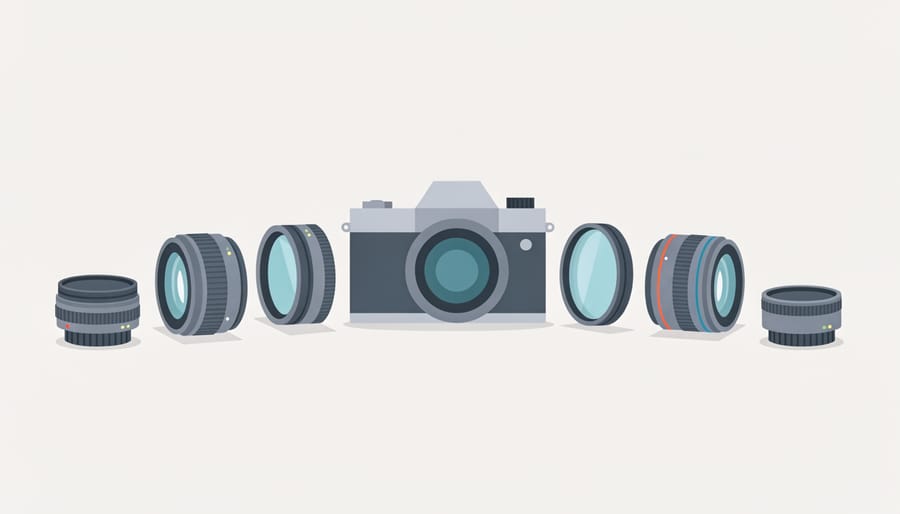
The following equipment recommendations represent the most valuable rental items for wedding photography, chosen specifically for their proven performance in real wedding scenarios. Each piece addresses a critical need in wedding coverage, from ceremony to reception, and offers rental value that justifies the cost compared to ownership. These selections span three essential categories: camera bodies that provide reliable backup and specialized capabilities, lenses that capture the full range of wedding moments from wide venue shots to intimate portrait details, and lighting equipment that ensures quality images regardless of challenging reception lighting conditions.
When building your rental kit, prioritize items that complement what you already own rather than duplicating existing capabilities. The camera bodies featured here offer either backup security or unique features like compact size for discrete shooting angles. The lens selections focus on fast apertures and focal lengths that wedding work demands most. The lighting options emphasize reliability and compatibility across different shooting situations you’ll encounter throughout a wedding day.
Beyond the core gear, consider how lens accessories like lens hoods and protective filters fit into your rental equation, particularly when working with expensive rental glass in unpredictable wedding environments.
Fujifilm X-T5 Mirrorless Camera Body Black

The Fujifilm X-T5 in black delivers 40.2 megapixels of resolution that wedding photographers can tap into without the commitment of ownership. This mirrorless body excels in mixed lighting scenarios, a constant at wedding receptions where you’re balancing window light, venue fixtures, and Z lighting or flash. The sensor’s dynamic range handles the extremes: a bride’s white dress backlit by a sunset, a groom’s black tuxedo in dim candlelight.
Autofocus performance matters when moments don’t repeat. The X-T5’s subject-detection algorithms lock onto faces and eyes reliably during ceremony processions and first dances, even when the officiant or DJ walks through your frame. The body’s in-body stabilization buys you two or three stops when you’re shooting handheld during vows in a low-light church, reducing the need to push ISO into noisy territory.
Rent this body when you’re shooting a Fujifilm system or testing the platform before investing in glass. Its compact form factor works well for second shooters who need to stay unobtrusive during intimate moments, and the film simulations give you a head start on color grading if your workflow values that efficiency. The X-T5 earned a 5 out of 5 rating from 252 customer reviews, suggesting reliability you can count on when equipment failure isn’t an option.
Fujifilm X-T5 Mirrorless Camera Body Silver

The silver variant of the Fujifilm X-T5 delivers identical technical performance to the black model while bringing a different aesthetic to wedding coverage. This color choice matters more than it might seem, silver bodies draw less attention at ceremonies and blend seamlessly when shooting candid moments, making them ideal for photographers who value discretion during sensitive portions of the day.
The silver finish carries forward Fujifilm’s classic camera styling, which resonates with clients who appreciate traditional aesthetics. Some wedding photographers find the silver body helps them present a less imposing presence when working in intimate spaces like bridal suites or during quiet ceremony moments. You get the same 40-megapixel sensor, in-body stabilization, and fast autofocus system that makes the X-T5 capable wedding equipment.
When renting, the silver option occasionally sees lower demand than black, which can improve availability during peak wedding season, late spring through early fall, when many photographers compete for the same gear. The silver X-T5 earns 5 out of 5 from 252 customer ratings, confirming that color choice doesn’t compromise performance.
Consider the silver body if you’re building a cohesive look with existing silver Fujifilm equipment or simply prefer how it presents to clients and guests during wedding coverage.
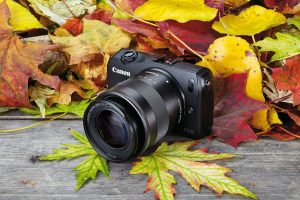
Canon EOS M3 Mirrorless Camera Body

The Canon EOS M3 shines in wedding scenarios where size and discretion matter more than absolute performance. This compact mirrorless body fits naturally into tight spaces, ceremony pews, crowded reception venues, or over-the-shoulder candid moments, without the bulk that draws attention or intimidates guests. Wedding photographers rent the M3 primarily as a second or third angle camera, mounted on a tripod for static ceremony coverage or handed to an assistant for behind-the-scenes shots while you work the main action with professional-grade gear.
The built-in Wi-Fi gives the M3 an edge over many backup options, letting you transfer select images to your phone during cocktail hour for immediate social media posts or sneak peeks that clients love. The 24.2-megapixel APS-C sensor delivers clean files in good light, making it reliable for ceremony and portrait work when conditions cooperate. Pair it with Canon’s compact EF-M lenses and you have a truly portable second system that doesn’t weigh down your bag during twelve-hour wedding days.
Where the M3 falls short is low-light autofocus speed and tracking performance, don’t expect it to nail critical reception dance floor moments or fast-moving processional shots with the consistency your primary body delivers. The 4.4 out of 5 rating from 49 customer reviews reflects its appeal as a capable compact camera, though wedding use demands realistic expectations about its role. Rent the M3 when you need an unobtrusive second angle or a lightweight backup, not as your main workhorse for high-stakes wedding moments.
Nikon NIKKOR Z 24-70mm f/2.8 S II

The Nikon NIKKOR Z 24-70mm f/2.8 S II represents the evolution of Nikon’s workhorse zoom, addressing the specific demands wedding photographers place on their standard zoom lens. This second-generation design delivers faster autofocus and improved close-focusing capabilities while maintaining the optical excellence the original version established.
For wedding coverage, the f/2.8 constant aperture gives you consistent exposure and depth of field control as you zoom from wide establishing shots during the ceremony to tighter portraits during cocktail hour. The lens excels in mixed lighting conditions, church interiors, dimly lit receptions, outdoor ceremony spaces, where that extra stop of light over an f/4 zoom makes the difference between sharp images and missed moments. The optical formula controls flare and ghosting effectively, crucial when shooting toward windows during daytime ceremonies or dealing with spotlights during evening receptions.
The improved autofocus motor tracks subjects more reliably than the first-generation model, particularly valuable when capturing processional moments or candid interactions during the reception. Close-focusing improvements let you move from full-length couple portraits to detail shots of rings, bouquets, and table settings without switching lenses, reducing the gear you need to carry during a long wedding day.
As a rental choice, the Z 24-70mm f/2.8 S II gives Nikon Z shooters access to pro-level gear without the substantial purchase commitment. Rental services stock this lens because wedding photographers consistently request it, and its widespread availability means you can secure it even during peak wedding season with advance planning.
NIKON NIKKOR Z 24-70mm f/2.8 S Standard Zoom Lens for Nikon Z

The first-generation NIKON NIKKOR Z 24-70mm f/2.8 S remains a compelling rental choice for wedding photographers working with Nikon’s Z-mount system, particularly when the newer S II model isn’t available or when budget considerations matter. This lens delivers the same focal range and maximum aperture as its successor, covering every essential wedding scenario from getting-ready shots through reception dances.
With a customer rating of 4.8 out of 5 from 543 reviews, the original Z 24-70mm f/2.8 S has proven itself reliable in real-world wedding work. The optical formula produces sharp images across the zoom range, with excellent rendering of out-of-focus backgrounds at f/2.8, critical for isolating subjects during ceremonies and portraits. Autofocus performance handles fast-moving moments like bouquet tosses and first dances, though the S II version does offer slightly faster acquisition in dim reception venues.
The main difference you’ll notice compared to the S II is weight. This first-generation lens carries more heft, which matters during an eight-hour wedding day. If you’re shooting solo or handling multiple camera bodies, the extra weight adds up. The control layout differs slightly as well, with the function button positioned differently than on the updated model.
When does this lens make sense as a rental? If the S II is booked for your dates, the original S delivers essentially the same image quality for your wedding coverage. The performance gap isn’t significant enough to reschedule a rental or compromise your gear plan. You’re getting professional-grade optics at the focal length that’ll capture 70% of your wedding day work.
Nikon AF-S NIKKOR 24-70mm f/2.8G ED Wide Angle Zoom Lens

For photographers still shooting with Nikon DSLRs, the AF-S NIKKOR 24-70mm f/2.8G ED remains a workhorse lens with a proven track record across thousands of weddings. This F-mount classic delivers the same essential focal range and fast aperture that makes the 24-70mm format indispensable for wedding coverage, from getting-ready shots through first dances.
The G ED variant earned its reputation through consistent optical performance and reliable autofocus across demanding shooting conditions. Wedding photographers value its ability to handle mixed lighting in churches, banquet halls, and outdoor ceremonies without missing focus, particularly when paired with Nikon’s DSLR bodies like the D750 or D850. The constant f/2.8 aperture gives you the shallow depth of field needed for flattering portraits while maintaining enough light-gathering ability for dim reception venues.
If you’re committed to the Nikon DSLR system, this lens represents a cost-effective rental choice compared to newer Z-mount options that would require an adapter or different camera body entirely. Services like Lensrentals maintain inventory of the AF-S 24-70mm f/2.8G ED specifically because it remains relevant for working photographers who haven’t transitioned to mirrorless systems. Its 4.4 out of 5 rating from 926 customer reviews speaks to its consistent real-world performance.
The rental advantage here is significant, you get professional-grade optics for your wedding shoot without the used-market prices that F-mount glass now commands. For backup shooters on your team using DSLRs, or as your primary lens on a reliable D-series body, this 24-70mm delivers exactly what wedding work demands.
Sony FE 24-70mm F2.8 GM II New Generation F2.8 G Master Zoom Lens

The Sony FE 24-70mm F2.8 GM II represents the pinnacle of standard zoom performance for Sony mirrorless shooters tackling weddings. This second-generation G Master lens delivers the fast, wide aperture coverage wedding photographers demand while addressing the original’s main weakness, weight.
At nearly 200 grams lighter than its predecessor, the GM II changes how you work through a twelve-hour wedding day. Your shoulder notices the difference by hour three, and that comfort translates to steadier handheld shots during low-light receptions and faster reflexes when the flower girl decides to sprint down the aisle off-script.
The autofocus system is where this lens earns its rental fee for wedding work. Sony’s latest linear motors track moving subjects with the kind of confidence you need when the couple walks back up the aisle and you have exactly one chance to nail the shot. The lens locks focus on backlit faces during ceremony exits and holds onto dancing guests in mixed LED and tungsten lighting without hunting.
Optical performance stays sharp across the zoom range, even wide open at f/2.8, so you’re not sacrificing image quality for that background separation during portraits or the light-gathering ability you need for dimly-lit ceremonies. Edge sharpness holds up well for group shots, and the lens handles backlight cleanly without excessive flare washing out your couple’s faces.
For Sony shooters, this lens is typically the first rental priority because it covers 80 percent of wedding coverage scenarios with a single piece of glass. Major rental services including Lensrentals stock this lens with nationwide shipping, making it accessible regardless of your location.
Godox V1 V1-C V1C Round Head Camera Flash for Canon Flash Speedlite

The Godox V1 stands out as a wedding flash rental because its round head design solves a persistent challenge: the uneven, rectangular light spread that traditional speedlights produce. That circular head creates smoother, more natural-looking catchlights in subjects’ eyes and wraps light more evenly across group shots during ceremony processionals or family formals. For wedding photographers working in mixed conditions, bright outdoor ceremonies followed by dim reception halls, this even distribution matters more than spec sheets suggest.
Battery performance separates the V1 from older speedlights that drain AAs by mid-reception. The lithium-ion pack delivers 480 full-power flashes on a single charge, easily covering a typical 8-to-10-hour wedding day without scrambling for replacements during critical moments like first dances or cake cutting. The 1.5-second recycle time at full power keeps pace with rapid shooting during bouquet tosses and exit sparkler lines, where missing a frame isn’t an option.
TTL metering and 1/8000s high-speed sync give you automatic exposure control when lighting changes faster than you can adjust manually, moving from shaded ceremony seating to sun-drenched aisles, or balancing flash with string lights during receptions. The 10-level LED modeling lamp helps you preview light placement during posed portraits without firing test shots that interrupt the couple’s timeline.
With 529 customer ratings averaging 4 out of 5 stars and current in-stock availability through major rental services, the V1 has proven itself reliable for event work where backup plans matter.
Understanding Photography Equipment Rental Services
Rental Timing and Shipping
Timing your rental correctly is crucial for wedding photography, you need the gear early enough to test it but not so early that you’re paying for unused days. Most rental services calculate periods by calendar days, not 24-hour increments, so a Friday-to-Monday rental typically gives you four days of coverage for a weekend wedding.
Lensrentals, which now includes BorrowLenses, ships orders to arrive on the specific day you request, using nationwide shipping to reach photographers across the country. This means you should schedule your rental start date for at least one or two days before the wedding. That buffer lets you unpack, inspect the equipment, test it in your typical shooting conditions, and troubleshoot any issues before the event. If a lens arrives with a focusing problem or a flash isn’t firing correctly, you’ll have time to contact the rental service for a replacement.
For Canadian photographers, services like ship across Canada, though you’ll want to confirm delivery timelines for your province. Factor in potential shipping delays, weather, holidays, or carrier issues can disrupt even the best-laid plans. When you’re dealing with an irreplaceable event like a wedding, that extra day of cushion is cheap insurance against disaster.
Return Policies and Procedures
Returning rental equipment on time protects your deposit and maintains your standing with rental services. Most providers, including Lensrentals, require you to return gear in the original shipping box on the final day of your rental period. Keep all packing materials when the equipment arrives, boxes, foam inserts, and protective wrapping, as you’ll need them for the return shipment.
Pack equipment carefully to prevent damage during transit. Return each item in the protective case or wrapping it arrived in, then secure everything in the original box. Most services include a prepaid return label in your shipment, so you won’t pay additional shipping costs. Drop the sealed box at the designated carrier location on your rental end date, ideally by early afternoon to ensure same-day processing.
Check your rental agreement for the exact return deadline. Some services count the return as complete when you ship it, while others require delivery by a specific date. Missing the return window typically triggers additional rental days at the daily rate, which adds up quickly for high-value wedding equipment.
Rental Services for Wedding Photographers
Several established rental platforms serve wedding photographers across North America, each offering different equipment selections and coverage areas. Lensrentals stands as the industry leader, providing nationwide shipping across the United States with an extensive inventory covering Canon, Nikon, Sony, Leica, Fuji, and video equipment. The company recently expanded by bringing BorrowLenses into its family of brands, strengthening its market position and equipment availability for photographers planning wedding shoots.
| Service | Shipping Coverage | Equipment Focus |
|---|---|---|
| Lensrentals | Nationwide (US) | Canon, Nikon, Sony, Leica, Fuji cameras and lenses, video gear |
| Canada-wide | Sony Alpha lenses (24-70mm, 70-200mm), HVL-F58AM flash | |
| Viva Camera | Toronto shelf pickup | Cinema cameras (day rates $200-$500) |
For Canadian wedding photographers, offers cross-country shipping with specific Sony gear including the Alpha 24-70mm and 70-200mm lenses plus the HVL-F58AM flash, essential pieces for wedding coverage. Regional options like Viva Camera in Toronto cater to local photographers with cinema cameras available at shelf pickup, though their day rates of $200 to $500 position them as higher-end options better suited for video-focused wedding work.
When evaluating rental services, prioritize those offering the specific camera system you shoot with for weddings. The shipping logistics matter significantly, Lensrentals ships equipment to arrive on your requested date and requires return in the same box on the day your rental period ends, which demands careful planning around wedding dates. Choose services with proven track records in your region rather than hunting for the absolute lowest price, since reliable delivery and well-maintained equipment matter more than saving a few dollars when a wedding day hangs in the balance.
Common Mistakes to Avoid When Renting Wedding Photography Gear
Renting photography equipment without proper preparation can turn a dream wedding shoot into a stressful disaster. The stakes are high, you can’t ask a couple to recreate their ceremony because your rental gear malfunctioned, so avoiding these common pitfalls is essential.
Waiting Too Long to Reserve Equipment
Wedding season runs from late spring through early autumn, and popular lenses like the 70-200mm f/2.8 get booked weeks in advance. Photographers who wait until a week before the event often face sold-out inventory or settle for second-choice gear. Reserve your equipment at least three to four weeks ahead for peak season weddings, and confirm your reservation a few days before the scheduled ship date.
Skipping the Pre-Wedding Test
Many photographers schedule rentals to arrive the day before a wedding to save money, but this leaves no margin for error. Order equipment to arrive two to three days early. Shoot a quick test session checking autofocus accuracy, flash sync, and menu settings. This buffer gives you time to contact the rental service if something’s wrong and potentially receive replacement gear before the wedding.
Overlooking Insurance and Damage Protection
Assuming your homeowner’s policy or general liability insurance covers rental equipment is a costly mistake. Wedding environments are chaotic, gear gets bumped during receptions, knocked over by guests, or damaged in transport. Review the rental service’s damage waiver options carefully and understand what you’re liable for without coverage. The small additional cost is negligible compared to replacing a damaged lens out of pocket.
Assuming Compatibility Without Verification
Not all equipment works together seamlessly. Canon shooters renting a Godox flash need to verify they’re getting the Canon-specific model (V1-C), not the Sony or Nikon version. F-mount lenses require adapters on Nikon Z bodies, which may limit autofocus performance. Check compatibility explicitly before finalizing your reservation, and ask the rental service about any adapters or accessories you’ll need to make everything function properly.
What to Look For
When evaluating wedding photography equipment rentals, prioritize reliability above all else, weddings don’t offer second chances. Look for gear with proven track records in professional use rather than the newest releases that might still have firmware quirks. Check customer reviews of specific rental items for mentions of autofocus consistency, battery life under heavy use, and performance in mixed lighting conditions typical of ceremonies and receptions.
Compatibility matters more than you might expect. Verify that rented lenses mount properly on your camera bodies and that flash units communicate fully with your system for TTL metering. Don’t assume compatibility based on brand alone, third-party lenses sometimes lack full function with newer camera firmware, and adapters can introduce autofocus lag during critical moments like first dances or cake cutting.
Insurance coverage deserves careful attention. Understand exactly what the rental service’s damage waiver covers versus what your own business insurance handles. Some photographers discover too late that minor scuffs or a broken lens hood trigger replacement charges.
Finally, consider the rental service’s shipping reliability and return flexibility. Services offering nationwide shipping with guaranteed delivery dates give you breathing room for pre-wedding testing, while clear return procedures prevent stress after an exhausting wedding weekend.
Main Options Compared
When choosing rental equipment for wedding photography, you’re essentially deciding between three main approaches, each with distinct trade-offs.
Complete kit rentals versus individual items represents your first decision. Some photographers rent everything, bodies, lenses, lighting, as a package for consistency and simplicity. Others already own core gear and rent only specialty items like a 70-200mm f/2.8 for ceremony reach or additional speedlights for reception coverage. Complete kits eliminate compatibility concerns but cost more, while selective rentals let you fill specific gaps economically.
DSLR versus mirrorless systems matters more than it should when renting. If you own Canon EF glass, for example, you’ll likely rent Canon bodies rather than switching systems for one event, even if mirrorless offers advantages. Compatibility with your existing gear, adapters, triggers, batteries, drives this choice as much as performance does.
Local versus national rental services involves balancing convenience against selection. National platforms like Lensrentals offer extensive inventories and ship nationwide, giving you access to the latest pro gear. Regional services may provide same-day pickup and personal relationships but smaller selections. Your location and the specific equipment you need determine which path makes sense.
Frequently Asked Questions
Rental costs vary by equipment tier and duration, but photographers can expect daily rates for professional camera bodies ranging from $50 to $150, while high-end lenses typically rent for $30 to $100 per day. Weekly rentals often offer better value if you’re shooting multiple events or want extended testing time before your wedding date. Services like Lensrentals offer nationwide shipping, making professional gear accessible regardless of your location.
How far in advance should I reserve wedding photography equipment?
Reserve equipment at least 2-3 weeks before your wedding date, especially during peak wedding season from May through October. Popular items like the Sony FE 24-70mm F2.8 GM II and Nikon Z 24-70mm f/2.8 book quickly on weekends.
Does rental equipment include insurance, or do I need my own?
Most rental services offer optional damage waiver coverage for a small percentage of the rental cost, typically 10-15%. This protects you from repair costs if equipment is damaged during normal use, though deliberate damage or loss isn’t covered.
What happens if I damage rented equipment during a wedding?
Without damage waiver coverage, you’re responsible for repair costs up to the equipment’s replacement value. Purchase the waiver when renting, it’s worth the peace of mind when working in unpredictable wedding environments.
Can I test the equipment before the actual wedding day?
Absolutely, and you should. Rent equipment to arrive at least one day before the wedding so you can familiarize yourself with the gear, test autofocus settings, and ensure everything works with your existing equipment.
When returning equipment, pack everything in the same box it arrived in and ship it on the day your rental period ends. Lensrentals ships orders to arrive on your requested date and expects the same box returned promptly. Set a phone reminder for your return deadline, especially if you’re exhausted after shooting a wedding, late returns mean additional rental charges.
Consider the full rental window when booking. If your wedding is on Saturday, renting Thursday through Monday gives you Friday for testing, Saturday for the event, and Sunday as a buffer before Monday’s return. This approach reduces stress and ensures you’re not scrambling to ship equipment back while still processing the previous day’s shoot.
Renting wedding photography equipment isn’t just a fallback, it’s a strategic tool that gives you access to cutting-edge gear exactly when you need it. Whether you’re testing equipment before a major purchase, securing backup bodies for redundancy, or stepping up to premium glass for a high-profile wedding, rentals let you deliver exceptional results without the capital investment.
The key to successful rentals is planning ahead. Reserve your equipment well before the wedding date, factor in shipping time to allow for pre-wedding testing, and verify insurance coverage to protect against unexpected damage. Don’t assume compatibility, confirm that rented lenses work with your existing bodies and that flash triggers sync properly with your lighting setup.
Build relationships with reliable rental providers like Lensrentals, which offers nationwide shipping and comprehensive equipment coverage. Treat rental decisions with the same care you’d apply to gear purchases: know exactly what you need, understand the rental terms, and always have a backup plan for mission-critical equipment.
Smart rental choices expand your creative possibilities and protect your bottom line. Make them part of your wedding photography toolkit.
Full transparency: this article contains affiliate links. We may be paid a commission if you make a purchase. As an Amazon Associate I earn from qualifying purchases.




 By
By