 By
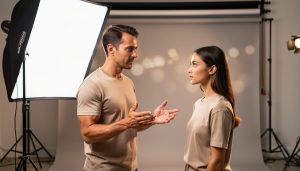
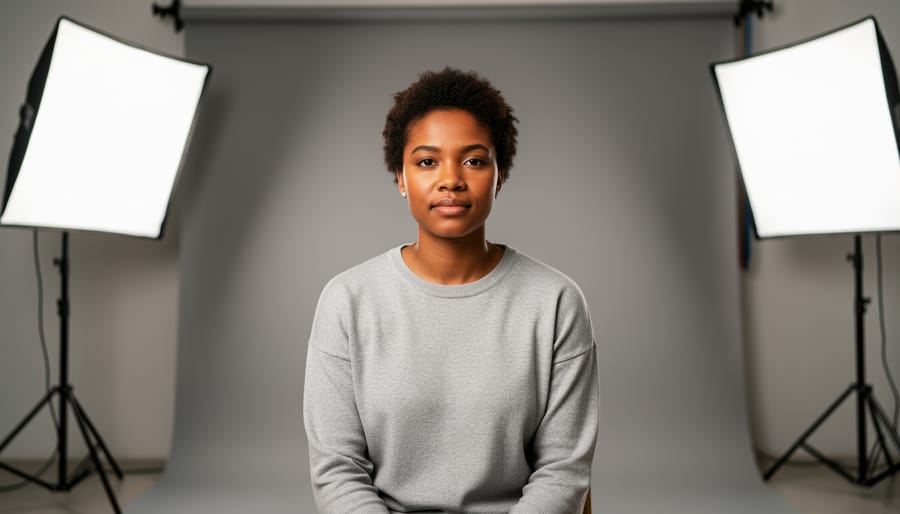
By Position your single light source 45 degrees to your subject’s face and slightly above eye level to create the foundational Rembrandt lighting pattern—recognizable by the small triangle of light beneath the shadowed eye. Master feathering by angling your light so the edge of the beam, rather than its center, illuminates your subject, producing softer transitions and more dimensional skin tones. Control the shadow intensity using a reflector on the opposite side of your light source, bouncing fill light back into darker areas to achieve ratios ranging from dramatic 4:1 splits to gentle 2:1 portraits. Experiment with light-to-subject…
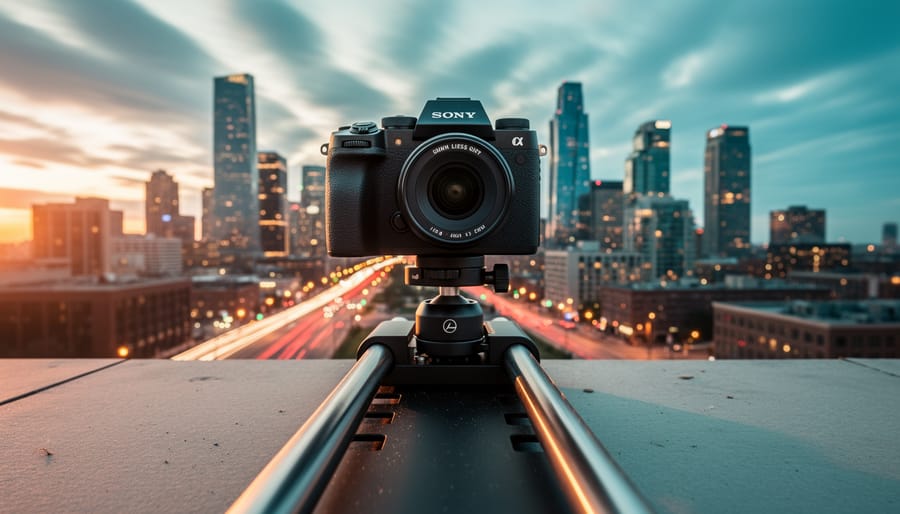
Why Your Time-Lapse Videos Look Stuck in Place (And How Motion Changes Everything)
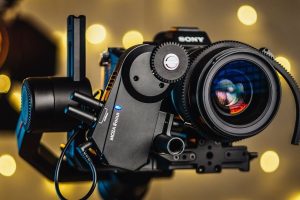
Mount your camera on a motorized slider or gimbal to create the fluid, cinematic movement that transforms ordinary time-lapses into professional-grade sequences. The difference between a static time-lapse and a moving one lies in that subtle dollying motion—a slow push toward your subject or a gentle pan across a cityscape—that adds dimensionality and visual interest your audience craves.
Moving time-lapses combine two complex techniques: capturing sequential frames over extended periods while simultaneously repositioning your camera between each shot. This marriage of time compression and physical movement creates what …