 By
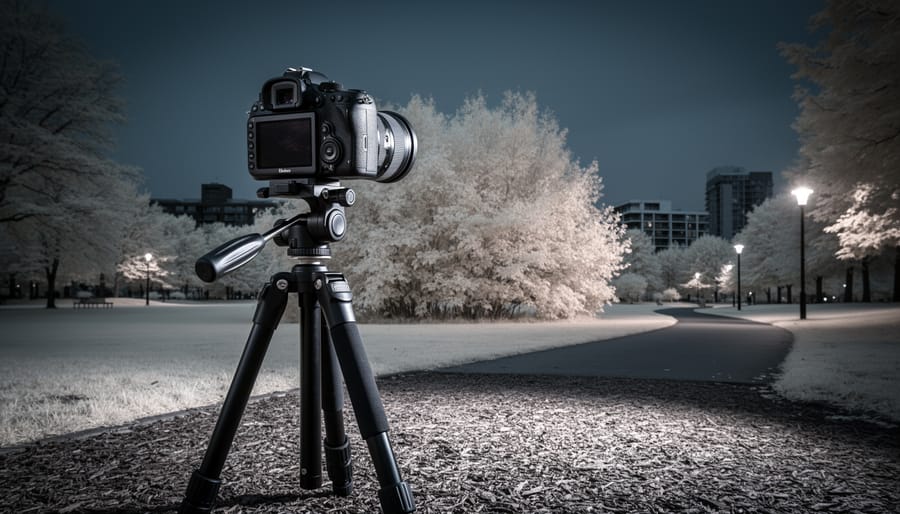
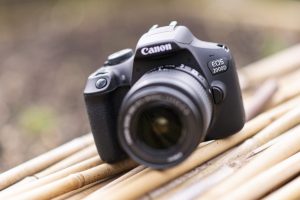
By Infrared photography transforms your camera into a tool that sees beyond the visible spectrum, capturing light wavelengths between 700 and 1,200 nanometers to create surreal landscapes where foliage glows white, skies turn deep and dramatic, and everyday scenes take on an otherworldly quality. You’ll need either a converted camera with its infrared-blocking filter permanently removed (the most practical route for dedicated IR work) or an unconverted camera paired with a dark infrared filter that screws onto your lens, though the latter requires tripod-steady exposures of several seconds even in bright sunlight.
The technical …