 By
By 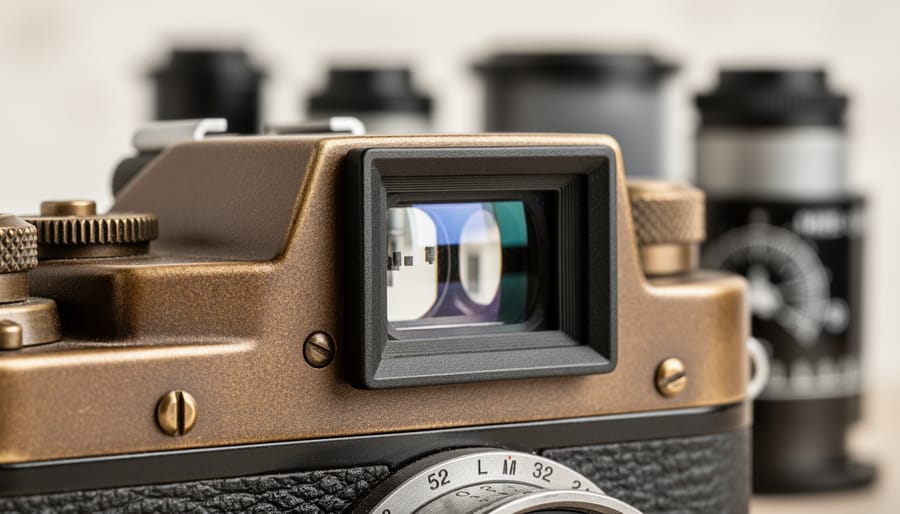
The viewfinder is where your creative vision meets reality, and choosing a vintage camera based on this single component can make the difference between a camera you’ll cherish for years and one that collects dust on a shelf. Whether you’re considering a waist-level finder on a medium format TLR, a bright-line rangefinder, or the ground glass of an SLR, the viewing experience fundamentally shapes how you compose, focus, and connect with your subject. Understanding these systems before you buy isn’t just technical homework. It’s the key to finding a film camera that actually suits the way you shoot.
When you’re evaluating a used camera, the viewfinder reveals critical information about both the camera’s condition and whether it matches your needs. A dim SLR finder might signal a worn focusing screen or misaligned prism, while a rangefinder’s double-image patch tells you immediately if the camera’s calibration has drifted over decades of use. Beyond condition checks, the type of finder determines your shooting style. Street photographers often gravitate toward rangefinders for their unobstructed view and quiet operation, while portrait shooters typically prefer the precision of an SLR’s through-the-lens viewing.
This camera buying guide walks you through the practical differences between viewfinder systems, shows you exactly what to inspect when handling vintage cameras, and matches specific models to different shooting preferences. You’ll learn which red flags to watch for and which compromises are worth accepting based on how you actually photograph.
Why the Viewfinder Matters When Buying Vintage Cameras
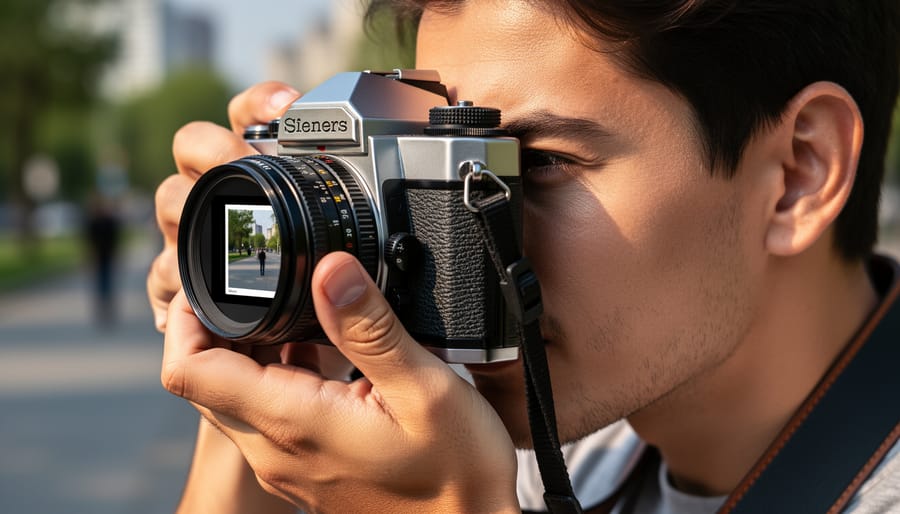
The viewfinder is your camera’s most direct interface with the scene you’re photographing, yet many buyers focus exclusively on lens compatibility or shutter mechanisms when shopping for vintage cameras. That’s a costly oversight. The viewfinder determines how accurately you can frame and focus, how quickly you can react to fleeting moments, and whether you’ll actually enjoy shooting with the camera long-term. A dim, cramped viewfinder turns every shot into guesswork and frustration, while a bright, clear finder makes manual focusing intuitive and composition a pleasure.
Different viewfinder technologies emerged to solve specific photographic challenges, which is why camera design evolved so distinctly across eras. The rangefinder systems that dominated Leica cameras and other 60s film cameras prioritized bright, unobstructed viewing for street and documentary work. SLRs gained popularity because they showed exactly what the lens saw, critical for macro and telephoto photography. Twin lens reflex designs offered waist-level viewing that excelled in studio and portrait settings.
Understanding these viewfinder categories helps you quickly eliminate cameras that won’t suit your shooting style. If you primarily shoot in low light or need critical focus with fast lenses, you’ll want a bright SLR finder with strong focusing aids. Prefer zone focusing and compact portability? A rangefinder’s design makes more sense. This knowledge transforms your vintage camera search from browsing everything to targeting specific models that match how you actually photograph.
Types of Vintage Camera Viewfinders Compared
Single Lens Reflex (SLR) Viewfinders
SLR viewfinders revolutionized photography by showing you exactly what the lens sees. When you peer through an SLR finder, light passes through the taking lens, bounces off a mirror, hits a focusing screen, then travels through a prism before reaching your eye. This through-the-lens (TTL) design eliminates parallax errors entirely, what you see is precisely what you’ll capture on film.
The prism makes all the difference in viewing quality. Pentaprisms use solid glass and deliver the brightest, clearest image with accurate colors. You’ll find them in professional cameras like the Nikon F3, Canon F-1, and Pentax LX. These finders feel luminous even in dim conditions. Pentamirrors, made from multiple mirror surfaces, weigh less and cost less to manufacture but produce a slightly darker, less crisp image. Most consumer SLRs from the 1970s and 1980s, including the Canon AE-1 and Pentax K1000, used pentamirrors, still perfectly usable but noticeably dimmer than their pro-level siblings.
Focusing screens further customize the experience. Split-prism circles snap into sharp alignment when focus hits, while microprism collars shimmer until the subject locks in. Plain matte screens suit certain lenses better. This combination of precision, versatility, and real-time composition feedback made SLRs the dominant professional format from the 1960s through the film era’s end.
Rangefinder Viewfinders
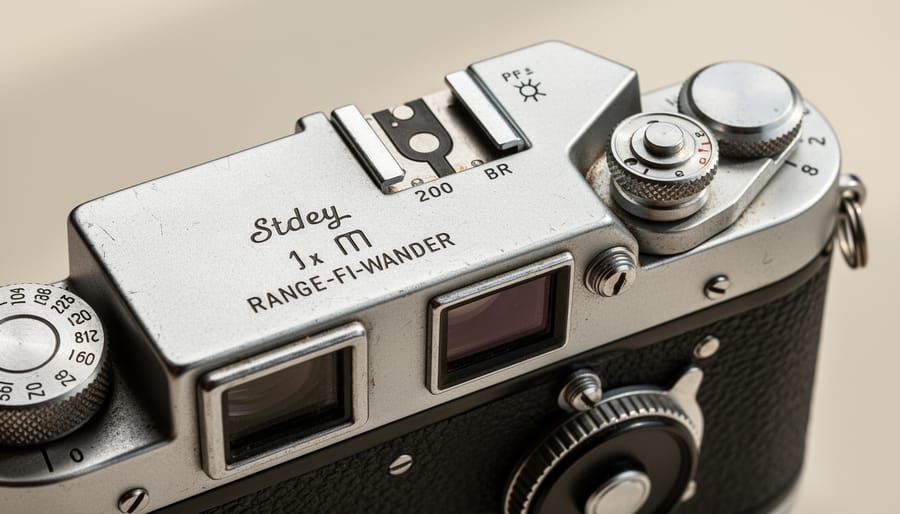
A rangefinder viewfinder sits separate from the taking lens, offering an entirely different shooting experience than an SLR. When you peer through a rangefinder, you see a bright, clear frame projected onto a small window, no mirror blackout, no viewfinder lag. The viewfinder remains live even during exposure, letting you watch the decisive moment unfold.
The focusing mechanism relies on a coupled rangefinder patch, typically a small rectangle or circle in the center of the frame. As you turn the focus ring, two overlapping images align when the subject is sharp. A well-maintained patch shows crisp contrast and snaps into alignment precisely. On older cameras, the patch may appear dim or yellowed, making accurate focus difficult in low light.
Bright-line frames, the white or yellow rectangles indicating your composition, shift slightly at different focus distances to compensate for parallax error. Since the viewfinder sits offset from the lens, what you see isn’t exactly what the lens captures, particularly at close distances. Better rangefinders like Leica M-series cameras minimize this offset and provide accurate automatic parallax correction.
Rangefinder shooters prize the unobstructed view beyond the frame lines, which allows you to anticipate movement entering the shot. This peripheral vision advantage makes rangefinders exceptional for street photography and documentary work, explaining why models from Leica, Canon, and Voigtländer command premium prices decades after production ended.
Twin Lens Reflex (TLR) Viewfinders
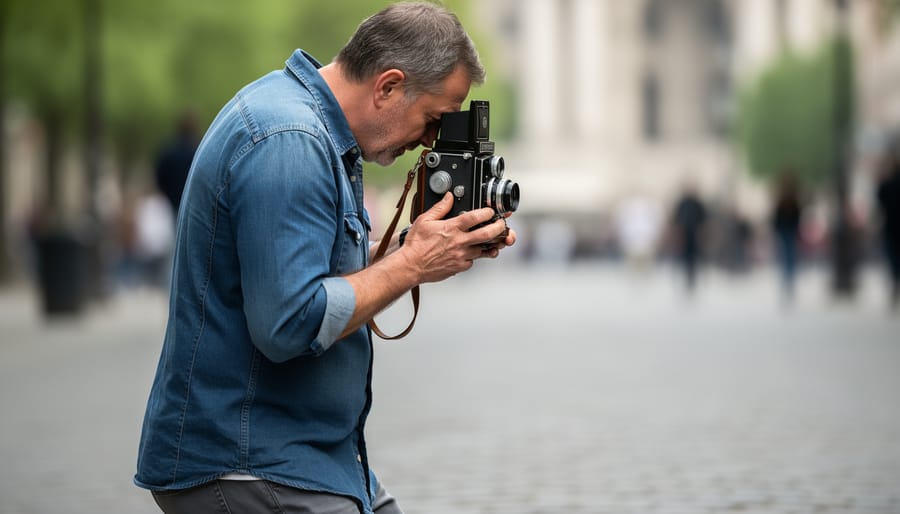
Twin lens reflex cameras offer a fundamentally different viewing experience that shapes how you compose and shoot. You look down into a hood at waist level rather than holding the camera to your eye, which creates a slower, more deliberate approach to photography. The viewfinder shows a bright, full-frame ground glass image from the upper viewing lens, while the lower taking lens captures the actual photograph.
The trade-off is that reflex cameras reverse image laterally, meaning left and right are flipped. Following moving subjects takes practice since panning in the “wrong” direction feels counterintuitive at first. Despite this quirk, many photographers prefer TLR viewing for its large, brilliant image that makes manual focusing surprisingly easy, even in dim light.
Classic examples include the Rolleiflex 2.8F, which delivers exceptional viewfinder brightness and sharpness, and the more affordable Yashica Mat-124G, which offers nearly the same waist-level experience at a fraction of the cost. The viewing hood typically includes a pop-up magnifier for critical focusing and folds flat for storage. This design dominated medium format photography for decades because it combined excellent image quality with a compact, reliable package that let you see exactly what you were capturing.
Simple Direct Viewfinders
Simple direct viewfinders are separate optical windows mounted above or beside the camera lens, common on compact rangefinders, fixed-lens cameras, and vintage point-and-shoots. Unlike SLR systems, you’re not looking through the taking lens, you’re viewing through an independent optical path that approximates what the lens sees.
This separation creates parallax error: the viewfinder sees a slightly different frame than the lens, especially noticeable at close distances. Many better compacts include parallax correction marks showing the actual frame at typical portrait distances. Without these guides, you’ll need to mentally compensate, particularly when shooting closer than six feet.
Direct finders vary dramatically in quality. Premium compacts like the Olympus 35 RC offer bright, clear optics with accurate frame lines. Budget models often have dim, scratched plastic windows with vague frame approximations. When evaluating these cameras, check for clarity, scratches that obscure the view, and whether frame lines remain visible in bright light.
The advantage? Direct finders are simple, compact, and never black out. They work well for street photography and casual shooting where precise framing matters less than capturing the moment.
Waist-Level and Folding Hood Finders
Some medium format cameras offer interchangeable viewfinder systems, with folding hood finders providing a unique compositional experience. Unlike fixed waist-level designs, these detachable hoods let you swap in prism finders when you need eye-level shooting. The waist-level viewing encourages slower, more deliberate composition, you’re looking down into a bright ground glass that shows the full medium format frame. This system works beautifully for studio work, landscapes, and street photography where you can shoot from hip height. Just remember that interchangeable finders add cost and complexity, and older folding mechanisms can develop light leaks if the hood doesn’t seat properly.
Key Factors to Consider When Evaluating Vintage Viewfinders
Brightness and Clarity
A bright, clear viewfinder transforms your shooting experience, it lets you compose confidently, focus accurately, and work faster in varied light. When evaluating vintage cameras, hold the body up to your eye in good light and scan the entire finder image. You’re looking for edge-to-edge brightness without dark corners, a crisp view of the focusing screen, and clear frame lines or focusing aids.
Glass and prism elements degrade over time. Check for haze (a cloudy, milky appearance), separation (visible bubbles or delamination between cemented lens elements), and fungus (thread-like growth or spots). These defects scatter light and reduce contrast, making manual focusing harder. Pentaprisms can also lose their internal silvering, creating dark patches or overall dimness that’s impossible to fix affordably.
If you’re buying online, ask sellers for photos taken through the viewfinder pointed at a white surface or bright window. Compare multiple cameras at similar price points, some models, like the Nikon F3 or Canon F-1, are legendary for their bright finders even decades later. Don’t settle for a murky view; a compromised finder will frustrate you every time you shoot.
Focusing Accuracy and Aids
Manual focus demands precision, and the focusing aids built into vintage viewfinders determine how accurately you can nail critical sharpness, especially at wider apertures where depth of field won’t save you.
SLR cameras typically feature one of three focusing screen types: split-prism (where a central circle splits the image until aligned), microprism collars (which shimmer out of focus areas into clarity), or plain ground glass. Split-prisms excel for subjects with clear vertical or horizontal lines but can black out with slower lenses. Microprisms work across varied subjects but feel less definitive. Ground glass offers the purest view but requires experienced eyes. When buying, peer through the finder at different distances and check that the split-prism circle isn’t chipped and the microprism ring hasn’t deteriorated into a distracting blob.
Rangefinder patch contrast matters enormously. A bright, clearly defined yellow or contrasting patch means confident focusing. Faded, low-contrast patches make accurate focus guesswork. Test alignment by focusing on a distant subject, then checking the same point through each frameline, misalignment means costly adjustment. Sticky or inconsistent rangefinder coupling ruins the entire mechanism’s usefulness.
Condition Issues Specific to Viewfinders
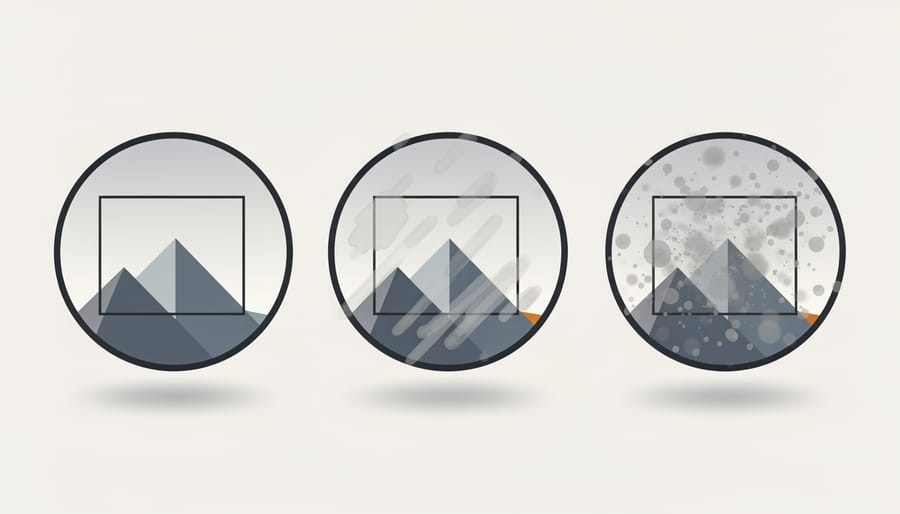
Vintage viewfinders reveal their age through predictable problems that range from minor annoyances to serious functionality killers. Fungus appears as web-like patterns or spots inside the optical path, usually from improper storage in humid conditions. Light fungus on the edges won’t ruin your shooting, but aggressive growth across the center demands professional cleaning or replacement parts.
Haze and separation affect prism-based SLRs particularly. The silvered surfaces inside pentaprisms can deteriorate over decades, creating dark patches or overall dimming that makes composition frustrating. This isn’t cleanable, it requires prism replacement, which often costs more than the camera itself. Some haze is cosmetic and barely visible when looking through the finder, while severe cases turn the viewfinder into a dim tunnel.
Dust is inevitable in 40-year-old cameras. A few specks won’t appear in your photos since they’re not in the taking lens path. Consider dust acceptable unless it’s excessive enough to obscure focusing aids.
Separation describes the delamination of cemented lens elements in the viewfinder assembly, appearing as oily patterns or cloudy areas. Unlike dust, separation typically worsens over time and significantly impacts the viewing experience, making it a legitimate deal-breaker that should substantially reduce asking prices.
Eyepiece Comfort and Eyeglass Compatibility
If you wear eyeglasses, eyepiece comfort becomes a critical buying factor that’s often overlooked until you’re actually shooting. Eye relief, the distance between your eye and the eyepiece where you can still see the full viewfinder frame, varies dramatically across vintage cameras. Some SLRs like the Nikon F3 offer generous eye relief that works perfectly with glasses, while others force you uncomfortably close to the eyepiece, cutting off the viewfinder corners.
Built-in diopter adjustments let you fine-tune focus to match your vision, though most vintage cameras only offer a limited range, typically -3 to +1. If your prescription falls outside this, you’ll need to find aftermarket diopter lenses or shoot with your glasses on. Check whether the camera accepts screw-in or slip-on diopter corrections, availability varies by model and era.
Rubber eyecups make a surprising difference for all-day shooting comfort. Original eyecups on vintage cameras have often deteriorated into sticky residue, but replacements are readily available for popular models. A good eyecup cushions your eye socket, blocks stray light that washes out the viewfinder image, and prevents scratches if you wear glasses. The eyepiece shape itself matters too, rectangular eyepieces generally accommodate glasses better than small circular ones.
Test the viewfinder with your actual shooting posture. What feels fine for a few minutes in a camera shop can become fatiguing after an hour of street photography.
Recommended Vintage Cameras by Viewfinder Experience
Best Bright SLR Viewfinders
The Canon F-1 New (produced 1981-1992) remains legendary among vintage SLR shooters for good reason: its viewfinder combines 0.8x magnification with a remarkably bright image that makes manual focusing effortless even in dim light. The interchangeable focusing screens let you customize the finder to match your shooting style, while the pentaprism’s exceptional glass quality delivers edge-to-edge clarity that puts many modern cameras to shame.
Nikon’s F3 (1980-2001) offers a similarly outstanding viewing experience with its bright, contrasty finder that excels with slower lenses. The red LED display integrates beautifully without cluttering the frame, and the finder’s 0.78x magnification provides an excellent balance between image size and eye relief. Expect to pay $300-600 for clean examples in 2026.
The Pentax LX (1980-2001) deserves its reputation as one of the finest mechanical SLRs ever made, with a viewfinder that rivals both Canon and Nikon’s best. Its 0.87x magnification is among the largest available, giving you an expansive, immersive view that makes composition intuitive. The finder accepts interchangeable screens and prisms, though the standard configuration satisfies most shooters perfectly.
Top Rangefinder Viewing Experiences
The Leica M3 remains the gold standard for rangefinder viewing, with its 0.91x magnification and brilliant, bright-line frames that automatically adjust for parallax. Its large, clear viewfinder makes manual focusing genuinely enjoyable rather than a chore. For 2026 buyers, expect to pay $1,500-2,500 for a good user copy.
More accessible options deliver excellent experiences without breaking the bank. The Canon P and Canon 7 feature bright viewfinders with multiple framelines, accurate rangefinder patches, and generally sell for $300-600. The Voigtländer Bessa R2A offers a modern take on classic rangefinder design with a clear 1:1 finder and modern coatings, typically available for $400-700 used.
For budget-conscious shooters, the Yashica Electro 35 series provides a surprisingly good fixed-lens rangefinder experience. While you can’t change lenses, the bright viewfinder and sharp 45mm f/1.7 lens make these cameras fantastic for street photography, with prices around $100-200.
When testing any rangefinder, verify the rangefinder patch shows strong contrast and aligns perfectly with the focusing mechanism. A misaligned rangefinder is expensive to repair and severely compromises the shooting experience.
Best Waist-Level and Medium Format Options
For photographers who want to slow down and compose deliberately, waist-level finders on TLR and medium format cameras offer an unmatched experience. The Rolleiflex 2.8F remains the gold standard, its ground glass is exceptionally bright, the magnifier hood crisp, and the entire package built to last decades. Expect to pay $800, $1,500 for a clean example, but the investment rewards you with professional-grade optics and that distinctive square format.
Budget-conscious shooters should consider the Yashica Mat-124G, which delivers 80% of the Rollei experience at $200, $400. The finder is plenty bright for outdoor work, and the 80mm f/3.5 lens produces sharp images that belie the camera’s affordable price.
If you prefer interchangeable lenses, the Hasselblad 500C/M with its folding waist-level finder offers the most versatile medium format system. Clean bodies run $600, $900, making used medium format Hasselblads accessible for serious film work. The finder hood locks securely, the Acute Matte screen aids focusing, and you can add a prism if you need eye-level shooting later.
Common Mistakes to Avoid When Buying for the Viewfinder
One of the biggest mistakes when buying vintage cameras is trusting seller descriptions or photos instead of inspecting the viewfinder yourself. Many sellers don’t understand what constitutes normal wear versus serious optical degradation. They might describe a viewfinder as “clean” or “bright” when it actually has significant haze, fungus between elements, or prism deterioration that dramatically affects the shooting experience. If you’re buying your first film camera, this becomes even more critical since you might not yet know what a properly functioning viewfinder should look like.
Another common pitfall is choosing a viewfinder type based purely on aesthetics or romantic notions rather than how you actually shoot. Waist-level finders look wonderful and feel special, but if you primarily shoot street photography or need to work quickly, that laterally reversed image will frustrate you constantly. Similarly, rangefinders appeal to many new film shooters because of their mystique, but if you plan to shoot macro work or frequently use telephoto lenses, the parallax limitations and frameline restrictions will leave you disappointed.
Many buyers also underestimate how much viewfinder condition affects usability. They accept moderate haze or dim viewing because the camera body seems otherwise pristine, then discover they struggle with focus accuracy or composition in anything less than bright daylight. A slightly worn camera body with an excellent viewfinder will serve you far better than a cosmetically perfect camera with compromised optics.
Finally, don’t assume all cameras within a model line have identical viewfinders. Manufacturing variations, replacement parts, and different production years mean two Nikon FM2s or Canon AE-1s might offer noticeably different viewing experiences. Always evaluate the specific camera you’re considering, not just the model’s general reputation.
Frequently Asked Questions
Can a dim viewfinder be cleaned or restored to brightness?
In many cases, yes. Surface dirt on the focusing screen, eyepiece, or mirror can be carefully cleaned using proper tools like a rocket blower and lens tissue. However, internal prism deterioration, fungus etching, or separation between cemented lens elements typically requires professional repair or parts replacement, which can be costly and sometimes impossible for rare models.
How do I test if a rangefinder is properly calibrated?
Point the camera at a subject with clear detail at various distances, focus using the rangefinder patch until the split images align perfectly, then check if that plane is actually sharp when you look at the developed negatives or scans. Repeat at close range, middle distance, and infinity. Consistent front-focus or back-focus across distances indicates the rangefinder needs adjustment, which should be done by a qualified technician.
Does viewfinder type affect the actual image quality on film?
No, the viewfinder is purely a compositional and focusing aid, it doesn’t touch the light path that exposes the film. An SLR, rangefinder, and TLR using the same lens and film will produce identical image quality. The viewfinder only affects your ability to compose accurately and achieve critical focus, which indirectly influences your success rate and creative control.
Are vintage cameras with interchangeable viewfinders worth the extra cost?
It depends on your shooting style. Interchangeable finders, like waist-level, chimney, or sports finders on some medium format SLRs, offer compositional flexibility and can make certain shooting scenarios much easier. If you only shoot one way, a fixed finder is simpler and less to maintain. But for photographers who value versatility or want the waist-level experience without buying a separate TLR, the option adds genuine practical value.
Can I use a vintage camera if I wear glasses?
Absolutely. Look for cameras with good eye relief (the distance from the eyepiece to your eye) and consider models with built-in or attachable diopter correction lenses. Many SLRs and rangefinders accommodate eyeglass wearers well, though some compact finders with short eye relief make it harder to see the full frame. Testing before buying is ideal, but asking the seller about corner visibility while wearing glasses helps narrow your options.
Is viewfinder brightness more important than focusing aids?
Can a dim viewfinder be cleaned or restored to brightness?
In many cases, yes, surface dirt on the focusing screen, eyepiece, or mirror can be carefully cleaned using proper tools like a rocket blower and lens tissue. However, internal prism deterioration, fungus etching, or separation between cemented lens elements typically requires professional repair or parts replacement, which can be costly and sometimes impossible for rare models.
How do I test if a rangefinder is properly calibrated?
Point the camera at a subject with clear detail at various distances, focus using the rangefinder patch until the split images align perfectly, then check if that plane is actually sharp when you look at the developed negatives or scans. Consistent front-focus or back-focus across distances indicates the rangefinder needs adjustment, which should be done by a qualified technician.
Does viewfinder type affect the actual image quality on film?
No, the viewfinder is purely a compositional and focusing aid, it doesn’t touch the light path that exposes the film. An SLR, rangefinder, and TLR using the same lens and film will produce identical image quality, though the viewfinder affects your ability to compose accurately and achieve critical focus.
Are vintage cameras with interchangeable viewfinders worth the extra cost?
It depends on your shooting style. Interchangeable finders offer compositional flexibility and can make certain scenarios much easier, but if you only shoot one way, a fixed finder is simpler and less to maintain. For photographers who value versatility or want the waist-level experience without buying a separate TLR, the option adds genuine practical value.
Can I use a vintage camera if I wear glasses?
Absolutely. Look for cameras with good eye relief and consider models with built-in or attachable diopter correction lenses. Many SLRs and rangefinders accommodate eyeglass wearers well, though some compact finders with short eye relief make it harder to see the full frame.
Is viewfinder brightness more important than focusing aids?
Both matter, but brightness affects every shot while focusing aids primarily help in specific conditions. A bright finder makes composition easier in all lighting and helps you see what you’re doing, while split-prisms and microprisms assist with manual focus precision, especially with fast lenses. Prioritize brightness if you shoot in varied light or want an enjoyable overall experience.
These questions come up repeatedly when photographers evaluate vintage cameras, and understanding the answers helps you set realistic expectations. A dim or misaligned viewfinder won’t ruin your negatives, but it will make shooting less accurate and far less pleasant. Test what you can before buying, ask specific questions about condition, and remember that a great viewfinder transforms a vintage camera from a collectible into a tool you’ll actually enjoy using.
The viewfinder isn’t just a window to compose through, it’s your primary interface with the camera and the world you’re photographing. When you’re investing in a vintage camera, whether it’s your first film body or your fifth, the finder experience should weigh heavily in your decision. A bright rangefinder patch that snaps into focus instantly, a crystal-clear SLR screen that makes manual focusing a pleasure, or the meditative ritual of composing on a waist-level TLR ground glass, these aren’t minor details. They’re what determine whether you’ll reach for that camera regularly or let it gather dust on a shelf.
If at all possible, handle the camera before buying. Look through the viewfinder in different lighting conditions, test the focusing aids, check how it feels against your eye. Photos and descriptions only tell part of the story.
The perfect vintage camera is out there, and choosing one with a viewfinder that matches how you see and shoot will make every roll of film more satisfying. Trust what feels right when you look through it, that connection matters more than any spec sheet can capture.


 By
By