 By
By 
The best lighting solution in 2026 depends on your specific use case, but LED technology now dominates the market for good reason: these systems deliver up to 75% energy savings compared to traditional bulbs, last up to 50,000 hours, and offer smart features that adapt to your workflow. Whether you’re illuminating a home studio for portrait work or need reliable general lighting that won’t distort color accuracy, understanding the real-world performance of options like Govee Smart Bulbs alongside quality general-service LEDs will save you money and frustration.
Here’s the reality most photographers face: lighting affects everything from how you evaluate your images on-screen to the ambient environment where you shoot. Poor choices lead to color casts, eye strain, and wasted electricity. The Canadian LED lighting market is growing at 7.7% annually through 2029 precisely because these solutions solve practical problems. You get consistent color temperature, dimming control, and longevity that makes traditional incandescent or fluorescent options obsolete.
This guide cuts through the marketing noise. We’ll walk you through the key factors that matter when selecting lighting, compare LED technology against older alternatives, recommend specific products tested for photography environments, and highlight the common mistakes that cost people time and money. Just as choosing the right equipment matters in our digital cameras guide your lighting infrastructure deserves the same careful consideration. LEDs can last 25 times longer than traditional bulbs, which means fewer replacements and more time focused on your creative work rather than maintenance.
Why Lighting Solutions Matter for Photography and Beyond
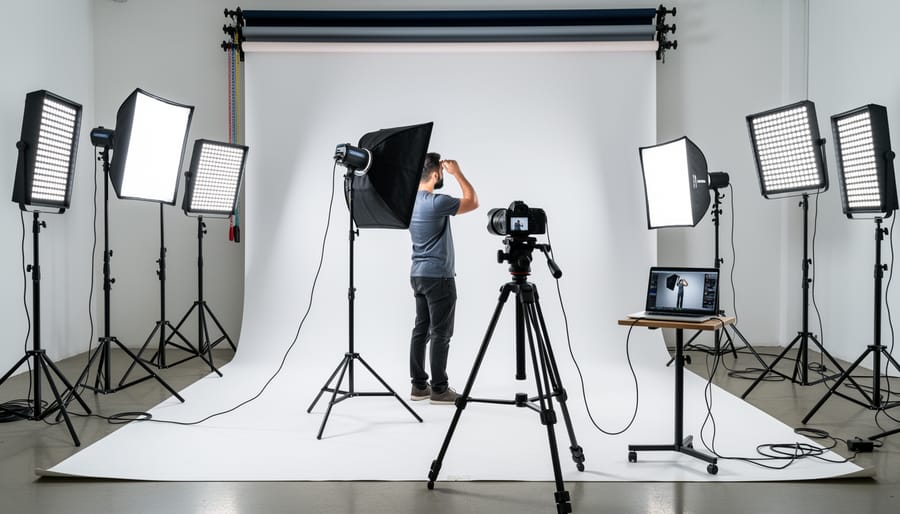
Walk into any photography studio and the lighting tells you everything about the photographer’s understanding of their craft. But here’s what most people miss: the same principles that make or break a professional shoot apply to every space where you work, create, or simply live. Whether you’re setting up strobes for a portrait session or choosing bulbs for your home office, lighting quality directly impacts what you produce and how much you spend doing it.
For photographers, proper lighting means the difference between capturing accurate skin tones and spending hours in post-production fixing color casts. You need consistent color temperature across your workspace, enough output to overpower ambient light when necessary, and the flexibility to adjust intensity without losing color accuracy. Poor lighting doesn’t just compromise your images, it forces you to work harder, limits your creative options, and can make critical editing decisions nearly impossible.
Beyond the creative side, lighting represents a substantial ongoing cost. Traditional incandescent and fluorescent solutions drain energy and require constant replacement, particularly in studios where lights run for extended sessions. The shift to LED technology has fundamentally changed this calculation. Modern LEDs deliver the color accuracy photographers need while using a fraction of the power, making them practical for both intensive studio work and everyday spaces.
The Canada LED lighting market’s growth from $1820 million in 2024 to a projected $2640 million by 2029 reflects a simple reality: once photographers and homeowners understand the performance and cost advantages, switching becomes inevitable. This isn’t just about saving money. It’s about working with tools that match professional standards without the professional power bill.
Key Factors When Choosing Lighting Solutions
Light Quality and Color Accuracy
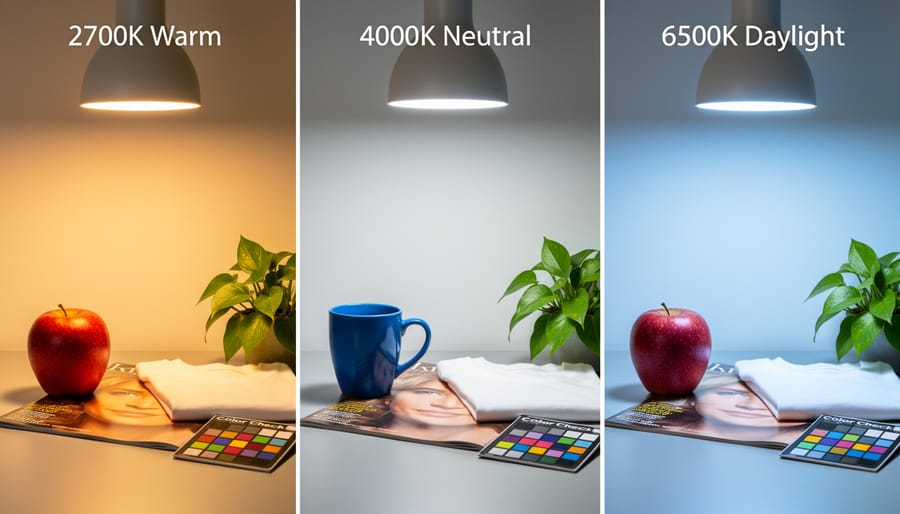
For photography work, the color rendering index (CRI) tells you how accurately a light source shows true colors compared to natural daylight. Professional photographers need bulbs with a CRI of 90 or higher to ensure skin tones, product colors, and scene details appear authentic in-camera and during editing. A low-CRI bulb might make a red sweater look brownish or flatten the subtle tones in a portrait, forcing you to correct color casts in post-production.
Color temperature, measured in Kelvin, sets the mood and accuracy of your lighting. Warm lighting (2700K, 3000K) creates a cozy, golden glow suitable for lifestyle shots and residential spaces, while cool lighting (5000K, 6500K) mimics daylight and works well for product photography, studio portraits, and task-focused workspaces where color precision matters. Neutral white (3500K, 4100K) splits the difference, offering versatility for mixed-use areas like home offices that double as shooting spaces.
Photographers often keep bulbs at different color temperatures on hand, switching them out depending on the creative brief or matching the ambient light in a location. Consistency matters more than any single temperature: mixing warm and cool sources in the same frame creates competing color casts that complicate white balance and waste time in editing.
Energy Efficiency and Long-Term Costs
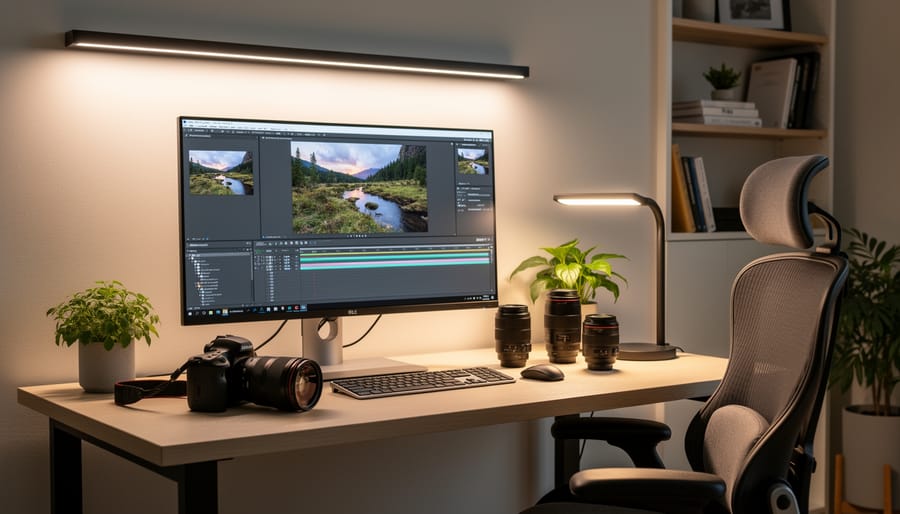
LEDs slash energy bills while delivering superior performance for photography work and everyday lighting. Upgrading from traditional incandescent or fluorescent bulbs to LEDs cuts energy consumption by up to 75%, translating to measurable savings month after month. A 60-watt incandescent bulb replaced with a 15-watt LED delivers equivalent brightness while using a quarter of the electricity.
The math gets compelling over time. If you light a photography studio or home office eight hours daily, that single LED bulb saves roughly 130 kilowatt-hours annually compared to its incandescent predecessor. Multiply that across multiple fixtures, and you’re looking at hundreds of dollars saved over the bulb’s lifespan. Factor in that LEDs last 25 times longer than traditional bulbs, often reaching 50,000 hours, and you’re also eliminating frequent replacement costs and the hassle of changing bulbs on ladders.
The market reflects this shift. Canada’s LED lighting market reached $1,820 million in 2024 and is projected to grow to $2,640 million by 2029, driven largely by photographers and homeowners recognizing the long-term value proposition.
Lifespan and Maintenance Requirements
LED bulbs deliver exceptional longevity, lasting 10,000 to 50,000 hours depending on quality and usage patterns, about 25 times longer than traditional incandescent bulbs. For a photography studio operating lights 8 hours daily, a quality LED might run 17 years before needing replacement, compared to replacing incandescent bulbs every few months. This extended lifespan transforms maintenance planning: you’ll spend far less time on ladder duty swapping bulbs and more time actually shooting.
In busy commercial studios where consistent lighting is non-negotiable, this reliability matters enormously. Home photographers benefit too, especially in spaces like darkrooms or editing suites where stable, predictable lighting supports color-critical work. The upfront cost of LEDs gets absorbed quickly when you factor in replacement frequency, and you avoid the workflow disruption of sudden bulb failures mid-shoot. LEDs also maintain consistent output throughout their lifespan, unlike fluorescents that dim noticeably as they age.
Smart Features and Control Options
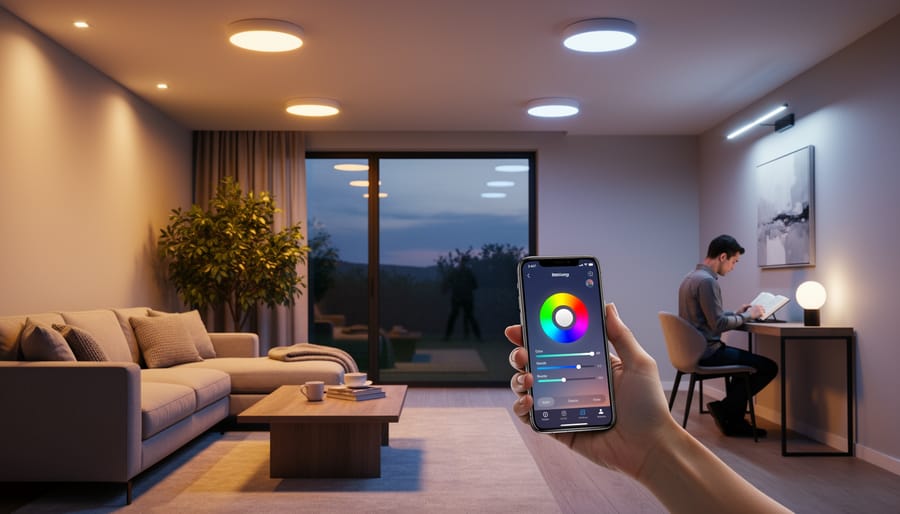
Smart lighting brings unprecedented control to photography studios and home spaces, letting you adjust brightness, color temperature, and even create preset scenes through apps or voice commands. You’ll face a key decision: smart bulbs or smart switches. Smart bulbs offer the most flexibility with per-bulb color control and dimming, perfect for photographers who need precise adjustments during shoots. They integrate directly with Alexa, Google Assistant, or Apple HomeKit, giving you voice control without touching a wall switch.
Here’s the catch: smart bulbs need constant power to maintain their wireless connection. If someone flips the physical wall switch off, your smart bulb becomes a regular dumb bulb until you flip it back on. You lose all app control and automation. This matters in shared studio spaces or homes where others might habitually use wall switches.
Smart switches solve this problem by replacing the wall switch itself, keeping power flowing to standard LED bulbs while giving you smart control. They’re ideal for rooms with multiple bulbs you want to control together, and they work even when you replace bulbs. The trade-off? You lose individual bulb color control and typically can’t achieve the same granular adjustments photographers need for creative lighting setups.
Brightness and Adjustability
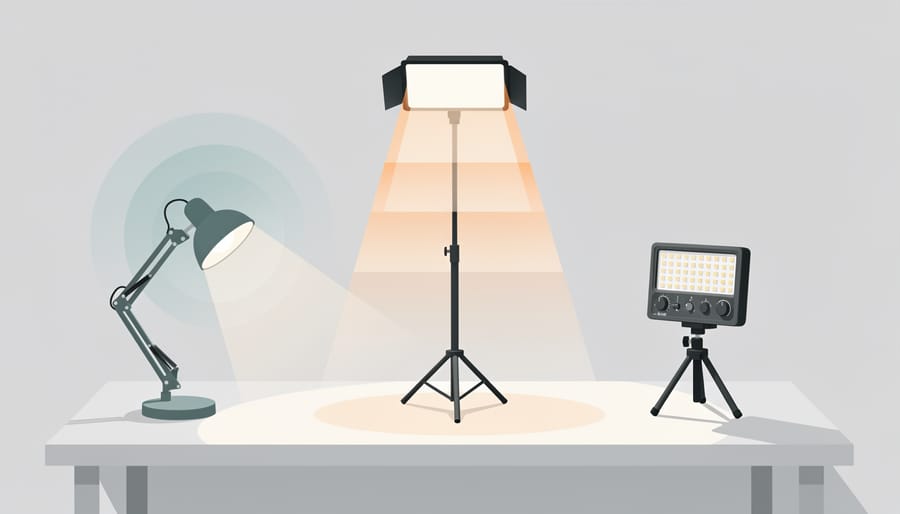
Understanding brightness measurement is essential for selecting the right lighting. Lumens measure actual light output, not watts, which only indicate energy consumption. For photography work, you’ll need different lumen levels depending on the task: 800 to 1100 lumens work well for general studio ambient light, while key lighting setups often require 1600 lumens or higher. Dimming capabilities give you control over lighting ratios and mood, critical for portrait work and product photography where subtle adjustments change the entire feel of an image. Adjustable brightness also matters for different room types in your home. A bedroom benefits from low-lumen, dimmable options for relaxation, while your editing room needs consistent, higher-output lighting to evaluate color and exposure accurately. Look for bulbs that dim smoothly without flickering, as flicker creates problems both during shoots and when reviewing footage. The ability to dial brightness up or down transforms a single lighting solution into multiple tools.
Types of Lighting Solutions Compared
LED Technology
LED technology has transformed how photographers approach studio-quality lighting offering precise control and remarkable efficiency that traditional bulbs can’t match. These lights reduce energy consumption by up to 75% compared with incandescent or fluorescent options, which matters both for your electricity bill and for keeping a studio comfortable during long shoots.
The lifespan alone makes LEDs worth the investment. They run for 10,000 to 50,000 hours, about 25 times longer than traditional bulbs. That means fewer interruptions to replace burned-out lights mid-session and lower maintenance costs over time.
For photographers, LEDs deliver consistent color temperature across their lifespan, unlike fluorescents that shift as they age. This consistency means you spend less time correcting white balance in photo editing techniques later. Modern LED options include high CRI ratings (90+) that render skin tones and product colors accurately, which is critical for commercial work.
LEDs also run cool, reducing heat buildup in enclosed spaces, a real benefit during portrait sessions where subjects need to stay comfortable under continuous lighting.
Incandescent and Fluorescent Alternatives
While many photographers have moved to modern LED systems, incandescent and fluorescent bulbs haven’t disappeared entirely. Some photographers keep incandescent bulbs for specialty work requiring continuous-spectrum light that matches film-era color profiles, though this is increasingly niche as digital sensors and post-processing tools improve. Tungsten fixtures still appear in some vintage studio setups, valued for their warm, predictable color rendering in very specific creative contexts.
The reality is that most photographers and homeowners are abandoning these older technologies for practical reasons. Incandescent bulbs waste roughly 90% of their energy as heat rather than light, creating uncomfortable studio conditions and driving up cooling costs. Fluorescent tubes offer better efficiency but introduce flicker issues that interfere with high-speed photography, and their cool, sometimes harsh color cast requires correction work that slows down your workflow. Neither technology integrates with the smart control systems that pro-level gear increasingly demands.
The verified 75% energy reduction when switching to LEDs makes the financial case clear, especially for photographers running studio lighting multiple hours daily. Factor in the frequent bulb replacements traditional options require, and the transition becomes obvious for anyone prioritizing both image quality and operating costs.
Smart Lighting Systems
Smart lighting systems transform how photographers control their workspace by bringing together bulbs, switches, and smartphone apps into a unified ecosystem. The core choice is between smart bulbs, which contain built-in Wi-Fi or Bluetooth, and smart switches that control standard bulbs. Smart bulbs offer individual control and color adjustment through apps like Philips Hue or Govee Home, letting you save custom lighting scenes for portrait work versus product photography. You can adjust color temperature from warm 2700K for lifestyle shots to cool 5000K for detail work, all without leaving your camera position.
The practical trade-off matters: smart bulbs lose all functionality when someone flips the physical wall switch off, which can frustrate family members in shared spaces. Smart switches solve this by keeping the switch operational while adding app and voice control, but you sacrifice per-bulb color adjustment. Many photographers use smart bulbs in dedicated studio spaces where switch control stays consistent, then rely on smart switches for editing rooms and hallways.
Integration with Alexa or Google Assistant means voice commands like “set studio to daylight” during shoots, while scheduling features automatically warm your editing space in evening hours to reduce eye strain.
General Service Lamps
General service lamps remain the foundational lighting choice for photography studios and home spaces, delivering reliable illumination without the complexity of smart features. These standard LED bulbs, typically A19 models with E26 bases, provide the ambient fill light that balances harsh shadows in shooting spaces while offering efficient general workspace lighting.
For photographers, general service lamps work best as background illumination rather than key lighting. Position them in ceiling fixtures to create even ambient light that reduces contrast ratios during shoots, or use them in desk lamps and work areas where you’re reviewing contact sheets and managing equipment. The consistent output and wide beam angles make them ideal for storage rooms and hallways where you need visibility but not specialized lighting control.
Modern general service LEDs meet strict efficiency standards, delivering 800 to 1600 lumens while consuming just 8 to 16 watts. This efficiency, up to 75% lower energy use than incandescent equivalents, adds up when you’re lighting an entire studio space. Look for bulbs rated at 10,000 hours minimum, though quality options often reach 25,000 hours, meaning years of maintenance-free operation in spaces you use daily.
Recommendations: Top Lighting Solutions for Different Needs
Best for Smart Photography Studios: Govee Smart Bulbs

The Govee Smart Bulbs stand out as a versatile solution for photographers who need flexible lighting control in their studio spaces. With a 4.6 out of 5 rating from over 17,000 customer reviews, these bulbs have earned consistent praise for their performance and reliability in real-world use.
The 800-lumen output provides enough brightness for general studio ambient lighting and background fill, though you’ll likely still want dedicated strobes or continuous lights for primary subject illumination. Where these bulbs really shine is in their smart capabilities: full integration with Alexa and Google Assistant means you can adjust lighting without leaving your shooting position, and the vibrant color options let you quickly dial in mood lighting or colored backgrounds for creative shots.
- 800 lumens of adjustable brightness for studio ambient and fill lighting
- Compatible with Alexa and Google Assistant for voice control during shoots
- Vibrant color palette for creative background and mood lighting effects
- Standard E26 base fits most fixtures in studios and home offices
- Four-pack configuration provides consistent lighting across multiple fixtures
The four-pack setup is particularly practical for studio work. You can outfit multiple overhead fixtures or desk lamps with identical bulbs, ensuring consistent color temperature and brightness across your workspace. This matters more than you might think: mismatched lighting creates editing headaches and makes it harder to evaluate your work accurately on screen.
One limitation to remember is that smart bulbs need to stay powered at the wall switch to maintain their smart functionality. If you flip the physical switch off, you lose app and voice control until you turn it back on. For studio use, this usually isn’t a problem since you’ll control the bulbs through your phone or voice commands. But if other people share the space and habitually use wall switches, consider labeling them or opting for a smart switch setup instead.
The E26 base means these bulbs work in standard light fixtures, and the four-pack value makes it cost-effective to upgrade multiple fixtures at once rather than buying bulbs individually.
Room-by-Room Lighting Strategy
Different spaces demand different lighting approaches. Your photography studio needs bright, color-accurate light for shooting and client meetings, while your editing room requires softer, consistent illumination that won’t strain your eyes during long sessions. Getting this right means matching the lighting technology to what you’re actually doing in each space.
Start with your main shooting area. This is where color accuracy matters most, so prioritize LEDs with a CRI above 90 and adjustable color temperature. You’ll want overhead brightness around 3000-4000 lumens for general coverage, supplemented by dedicated strobes or continuous lights for actual shoots. The Govee smart bulbs work well here because you can dial in different color temperatures throughout the day without switching bulbs.
Your editing room needs a different setup entirely. Target neutral white light around 5000K to 5500K that matches your monitor calibration. Skip the smart color features here and focus on consistent, flicker-free LEDs that won’t create color casts. Install dimmer switches so you can reduce brightness for evening work without shifting the color temperature.
Storage and equipment areas often get overlooked, but proper lighting here protects your investment. Bright, cool white LEDs make it easier to spot dust on lenses and organize your gear essentials. Motion-sensor switches make sense here since you’re in and out frequently.
Living spaces benefit from warmer LED options around 2700K to 3000K. This is where smart lighting shows its value beyond photography work. Set schedules that automatically shift from energizing cool white during the day to relaxing warm tones in the evening, reducing your overall energy consumption while creating comfortable spaces.
Common Mistakes to Avoid When Choosing Lighting
Ignoring Color Temperature Consistency
Mixing warm (3000K) and cool (5500K) bulbs across your photography workspace creates the same color cast problems you’d correct in post-processing, except now they’re baked into your shooting environment. Your camera’s white balance can’t compensate for multiple competing light sources, leading to inconsistent skin tones in portraits or color shifts that muddy product photography. Just as you’d use a lens hood to control stray light, maintaining consistent color temperature across all fixtures controls your color palette. Choose one temperature for your entire studio, 5000K to 5500K works well for photography spaces, and stick with it. Label your bulb purchases with their exact Kelvin rating, and replace any outliers immediately. This consistency extends your creative control beyond the camera into the environment itself.
Overlooking Long-Term Energy Costs
A $5 LED bulb might look expensive next to a $1 incandescent, but that initial cost difference vanishes quickly. LEDs reduce energy consumption by up to 75% compared with traditional bulbs, which means a 60-watt incandescent replaced by a 15-watt LED delivers the same brightness while slashing your electricity bill. Over the LED’s 50,000-hour lifespan, you’ll avoid buying 25 replacement incandescent bulbs and save hundreds of dollars in energy costs. For photographers running multiple lights daily in a studio, those savings compound fast, what seems like a premium purchase upfront becomes the budget-friendly choice within months.
Choosing the Wrong Smart Lighting Setup
The most expensive mistake photographers make is buying smart bulbs for every fixture in their studio without considering whether smart switches would serve them better. Smart bulbs offer individual color control and scheduling, perfect for creating specific lighting moods during shoots. However, they become “dumb” the moment someone flips the physical wall switch, a frustrating discovery when your assistant kills power to your entire RGB setup mid-session.
Smart switches solve this problem by keeping traditional LED bulbs always powered while controlling them digitally. They work brilliantly for photography studios where you need reliable on/off control and dimming without worrying about accidental switch-offs. The trade-off? You lose per-bulb color customization and can’t create those sunset-to-daylight transitions that smart bulbs enable.
The right choice depends on your workflow. Use smart bulbs in key positions where you actively change colors and temperatures between shoots, your main overhead fixtures or backdrop lighting. Install smart switches in editing rooms, hallways, and storage areas where you simply need convenient control without color adjustments. Many photographers find a hybrid approach works best: smart bulbs where creative control matters, smart switches everywhere else. This combination delivers flexibility without the frustration of accidentally “disconnected” smart bulbs that won’t respond to your app because someone used the wall switch.
What to Look For
When shopping for lighting solutions, start with the practical essentials that directly affect both your photography work and everyday use. Color accuracy matters more than most people realize, look for a high Color Rendering Index (CRI of 90 or above) to ensure your images show true colors and your workspace feels natural. Check the color temperature range; you’ll want options between 2700K (warm) and 6500K (daylight) to match different shooting scenarios and room moods.
Energy efficiency should be non-negotiable. LED options reduce energy consumption by up to 75% compared with traditional bulbs, and with lifespans reaching 50,000 hours, you’ll replace them far less often. Calculate the long-term savings rather than just comparing shelf prices.
For control flexibility, consider whether you need smart features. App-controlled bulbs offer scene customization perfect for photography setups, while smart switches work better for rooms where you want traditional switching. Our LED buying guide covers these technical specifications in depth.
Finally, verify the base type (E26 is standard in North America) and lumen output, 800 lumens works for most spaces, but larger studios may need 1100+ lumens per fixture.
Frequently Asked Questions
Photographers and homeowners shopping for lighting solutions often have similar questions about performance, compatibility, and long-term value. Here are the answers to the most common concerns that come up when choosing between different lighting options.
How long do LED bulbs actually last?
LEDs typically last anywhere from 10,000 to 50,000 hours depending on quality and usage patterns, which is about 25 times longer than traditional bulbs. For a photography studio running lights 8 hours daily, even a mid-range 25,000-hour LED would last over 8 years.
How much money will I save by switching to LED lighting?
Upgrading to LED solutions can reduce energy consumption by up to 75% compared with traditional incandescent or fluorescent lights. The exact savings depend on your current setup and usage hours, but most photographers see the investment pay for itself within the first year through lower electricity bills.
Will smart bulbs work with my existing photography equipment?
Smart bulbs with standard E26 bases fit into regular light fixtures and don’t interfere with camera equipment or wireless triggers. However, remember that smart bulbs need constant power to maintain their smart features, so you can’t use traditional wall switches to turn them off without losing app control and scheduling functions.
Can I mix different color temperatures in my photography studio?
Mixing color temperatures creates inconsistent lighting that makes color correction difficult in post-processing. Choose one color temperature for your main working area (typically 5000K-5500K for photography work) and stick with it across all your primary lights to maintain accurate color rendering.
These questions reflect the practical concerns that come up when photographers evaluate their lighting investments. The LED market’s projected growth to $2640 Million by 2029 in Canada alone shows that more professionals are making the switch based on these performance and cost factors. When you’re comparing options, focus on verified specifications like actual lumen output and rated lifespan rather than marketing claims, and consider how the lighting will integrate with your existing workflow and equipment setup.
Choosing the right lighting solution comes down to balancing three core priorities: the quality your photography work demands, the efficiency your budget appreciates, and the control features that fit your workflow. Modern LED technology delivers on all three fronts, offering the color accuracy and adjustability that studio work requires while cutting energy costs by up to 75% compared with older bulbs.
The market’s rapid growth, projected to expand from $1,820 million in 2024 to $2,640 million by 2029, reflects what photographers and homeowners have already discovered: LED investments pay for themselves through lower electricity bills and decades of maintenance-free performance. Whether you’re outfitting a photography studio with smart bulbs for scene-specific control or upgrading general service lamps throughout your workspace, the upfront cost is offset by 50,000-hour lifespans and dramatically reduced power consumption.
Start with your most critical spaces first. Prioritize areas where lighting directly affects your creative output or daily productivity, then expand to general spaces as budget allows. The technology has matured, the selection is vast, and the long-term savings make this an upgrade you won’t regret.
Full transparency: this article contains affiliate links. We may be paid a commission if you make a purchase. As an Amazon Associate I earn from qualifying purchases.
 By
By