 By
By 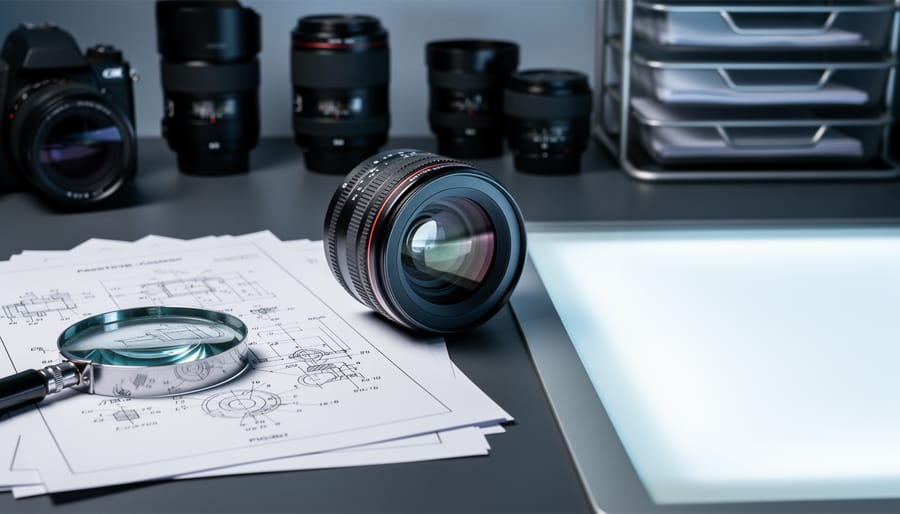
The U.S. Patent and Trademark Office has quietly transformed how photographers can access imaging technology patents, with substantially improved image resolution and streamlined retrieval tools now available across millions of historical and recent filings. For anyone tracking camera innovation, lens designs, or sensor breakthroughs before manufacturers announce them, these upgrades mean you can now study detailed patent drawings and technical schematics with unprecedented clarity.
Patent images have long served as a crystal ball for photography enthusiasts eager to spot the next autofocus breakthrough, computational photography technique, or mirrorless body design. Canon’s eye-tracking patents, for instance, appeared in filings years before the technology reached consumer cameras. But until recently, accessing these documents meant wrestling with low-resolution scans, fragmented archives, and search interfaces built for patent attorneys rather than photographers curious about where the industry is heading.
The changes matter because they democratize technical intelligence. When Nikon files a patent for a new Z-mount lens configuration or Sony explores stacked sensor architectures, the accompanying diagrams now render clearly enough to examine optical path designs, element groupings, and mechanical layouts. You’re no longer squinting at pixelated PDFs hoping to distinguish a glass element from a housing component.
This guide walks through what changed in patent image availability, how to retrieve high-quality schematics efficiently, and which current patent trends reveal where camera makers are investing their engineering resources for the next product cycle.
What Changed: New Access and Quality Standards for US Patent Images
The USPTO rolled out significant improvements to its patent image system in late 2025, with full implementation completed by January 2026. These changes fundamentally altered how photographers and technology researchers can access and analyze imaging patents, addressing long-standing frustrations with poor image quality that made examining optical diagrams and sensor layouts nearly impossible.
The resolution upgrade represents the most immediately visible change. Patent drawings now render at 300 DPI minimum, with many technical diagrams available at 600 DPI for complex optical systems. This matters enormously when you’re trying to trace light paths through a lens assembly or count the individual elements in a new telephoto design. The old 200 DPI standard left critical details fuzzy or illegible, particularly in dense figures showing sensor pixel arrangements or phase-detection autofocus point configurations.
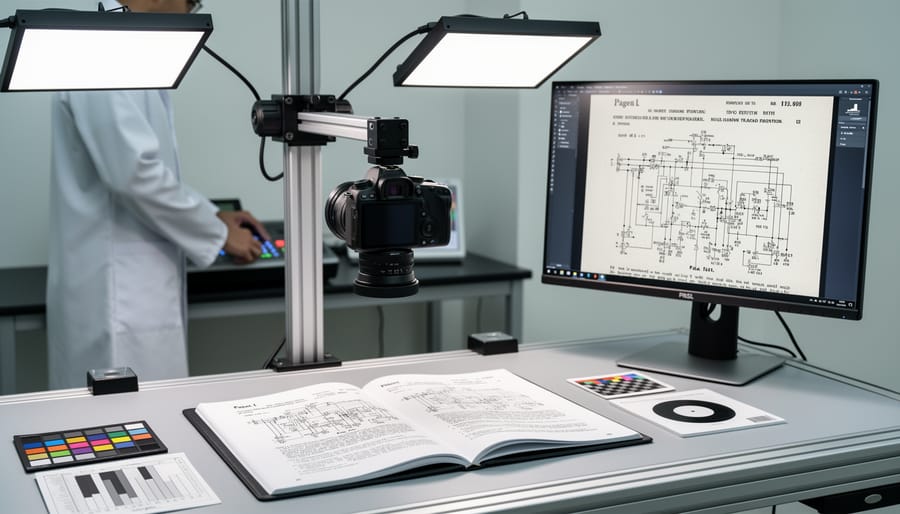
Behind the scenes, the USPTO modernized its entire image storage and delivery infrastructure. The aging TIFF-based system gave way to a hybrid architecture supporting both legacy formats and modern compressed formats without quality loss. Load times dropped substantially, making it practical to review dozens of related patents in a single research session rather than waiting through frustrating page loads.
Search capabilities received equally important enhancements. New classification filters let you isolate imaging-specific patents by CPC codes (like G03B for cameras or H04N for electronic imaging), while bulk export tools allow downloading complete image sets from a manufacturer’s patent portfolio. These weren’t flashy announcements but quiet infrastructure investments that triggered the improvements photographers and camera analysts had requested for years.
Key Developments in Patent Image Infrastructure
1. High-Resolution Image Archives Now Standard
Until early 2026, anyone trying to examine patent drawings for optical innovations faced a frustrating reality: most images in the USPTO database were grainy, low-resolution scans that turned lens element diagrams into guesswork. Fine details, critical for understanding how a new autofocus mechanism worked or how sensor layers were arranged, were often illegible.
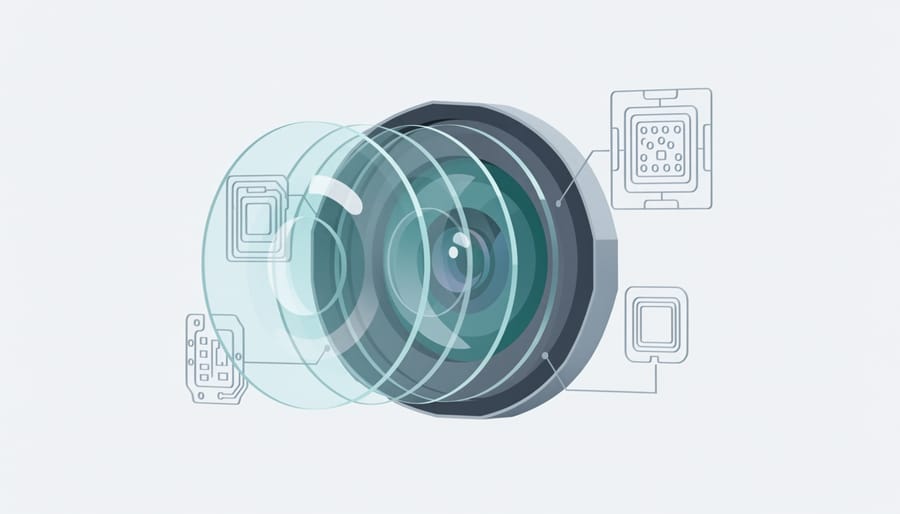
That changed when the USPTO implemented a 300 DPI scanning requirement for all newly filed patent images and began retroactively upgrading archived drawings. The difference is immediate. Where you once squinted at blurry cross-sections of a mirrorless mount design, you can now zoom into individual lens elements, trace light paths through aspherical surfaces, and read dimension callouts that were previously smudged beyond recognition.
For photographers tracking innovation, this shift is practical gold. High-resolution patent images let you analyze the mechanical layout of in-body stabilization systems, identify how manufacturers are stacking phase-detection points across a sensor, or spot the telltale signs of a new image processor architecture before any official announcement. When Sony files a patent showing a novel on-chip memory configuration, you can now see the actual circuit topology rather than a pixelated blob.
The improved clarity also makes historical research viable, comparing how Canon’s dual-pixel autofocus evolved from early patents to current implementations becomes straightforward when every diagram renders crisply.
2. Streamlined Image Retrieval for Technology Researchers
The USPTO’s modernized search infrastructure introduced in late 2025 now includes targeted filters that technology researchers previously had to implement through third-party tools or manual workflows. The updated Patent Public Search platform lets users isolate image-heavy filings by classification code, particularly useful for camera and optics patents falling under H04N (pictorial communication) and G02B (optical elements) categories. You can filter results by drawing complexity, number of figures, and even specific assignee combinations, which streamlines the process of monitoring Canon’s latest autofocus mechanisms or tracking Sony’s sensor innovations without wading through unrelated filings.
Bulk download functionality represents the most significant practical improvement for researchers tracking multiple manufacturers simultaneously. Instead of downloading patent images one filing at a time, you can now export entire result sets with their associated drawings in a single compressed archive. The system preserves original file naming conventions and includes metadata spreadsheets that map each image to its corresponding patent number and filing date.
For developers and institutional researchers, the newly documented Patent Image API offers programmatic access to high-resolution drawings. This allows automated monitoring of specific technology areas, setting up alerts when Nikon files a patent containing lens element diagrams exceeding certain complexity thresholds, for example, or tracking the frequency of computational photography-related filings across all major imaging manufacturers. The API documentation includes Python and JavaScript examples specifically designed for research workflows.

3. Historical Patent Image Digitization Projects
The USPTO’s ongoing digitization efforts have transformed access to pre-2000s imaging patents, converting decades of yellowed microfiche and low-quality scans into crisp, readable documents. These projects specifically target optical and imaging technology patents filed between 1970 and 2000, a period that saw fundamental innovations in modern photography but whose documentation remained trapped in analog formats until recently.
The digitization initiative has prioritized patents containing technical drawings that were previously illegible in older scanned versions. For imaging technology researchers, this means patents covering foundational autofocus systems from the 1980s, early image stabilization designs from the 1990s, and the first computational photography concepts from the late 1990s can now be examined with the same clarity as current filings. You can trace the lineage of today’s phase-detection autofocus by reviewing Canon and Nikon patents from 1985-1995 that were previously too blurry to analyze in detail.
Key patent categories now available in high resolution include:
- Optical design patents showing lens element configurations and aspherical grinding techniques
- Sensor technology patents documenting early CCD architecture and photodiode layouts
- Stabilization systems patents revealing gyroscopic and optical shift mechanisms
- Autofocus mechanisms patents detailing phase-detection arrays and contrast-detection algorithms
- Computational imaging patents covering early multi-frame processing and noise reduction methods
These newly accessible historical records let photographers understand that many “revolutionary” features announced today actually evolved from concepts filed two or three decades ago. The improved image quality reveals cross-licensing patterns and shows which manufacturers pioneered specific approaches, giving context to current competitive advantages in mirrorless cameras and smartphone imaging.
Why This Matters for Photographers and Camera Enthusiasts
Better patent image access transforms how you research gear before manufacturers even hint at new features. When Canon filed a patent in 2017 showing a dual-pixel autofocus system with expanded coverage areas, careful observers could predict the EOS R’s autofocus capabilities two years before launch. Similarly, Sony’s 2019 patents detailing stacked sensor architectures with integrated memory clearly telegraphed the a1’s breakthrough readout speeds long before any feature hype began.
High-resolution patent drawings let you analyze optical formulas, count lens elements, trace light paths, and spot genuinely new approaches to old problems. A patent showing redesigned stabilization gyroscopes or novel phase-detection arrangements tells you what’s technically feasible before marketing teams shape the narrative. This matters when planning your next purchase especially if you’re deciding whether to buy now or wait for the next generation.
Patent images also clarify what’s technologically ready versus what’s aspirational. Understanding patent battles over specific sensor technologies or autofocus methods helps you see which manufacturers hold key advantages and which are working around competitors’ IP. When Nikon’s patents show adaptive autofocus algorithms similar to Canon’s but using different mathematical approaches, you’re seeing real-time evidence of design-around strategies that will shape product differentiation.
Beyond individual purchases, tracking patent images reveals industry direction. The recent surge in computational optics patents, where multiple lens elements work with processing algorithms, shows where mirrorless design is headed regardless of brand. Improved image quality in USPTO archives means you can now study these trends with the same clarity engineers use internally, giving enthusiasts unprecedented insight into what’s coming before camera gear supply chains even ramp up production.
What to Watch: Imaging Industry Trends Visible in Recent Patents
The improved image quality in 2026 patent filings reveals several emerging trends that signal where camera technology is headed. High-resolution diagrams now make it easier to spot recurring design elements across multiple manufacturers, giving photographers early insight into features likely to appear in consumer products within the next few years.
Computational optics patents have surged noticeably. Instead of traditional multi-element lens designs, recent filings show optical systems paired with sophisticated image processing algorithms that correct aberrations digitally. Canon and Sony patents filed in late 2025 and early 2026 detail lens assemblies with fewer physical elements than their predecessors, relying on computational correction for edge sharpness and chromatic aberration control. This suggests upcoming lenses that are lighter and potentially more affordable, though image quality will depend heavily on processing power.
Multi-sensor array designs appear frequently in 2026 filings from both established brands and startups. These patents show camera bodies housing multiple sensors with different characteristics: one optimized for resolution, another for low-light sensitivity, and sometimes a third for speed. The detailed drawings reveal how manufacturers plan to merge these captures seamlessly. If these designs reach production, photographers could see cameras that deliver 60-megapixel stills and clean ISO 102400 performance from the same body, eliminating the traditional resolution-versus-sensitivity trade-off.
AI-assisted autofocus patents have evolved beyond simple subject recognition. Recent diagrams depict autofocus systems that predict subject movement patterns, pre-focus on likely positions, and adjust tracking algorithms based on shooting context. Patents from Nikon and Fujifilm show neural network integration directly into autofocus modules rather than relying solely on general-purpose processors. This points toward autofocus that adapts to individual shooting styles and anticipates action more accurately than current systems.
Miniaturization techniques dominate patents for mirrorless bodies and compact cameras. Engineers are filing designs for folded optical paths, stacked sensor architectures, and ultra-compact stabilization mechanisms. One recurring pattern shows full-frame sensors in bodies barely larger than current APS-C cameras. For street photographers and travelers who prioritize portability, these patents suggest genuinely pocketable full-frame options may arrive by 2027 or 2028, not as concept products but production cameras with competitive specifications.
Frequently Asked Questions
How do I search USPTO patent images specifically for camera technology?
Start at or the USPTO’s PatFT database and use specific terms like “lens element,” “image sensor,” “autofocus actuator,” or manufacturer names combined with “optical” or “imaging.” The classification code G02B (optical elements) and H04N (image communication) will narrow results to photography-related patents.
Are patent images free to access?
Yes, all US patent images are in the public domain and freely accessible through the USPTO and Google Patents. You can view, download, and analyze them without fees or licensing restrictions.
Can I tell if a patented feature will actually make it to production?
Not with certainty, patents represent ideas manufacturers are protecting, not guaranteed products. However, patents filed by multiple engineers, with detailed implementation drawings, or followed by continuation patents often indicate serious development effort rather than defensive filing.
What resolution are the new patent images?
Recent patents now include images at 300 DPI or higher, a significant improvement from the previous 200 DPI standard. This makes technical diagrams, optical ray paths, and component annotations clearly readable when zoomed.
The shift to higher-resolution patent images removes a longstanding frustration for anyone trying to decipher complex optical designs or sensor architectures. Previously, important details like aspherical surface profiles or coating layer sequences were often illegible in compressed scans, forcing researchers to request physical copies or work from blurry enlargements.
For imaging industry research, this FAQ addresses the most common barriers newcomers face when exploring patent databases as a tool for tracking technology development. Once you become familiar with the search syntax and understand that not every filing becomes a shipping product, patent images transform into an early-warning system for where Canon’s RF mount, Sony’s computational imaging, or Nikon’s Z-mount lenses are headed next. The combination of improved image quality and broader digitization coverage makes 2026 an ideal time to incorporate patent research into your gear-watching routine.
The improved access to high-resolution US patent images gives photographers and camera enthusiasts a powerful tool for tracking industry innovation before products hit the market. Better search capabilities, clearer technical drawings, and digitized historical archives make it easier than ever to spot emerging trends in computational optics, autofocus systems, and sensor technology. Whether you’re researching a potential gear purchase or simply curious about where camera technology is headed, patent databases now offer practical insights that were previously difficult to extract from low-quality scans.
We’ll continue monitoring these developments at Out of Focus, bringing you the most significant imaging industry patent discoveries and explaining what they mean for your photography.




 By
By