 By
By 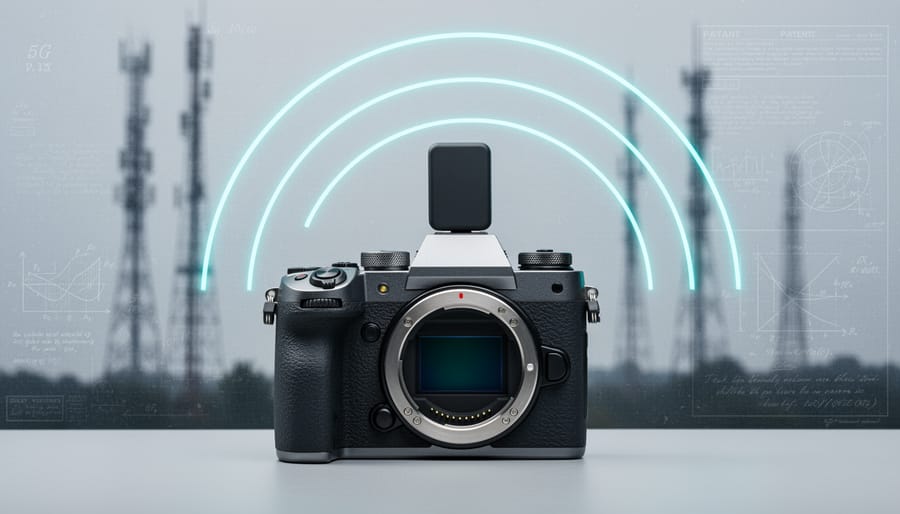
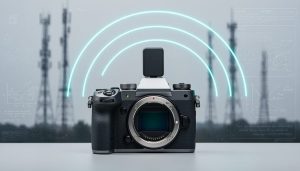
The 5G patent landscape shifted significantly in 2026, forcing camera manufacturers to navigate new licensing fees, cross-licensing agreements, and legal challenges that directly affect whether your next mirrorless body will include cellular connectivity. If you’re tracking why some brands can offer built-in 5G transmission while others remain tethered to Wi-Fi, the answer lies in a complex web of standard-essential patents controlled by telecommunications giants, not the camera companies themselves.
Recent developments have changed the cost calculus for integrating 5G into imaging devices. Patent pools have restructured their royalty terms, several major lawsuits have reached settlement, and regulatory bodies have stepped in to clarify fair licensing practices. These shifts explain why some manufacturers suddenly announced 5G-enabled cameras while others quietly canceled planned models.
For photographers and buyers, these patent dynamics translate into real-world consequences: the features you get, the prices you pay, and which brands can compete in the connected imaging space. A US patent update earlier this year highlighted broader intellectual property changes affecting the industry, but 5G-specific patents carry unique complications because they span telecommunications standards, not just imaging technology. Understanding the current state of 5G patent licensing helps you anticipate which connectivity options will be available in your next camera purchase and why certain features carry premium pricing.
What Changed: Recent 5G Patent Developments in Imaging
The imaging industry’s 5G patent landscape shifted significantly in early 2026 when three major camera manufacturers joined established telecommunications patent pools, marking the first widespread adoption of 5G licensing frameworks by traditional imaging companies. This move followed months of uncertainty around royalty rates and standard-essential patent requirements that had previously deterred smaller manufacturers from integrating cellular connectivity.
Patent litigation intensified in parallel, with notable disputes emerging between smartphone makers and dedicated camera brands over wireless image transfer protocols. These cases centred on whether certain implementations of instant cloud backup and remote camera control systems infringed existing 5G patents originally filed for mobile devices. The outcomes will likely determine how freely camera makers can implement wireless features without facing costly licensing fees or redesigns.
New patent applications paint an intriguing picture of where the technology is headed. Several imaging sensor manufacturers filed patents for chips with embedded 5G modules rather than separate wireless components, potentially reducing size, power consumption, and the complexity of licensing arrangements. These filings suggest the industry is moving toward treating connectivity as a core sensor feature rather than an add-on, which could reshape both camera design and the intellectual property strategies surrounding it.
The timing matters because many foundational 4G patents are expiring, creating both opportunities and uncertainties. Manufacturers must navigate a transition period where older wireless standards remain common while 5G infrastructure expands globally at uneven rates.
1. Major Camera Manufacturers Join 5G Patent Pools
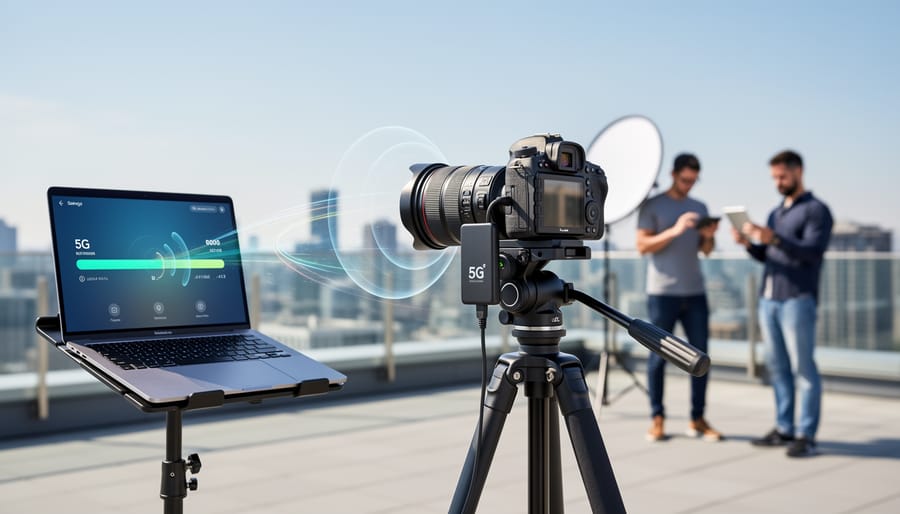
Leading camera manufacturers have moved decisively into 5G patent licensing pools over the past year, marking a fundamental shift in how imaging companies approach wireless connectivity. Rather than develop proprietary systems or negotiate individual licenses with multiple patent holders, brands like Canon, Nikon, Sony, and Panasonic are joining collaborative licensing frameworks that bundle thousands of essential 5G patents under standardized terms.
A patent pool is essentially a collective licensing arrangement where multiple patent owners agree to license their technologies together as a package. Think of it like a streaming bundle: instead of subscribing to ten different services individually, you get access to everything through one agreement at a fixed rate. For camera manufacturers, this means paying into a pool managed by organizations like Avanci or Via Licensing, which handle the complex web of intellectual property owned by telecom giants such as Qualcomm, Nokia, Ericsson, and Huawei. These pools reduce legal risk, accelerate product development, and make 5G integration economically feasible for companies whose core expertise is optics and imaging sensors, not wireless protocols.
The recent wave of participation focuses on specific connectivity capabilities that photographers have long demanded:
- Canon: targeting instant RAW file transfer from mirrorless bodies to cloud storage during shoots
- Sony: developing real-time 4K video streaming directly from Alpha cameras to broadcast systems
- Nikon: enabling remote camera control and live view over 5G for wildlife and sports photography
- Panasonic: integrating 5G into cinema cameras for on-set collaboration and immediate footage review
- Fujifilm: exploring 5G-connected medium format systems for tethered studio workflows without cables
This coordinated approach matters because it signals industry-wide commitment to connectivity as a core feature rather than an afterthought. When major manufacturers share licensing infrastructure, they can standardize implementation, reduce per-unit costs, and focus R&D budgets on user experience instead of legal navigation. For photographers, the practical outcome is cameras that treat wireless transfer as reliably as shutter actuation, with speeds measured in seconds for full-resolution files instead of minutes over Wi-Fi. Patent pools eliminate the scenario where one manufacturer’s 5G camera faces injunctions or import bans due to licensing gaps, ensuring the technology reaches market on predictable timelines.
2. Patent Disputes Over Wireless Image Transfer Technology

Recent courtroom battles over 5G wireless transfer patents have put several camera launches on hold and forced manufacturers to rethink how they implement instant image transmission. In early 2026, a consortium of telecommunications patent holders filed suit against three major imaging brands, claiming their wireless RAW transfer systems infringed on protected 5G protocols. The disputes centre on whether camera-specific implementations of 5G connectivity fall under existing telecom licenses or require separate imaging-industry agreements.
The practical fallout hit photographers quickly. One anticipated mirrorless camera featuring direct-to-cloud RAW uploads was delayed by eight months while its manufacturer negotiated new licensing terms. Another brand quietly removed advertised 5G transfer speeds from a flagship model’s specifications before launch, reverting to Wi-Fi 6E to avoid litigation. These aren’t abstract legal squabbles, they directly affect which cameras ship with the connectivity features you need on location.
The core dispute involves how cameras compress and transmit image data wirelessly. Patent holders argue that 5G-enabled instant transfer of high-resolution files uses proprietary encoding methods that go beyond basic connectivity, touching on the same territory as codecs for workflow optimization. Camera manufacturers counter that their systems use standard 5G protocols without modification, making them covered under existing infrastructure licenses.
What makes this particularly messy: some companies that manufacture both cameras and telecommunications equipment sit on both sides of the dispute. Cross-licensing agreements are being renegotiated industry-wide, and until those settle, expect feature uncertainty. Cameras already on the market aren’t affected, but announced connectivity features for upcoming models should be treated as tentative until products actually ship. The litigation is reshaping how manufacturers approach wireless capabilities, with some pivoting to hybrid systems that combine multiple wireless standards to sidestep single-protocol patent exposure.
3. New Patent Filings for 5G-Connected Imaging Sensors
Several imaging giants have filed groundbreaking patent applications in 2026 for sensors that embed 5G connectivity directly at the hardware level, moving beyond the add-on wireless modules photographers currently use. Sony, Canon, and Samsung have each submitted patents describing imaging sensors with integrated 5G chipsets that enable direct cloud transmission without routing through a camera’s processor or external transmitter. These patents outline sensors capable of streaming full-resolution RAW files in real time, allowing remote directors to monitor live shoots from anywhere and enabling instant backup to cloud storage as frames are captured.
The most significant capabilities promised in these filings include low-latency remote camera control, where a photographer could adjust exposure, focus, and framing on multiple cameras simultaneously from a tablet, and seamless integration with IoT ecosystems for automated workflows in studio and event photography. Canon’s patent application specifically describes a sensor that can transmit image data while simultaneously processing the next frame, eliminating the current bottleneck where wireless transfer slows shooting speeds. Sony’s filings focus on power-efficient 5G integration that won’t drastically reduce battery life, addressing one of the major concerns around always-connected cameras.
The innovation race extends beyond traditional camera manufacturers. Qualcomm has filed patents for 5G-enabled image signal processors designed specifically for computational photography, while Huawei’s applications cover sensors that can switch between 5G and Wi-Fi based on bandwidth needs and cost considerations. These patent battles over fundamental 5G sensor technology will determine which companies can offer truly wireless-first cameras and which must license the technology at significant cost. The filings reveal a clear industry direction: imaging sensors are evolving from passive light-capture devices into active, connected nodes in a larger photography ecosystem.
Why It Matters to Photographers and the Industry
These patent developments aren’t just legal fine print. They directly affect the cameras you’ll buy, how you’ll use them, and what you’ll pay.
For professionals shooting events, sports, or news, 5G connectivity means uploading high-resolution images to clients or newsrooms while still on location. No more hunting for Wi-Fi hotspots or tethering to a phone. A wedding photographer can deliver highlight shots to social media before the reception ends. A wildlife photographer in a remote area can transmit files for immediate publication without returning to civilization.
The workflow benefits extend beyond transfer speeds. Cloud-connected cameras enable real-time backup, so you’re not gambling an entire shoot on a single memory card. Remote camera control becomes practical for dangerous or inaccessible shooting positions. Studios can stream 4K video directly from cameras to editing suites without dedicated hardware.
But patent licensing costs don’t disappear. They get passed to consumers. Camera manufacturers paying royalties to multiple patent pools will build those fees into retail prices. We’ve already seen this with wireless technologies in smartphones. The same camera body might cost $200-$300 more with 5G than without it, splitting product lines between connected and traditional models. This affects not just flagship cameras but also camera gear availability across price tiers as manufacturers decide which models justify the licensing investment.
For enthusiasts, the question becomes whether you need always-on connectivity or if occasional Wi-Fi transfers suffice. Patent-driven feature segmentation may force that choice sooner than you’d like, reshaping what’s available at your budget.
What to Watch: The Future of 5G in Cameras
Several factors will shape how 5G connectivity evolves in cameras over the next few years, though specific timelines remain uncertain as negotiations and technology development continue behind closed doors.
The patent landscape itself is in flux. While foundational 5G patents began entering the market around 2019, many key patents won’t expire for another decade. However, licensing terms often get renegotiated as the technology matures and more manufacturers adopt it. Camera companies that initially opted out of patent pools may join as costs stabilize and the competitive disadvantage of lacking 5G becomes clearer.
On the technology side, watch for these developments:
- Integration of 5G modules directly into imaging sensors rather than as separate components, reducing power consumption and camera body size
- Expanded mmWave frequency support for ultra-high-speed transfers at sporting events and studios with dedicated infrastructure
- Patent filings around AI-powered connectivity that automatically selects optimal wireless protocols based on shooting conditions
- Licensing agreements that bundle 5G with Wi-Fi 7 patents, potentially offering manufacturers better terms for comprehensive wireless capabilities
- Standardization efforts that could reduce patent royalty stacking, where manufacturers pay multiple parties for overlapping technology
The real inflection point will come when mid-range cameras routinely include 5G rather than reserving it for flagship models. That shift depends heavily on licensing costs dropping and chipsets becoming commodity components. Patent pool expansions and cross-licensing deals between imaging and telecom companies will signal that transition is underway.
Common Questions About 5G Patents in Imaging
Will 5G patent licensing make cameras more expensive?
Yes, but not dramatically. Manufacturers typically pay royalties of a few dollars per device to patent pools, which they factor into pricing alongside other component costs. The connectivity benefits usually justify the modest increase.
Do 5G patents affect cameras I already own?
No. Patent licensing applies to new products during manufacturing, not retroactively to cameras already in your hands. Your existing gear’s wireless capabilities remain unchanged regardless of ongoing patent developments.
What’s the real difference between 5G and Wi-Fi in cameras?
5G connects directly to cellular networks for image transfer anywhere with mobile coverage, while Wi-Fi requires a nearby router or hotspot. For studio work, Wi-Fi suffices. For remote location shoots, 5G offers independence from fixed infrastructure.
Should I wait for 5G cameras or buy now?
That depends on your workflow needs. If instant uploads from any location are essential to your work, waiting makes sense. If you shoot primarily where Wi-Fi is available or can wait until you’re back at your computer, current models serve you well.
These questions reflect what photographers actually worry about when patent news breaks. Most buyers care less about the legal intricacies than about how licensing affects their wallets and whether their investment is protected. The distinction between 5G and Wi-Fi matters because it determines whether the added cost delivers value for your specific shooting situations.
Patent developments rarely obsolete existing cameras overnight. The imaging industry moves incrementally, and manufacturers integrate new connectivity standards across product cycles spanning years. If you need a camera today, buy what fits your requirements now rather than waiting for hypothetical future features. When 5G-equipped models arrive, they’ll coexist with Wi-Fi cameras for the foreseeable future, giving you options at multiple price points and capability levels.
The 5G patent landscape is rapidly reshaping what’s possible in modern imaging equipment. Understanding these intellectual property developments isn’t just legal theory, it directly influences which cameras get advanced connectivity features, how quickly manufacturers can bring innovations to market, and ultimately what you’ll pay for wireless-enabled gear.
As camera makers navigate licensing agreements and patent pools, the choices they make today determine tomorrow’s feature sets. Whether you’re a professional relying on instant cloud backup during shoots or an enthusiast excited about remote camera control, these patent decisions affect your workflow possibilities.
Keep connectivity specs in mind when evaluating upcoming camera releases. The 5G-enabled features appearing in 2026 models represent years of patent negotiations and engineering compromises. By understanding the IP dynamics behind the scenes, you’re better equipped to assess which manufacturers are positioned to deliver cutting-edge wireless capabilities, and which connectivity promises might face delays due to licensing hurdles.



 By
By