 By
By 
The Stratford Festival in Ontario stands as Canada’s premier example of how theatre festivals reflect and drive globalization in the performing arts. Founded in 1953, this internationally renowned event brings classical and contemporary works to audiences from around the world, featuring directors, actors, and designers from multiple continents while exporting Canadian theatrical innovation back to global stages.
For photographers, understanding which festivals embody theatrical globalization matters because these events offer unparalleled opportunities to document cross-cultural artistic exchange. The visual story of a globalized theatre festival extends far beyond stage performances. It encompasses the convergence of diverse artistic traditions, the transformation of regional venues into international cultural hubs, and the way performance photography itself has become a universal language that transcends borders.
The Stratford Festival exemplifies this phenomenon through its commitment to mounting world-class Shakespearean productions alongside contemporary international works, attracting talent and audiences from across Europe, Asia, and the Americas. This global reach creates rich photographic subjects: actors interpreting classical texts through multicultural lenses, production designs blending traditional and avant-garde aesthetics, and audiences whose diverse backgrounds reshape how we see and capture live performance.
This article explores how the Stratford Festival and similar events demonstrate theatrical globalization, what that means for visual documentation, and how photographers can capture the intersection of local tradition and international influence. You’ll learn to identify the visual markers of globalization in theatre settings, understand the technical challenges of shooting internationally-focused performances, and discover how festival photography contributes to the broader cultural conversation about art without borders. Whether you’re documenting a major festival or exploring smaller cross-cultural theatre events, these insights will sharpen your ability to tell compelling visual stories about performance in our interconnected world.
What the Stratford Festival Means for Global Theatre
The Stratford Festival is Canada’s largest classical repertory theatre company, founded in 1953 in Stratford, Ontario, with the original mission of presenting Shakespeare’s plays at a world-class level. What started as a bold experiment in bringing Shakespearean theatre to a small Canadian town has evolved into a theatrical powerhouse that stages 12-16 productions annually across four theatres, drawing over 500,000 visitors each season. The festival’s core principle remains rooted in celebrating the works of Shakespeare, but its programming has expanded dramatically to encompass contemporary plays, musicals, and theatrical works from diverse global traditions.
At its heart, the festival operates as a crucible where international theatrical cultures converge. The company regularly recruits directors, designers, choreographers, and actors from Britain, the United States, Australia, Asia, and beyond, creating productions that blend Canadian sensibilities with global artistic perspectives. This cross-pollination transforms how audiences experience familiar works, a Japanese director might stage “The Tempest” with elements of Noh theatre, or a Caribbean choreographer might reimagine “A Midsummer Night’s Dream” through movement traditions from their culture.
Understanding the festival’s global significance requires familiarity with several foundational concepts:
- Repertory Theatre
- A system where a company of actors performs multiple productions in rotation throughout a season, allowing for ensemble development and artistic cohesion across different works.
- Classical Canon
- The body of established theatrical works, primarily Shakespeare and other pre-20th century dramatists, that form the traditional foundation of Western theatre education and performance.
- Cultural Exchange Programming
- Intentional collaboration with international artists and theatre companies to share techniques, perspectives, and storytelling traditions across cultural boundaries.
- International Ensemble
- A company of performers drawn from multiple countries and cultural backgrounds, bringing diverse training methods and performance traditions to a unified production.
The festival’s significance extends beyond simply importing foreign talent. It functions as a living laboratory where theatrical traditions from different continents meet, challenge each other, and create something new. When a South Asian actor trained in classical Indian performance techniques shares the stage with a classically-trained British actor in a production of “King Lear,” audiences witness not just a play, but a dialogue between theatrical cultures. This exchange enriches both the art form and the performers themselves, as they adapt their techniques and learn from radically different approaches to embodying characters and telling stories.
How the Festival Operates as a Global Theatre Hub
International Collaboration and Exchange Programs
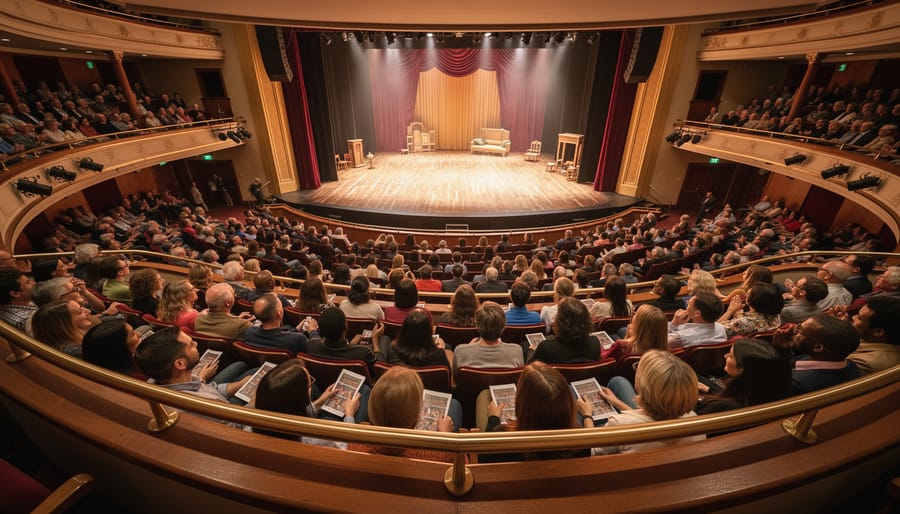
The Stratford Festival doesn’t operate in isolation. Since its earliest seasons, the organization has deliberately recruited talent from major theatre centers across Europe, the United States, Australia, and increasingly Asia and Africa. This isn’t simply about importing star power, it’s a systematic commitment to cross-pollination of theatrical techniques and cultural perspectives.
The festival regularly brings in directors trained in British classical theatre, designers schooled in European avant-garde traditions, and movement directors versed in non-Western performance styles. These international creative staff don’t just apply their skills to Canadian productions; they mentor local artists, conduct workshops, and engage in extended residencies that transfer knowledge across borders.
Stratford also participates in formal exchange programs with institutions like the Royal Shakespeare Company and various international Shakespeare festivals. Artists from Stratford work abroad while foreign practitioners spend seasons in Ontario, creating a two-way flow of ideas. The festival hosts symposia where directors, scholars, and practitioners from different countries examine how various cultures interpret canonical works.
This network effect means a production technique developed in Tokyo might influence a Stratford staging, which then gets photographed and shared globally, potentially inspiring a director in London or Melbourne. The festival functions as both node and amplifier in a worldwide conversation about what theatre means across cultures, a conversation increasingly documented and spread through visual media.
Reimagining Classics Through Global Lenses
At Stratford, Shakespeare’s plays and other Western classics transform into vehicles for exploring contemporary global perspectives. The festival routinely reimagines canonical works by placing them in unexpected cultural contexts, a Macbeth set in feudal Japan, a Merchant of Venice relocated to contemporary Mumbai, or a production drawing on Indigenous storytelling traditions. These aren’t superficial cosmetic changes. Directors collaborate with designers, composers, and cultural consultants from diverse backgrounds to fundamentally rethink how a 400-year-old English play speaks to modern multicultural audiences.
The creative process begins with multicultural interpretations and diversity at the conceptual stage, not as afterthoughts. A Korean-Canadian director might incorporate elements of traditional Korean theatre aesthetics into A Midsummer Night’s Dream, using stylized movement vocabulary foreign to Western Shakespeare production. Meanwhile, costume designers reference textiles and silhouettes from multiple continents, creating visual languages that signal the production’s global perspective before anyone speaks.
This approach does more than refresh familiar material. It challenges the notion that these plays belong exclusively to a British or European theatrical tradition. When audiences see Hamlet grappling with familial duty through the lens of Caribbean diaspora experience, they recognize the story’s universal themes while appreciating how cultural specificity deepens meaning. Photographers documenting these productions capture this fusion visually, their images revealing how costume, gesture, and staging merge traditions into something recognizably Shakespearean yet distinctly global.
Forms of Globalization in Stratford’s Programming
Diverse Casting and Representation

Color-conscious casting transforms how audiences experience classical theatre by deliberately choosing actors whose racial, ethnic, or cultural backgrounds differ from a character’s traditional portrayal. At Stratford, this isn’t tokenism, it’s a systematic approach that reveals new dimensions in familiar texts. When a Black actor plays King Lear or a South Asian performer embodies Lady Macbeth, the production gains layers of meaning that resonate with contemporary global audiences while honoring the text’s universal themes.
This approach does more than increase diversity. It challenges Western theatre’s historical assumption that classical roles default to white performers. A Jamaican-Canadian actor bringing Caribbean vocal rhythms to Shakespearean verse creates a distinct interpretation that photographs capture as visual evidence of theatre’s evolution. These casting choices make implicit statements about power, belonging, and whose stories matter on major stages.
For photographers, diverse casting presents opportunities to document authentic cultural expression within classical frameworks. The visual contrast between traditional period costumes and performers who bring non-European features, body language, and physical presence creates compelling images that tell stories about theatre’s expanding boundaries and shifting cultural centers.
International Directorial and Design Vision
Directors and designers from around the world bring distinct theatrical vocabularies to Stratford’s stages, fundamentally altering how audiences experience canonical works. A British director might emphasize psychological realism in Shakespeare, while a Japanese director could incorporate stylized movement influenced by Noh theatre. Indian designers have introduced vibrant color palettes and textile traditions that transform the visual language of European plays.
These creative teams don’t simply add surface-level cultural elements. They restructure pacing, spatial relationships, and visual hierarchies according to their theatrical training. A director from Ghana might emphasize communal storytelling and direct audience address where Western tradition favors the fourth wall. Designers from Eastern Europe bring different approaches to stage architecture and symbolic use of props.
The result challenges audiences to see familiar texts through genuinely foreign perspectives. When a Korean director stages a Shakespeare tragedy with slower, more deliberate movement patterns, it reveals rhythms the text can support that traditional Western productions miss. Each international creative vision expands what’s possible within these works, demonstrating that globalization means genuine artistic exchange rather than superficial decoration.
Programming Beyond the Western Canon
Stratford’s programming now deliberately extends beyond Shakespeare and European classics to include theatrical traditions from Asia, Africa, and Indigenous North America. Recent seasons have featured works like Tetsuro Shigematsu’s Empire of the Son, which blends Japanese storytelling forms with Canadian immigrant experience, and Indigenous playwright Tomson Highway’s The Rez Sisters, reframing Canadian narratives through First Nations perspectives.
The festival commissions contemporary playwrights from the cultural diaspora to create new work that challenges Western theatrical assumptions. Productions increasingly incorporate non-Western performance techniques, Noh theatre’s minimalist movement vocabulary, Kathakali’s expressive physicality, or African storytelling’s direct audience address. This programming shift creates visually distinct productions that demand different photographic approaches than traditional proscenium theatre.
Contemporary works exploring themes like gender across cultures and post-colonial identity provide photographers with subject matter that reflects global social conversations rather than solely canonical texts. These productions generate imagery that travels beyond theatre circles into broader cultural discourse, making festival photography a vehicle for amplifying marginalized voices and alternative theatrical forms.
How Photographers Document and Amplify Global Theatre at Stratford
Production Photography as Cultural Record
Production photography at Stratford creates a permanent visual archive of how global theatrical traditions intersect on Canadian stages. When a South Asian director reimagines The Tempest or an Indigenous choreographer stages movement for A Midsummer Night’s Dream, official photographers document choices that written reviews alone cannot capture, the specific hand gestures borrowed from Kathakali dance, the color palettes drawn from Haida art, the spatial relationships that reflect non-Western staging conventions.
These images function as cultural evidence. A photograph of an all-Black cast performing Richard III in contemporary dress doesn’t just show what happened on stage; it records a specific moment in theatre’s ongoing conversation about whose stories get told and how. Decades later, scholars and artists study these production stills to understand how theatrical globalization actually manifested, not as abstract theory but as concrete aesthetic decisions visible in costume, lighting, body language, and spatial composition.
Festival photography at this level requires photographers who understand both theatrical craft and cultural context. They must recognize when a director’s blocking references Noh theatre traditions or when a designer’s set pieces incorporate symbols from multiple cultures. The resulting archive becomes invaluable, preserving interpretations that exist only during limited performance runs and creating visual documentation that travels farther than most audience members ever will.
Photography’s Role in Global Audience Reach

Festival photography transforms Stratford from a seasonal Ontario event into a year-round global presence. Production images circulate through international theatre websites, academic journals, and social media platforms, reaching audiences who will never attend in person. A striking photograph of a culturally reimagined production can spark interest across continents, drawing international visitors and influencing how other companies approach similar works.
Digital platforms amplify this reach exponentially. Instagram posts showing diverse casting in classical roles, behind-the-scenes rehearsal shots with international directors, and visually stunning production stills generate engagement from theatre communities worldwide. These images appear in course materials at drama schools from London to Tokyo, illustrating contemporary approaches to canonical texts.
Educational publishers use festival photography to demonstrate evolving theatrical practice. A single photograph showing traditional Japanese staging techniques applied to Shakespeare can communicate globalization more effectively than paragraphs of text. Theatre magazines worldwide rely on Stratford’s visual documentation to report on international trends without sending correspondents. The festival’s physical geography becomes irrelevant when its photographic record circulates globally, making Canada’s theatrical innovations instantly accessible to practitioners and scholars everywhere.
Practical Considerations for Photographing Festival Theatre
Shooting live theatre demands technical precision and cultural sensitivity. Stage lighting varies wildly, a single scene might shift from deep amber pools to harsh blue washes in seconds. Set your camera to manual mode with a fast lens (f/2.8 or wider) and push your ISO to 3200-6400, accepting some grain as the cost of freezing movement. Shoot in raw format to recover detail from extreme shadows and blown highlights during post-processing.
Positioning matters more than equipment. Rehearsal photography from backstage offers intimate angles impossible during performances, but front-of-house seats during tech runs let you capture the lighting designer’s full vision. Always secure permission before shooting, many festivals prohibit flash and restrict when you can photograph.
When documenting diverse casts, avoid exoticizing performers or reducing them to visual novelties. Frame them as artists in their craft, not cultural specimens. Capture the moment an actor transforms onstage, the concentration before an entrance, the collaborative energy during notes sessions. Balance your approach: some shots should preserve a historical record of the production’s blocking and design, while others chase the emotional truth that makes theatre resonate across cultures.
Why Stratford Matters for Photographic Culture
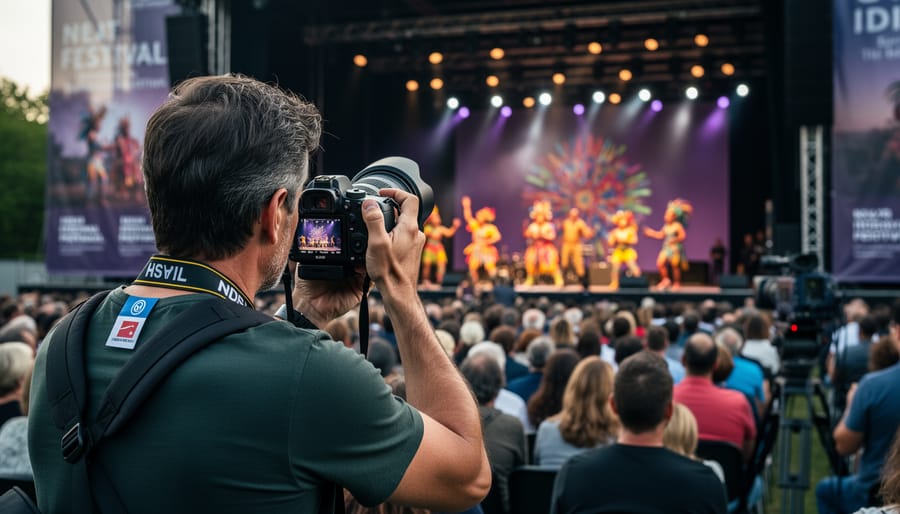
The Stratford Festival has quietly become one of the most significant forces shaping contemporary theatre photography, not just in Canada but globally. Its sustained commitment to staging culturally diverse interpretations of classic works creates an unusually rich testing ground for photographers working at the intersection of documentation and artistic interpretation.
Unlike single-production photography, Stratford’s season-long programming offers photographers the chance to develop a coherent visual language across multiple productions that share thematic or cultural threads. A photographer might document three different Shakespeare plays in the same season, each staged through distinct cultural lenses, a Japanese-influenced Tempest, a South Asian Romeo and Juliet, an African-diaspora Othello. This concentrated exposure to multicultural theatrical aesthetics pushes photographers to expand their visual vocabulary beyond Western theatrical conventions, learning to recognize and capture the gestural languages, spatial relationships, and symbolic systems of diverse performance traditions.
The festival’s production quality sets a benchmark that raises standards throughout the performance photography field. When images from Stratford circulate through theatre publications, educational materials, and social media, they establish visual expectations for how global theatre should be documented: authentic representation of diverse performers, sensitivity to cultural context, technical excellence under challenging stage lighting, and compositions that honor both the theatrical moment and the cultural framework it emerges from.
Perhaps most importantly, Stratford creates a feedback loop where photography extends the festival’s globalizing mission. Images of culturally reimagined classics reach audiences who will never visit Ontario, carrying the concept that Shakespeare belongs to everyone into classrooms, artistic discussions, and cultural conversations worldwide. These photographs become evidence that theatre can simultaneously honor its roots and evolve through cross-cultural exchange, a visual argument for globalization as enrichment rather than dilution. For photographers, contributing to that conversation means their work matters beyond aesthetic achievement; it becomes part of how culture itself moves and transforms.
Common Questions About Theatre Festivals and Photography
Theatre festivals operate at a unique intersection of live performance and visual documentation, creating both opportunities and challenges for photographers. Understanding how to navigate these spaces, from technical requirements to cultural significance, helps photographers engage meaningfully with festival culture while respecting the artistic work being presented.
Why is the Stratford Festival considered globally significant for theatre?
Stratford’s global importance stems from its sustained commitment to bringing international directors, diverse casting, and multicultural interpretations to canonical works, effectively creating a laboratory for how classical theatre can reflect contemporary global society. The festival’s scale, artistic reputation, and willingness to reimagine Western classics through non-Western perspectives make it a model for theatrical globalization that other institutions study and emulate.
Can amateur photographers shoot performances at theatre festivals?
Most theatre festivals, including Stratford, prohibit audience photography during performances due to copyright, performer contracts, and the disruption caused by camera lights and sounds. However, many festivals offer designated photo calls, behind-the-scenes tours, or outdoor events where photography is permitted with advance permission.
What makes photographing festival theatre different from other performance photography?
Festival theatre photography requires balancing documentary accuracy with artistic interpretation while capturing the specific cultural fusion that makes each production unique. Photographers must work within the constraints of existing stage lighting designed for live audiences rather than cameras, often shooting in low light with high contrast, while remaining sensitive to how they represent diverse performers and cultural traditions authentically.
How has digital photography changed the way festivals are documented?
Digital technology lets photographers shoot hundreds of frames without film costs, review images immediately for technical quality, and push higher ISOs to work with available stage light. More significantly, digital distribution through social media and online galleries has transformed festival photography from archival documentation into real-time global outreach, allowing productions to reach audiences who will never attend in person.
What camera gear works best for shooting theatrical performances?
A full-frame camera body with strong high-ISO performance (usable at 3200-6400) paired with fast lenses in the f/1.4-f/2.8 range gives you the best chance of capturing well-exposed images under stage lighting. A 70-200mm f/2.8 lens handles most situations, while a 50mm f/1.4 or f/1.8 works well for wider ensemble shots and rehearsal documentation.
For photographers hoping to work with festival theatre, building relationships with festival press offices and demonstrating respect for the artistic process opens more doors than technical skill alone. Many festivals welcome photographers who understand that their role is to serve the production’s vision rather than impose their own, creating images that honestly represent the cultural complexity these institutions work to achieve. Starting with smaller local festivals, offering to document community theatre productions, or volunteering for arts organizations builds the portfolio and trust needed to eventually photograph major events like Stratford.
The Stratford Festival stands as living proof that theatrical globalization isn’t an abstract concept, it’s a dynamic process unfolding on Canadian stages every season. By bringing international directors to reinterpret Shakespeare, casting actors who reflect our multicultural reality, and programming works from beyond the Western canon, Stratford creates a cultural crossroads where diverse theatrical traditions converge and evolve.
This convergence matters precisely because it doesn’t stay confined to theatre seats in Ontario. Photography transforms these localized performances into globally accessible cultural artifacts. Production photographers capture the visual language of cross-cultural interpretation, the Japanese-inspired Macbeth design, the South Asian actor’s Hamlet, the Indigenous retelling of a Greek tragedy. Those images travel through festival publications, social media feeds, and digital archives to reach audiences who will never set foot in the physical venue.
The relationship runs both ways. Festivals need photographers to document their work and extend their cultural influence beyond opening night. Photographers need festivals that push creative boundaries and provide compelling multicultural subject matter that challenges their technical skills and artistic vision. Together, they create a visual record of how theatre evolves when borders dissolve.
For photographers drawn to cultural documentation, theatre festivals like Stratford offer more than assignments. They provide front-row access to artistic globalization in action, where every production becomes a chapter in the ongoing story of how we share stories across cultures.





 By
By