
 By
By 
When you stream a video online, your device doesn’t just randomly connect to any available server. Streaming video quality directly influences server discovery, the technical process by which content delivery networks automatically route your connection to the optimal server based on your bandwidth, location, and the resolution you’re requesting. Think of it like when choosing a server to play on: you want the one that delivers the best performance for your specific needs.
The comparison is only an analogy: streaming delivery networks choose infrastructure automatically, while Minecraft players choose a community. Before joining, a player can compare a server’s game mode, rules, version, reset policy, and the kind of community it describes.
This relationship has transformed how content reaches viewers in 2026. Higher video quality demands more data, faster connections, and smarter routing decisions. When you click play on a 4K video versus standard definition, entirely different infrastructure springs into action behind the scenes. The system must identify which servers can handle that bandwidth load, which are geographically closest to you, and which have the processing power to deliver those pixels without buffering.
For photographers sharing portfolio videos or tutorials, this matters more than you might think. The quality settings you choose for your uploaded content don’t just affect file size. They trigger specific server discovery protocols that determine whether viewers in Tokyo experience the same smooth playback as those in Toronto. A beautifully shot behind-the-scenes video loses its impact when poor server selection causes stuttering and quality drops.
This article breaks down how streaming platforms make split-second decisions about which servers handle your content, why video quality is the primary factor driving those choices, and what content creators can do to ensure their work streams reliably across different networks and devices.
What Server Discovery Means in Video Streaming

Server discovery is the automated process streaming platforms use to find and connect you to the optimal content delivery server when you hit play on a video. Think of it like a photographer choosing between multiple professional labs to process the same roll of film: each lab could technically do the job, but one might be closer to your location, less busy at the moment, better equipped for the specific format you’re working with, and capable of delivering faster results. The streaming platform evaluates dozens of servers in real time, measuring their performance characteristics to select the one that will deliver the highest quality experience to you specifically.
Here’s what these technical terms actually mean:
- Server Discovery
- The automated process of identifying, testing, and connecting to the best available content server for your specific streaming session based on your location, network conditions, and quality requirements.
- CDN (Content Delivery Network)
- A geographically distributed network of servers that store copies of content, allowing users to access video from a nearby server rather than one central location thousands of miles away.
- Edge Servers
- Servers positioned at the “edge” of the network, physically closer to users, designed to reduce distance and deliver content faster than central origin servers.
- Latency
- The delay between when you request content and when it begins arriving, measured in milliseconds. Lower latency means faster response and smoother playback.
- Bandwidth Allocation
- The amount of data transfer capacity assigned to your streaming session, which determines the maximum quality level the server can deliver to you without buffering.
This matters immensely to both viewers and creators. For photographers streaming portfolio reviews or tutorial sessions, poor server discovery means viewers might connect to an overloaded server halfway across the world, resulting in pixelated video that fails to showcase the detail in your work. The platform’s server discovery system constantly monitors server health, available bandwidth, and network congestion to route each viewer to a server that can actually handle high-quality delivery. When it works well, you never notice it. When it fails, even gorgeous 4K footage becomes an unwatchable slideshow.
How Video Quality Changed the Server Discovery Equation

From Simple Connections to Smart Selection
In the early days of streaming, think late 1990s and early 2000s, the process was refreshingly straightforward. You’d click a link, your computer would connect to whichever server hosted the file, and that was it. No algorithms, no quality checks, just a simple handshake between your machine and theirs. If the server was slow or overloaded, you waited. If the connection dropped, you started over. These systems worked for grainy, postage-stamp videos that demanded little bandwidth, much like how early digital cameras produced files small enough to email without a second thought.
Today’s streaming environment operates nothing like those primitive systems. Modern platforms deploy intelligent discovery protocols that evaluate dozens of factors before your video even starts playing. These systems assess your internet speed, device capabilities, geographic location, and current server loads, all in milliseconds. They prioritize servers that can deliver the resolution you’re requesting, whether that’s standard definition or HD vs 4K streaming. The selection isn’t random; it’s calculated to maintain consistent quality throughout playback. When you’re streaming a photography tutorial at 4K, the system needs to guarantee that bitrate remains stable, unlike the old days when buffering every few seconds was just accepted as normal. This shift from passive connection to active server intelligence happened because video quality demands left no room for the guesswork that characterized early streaming.
Why Higher Quality Demands Better Discovery
When you stream standard-definition video, you’re working with roughly 3-5 megabits per second of data. The modest bandwidth requirements mean most servers can handle the load without breaking a sweat, and if a server lags slightly or delivers inconsistent speeds, your video player has enough breathing room to compensate. A poorly chosen server might cause a brief pause, but the stream recovers quickly.
4K streaming flips this equation. Now you’re pushing 25-50 megabits per second for standard 4K, and HDR content can demand even more. Think of it like upgrading from JPEG compression to uncompressed RAW files: the quality leap is stunning, but the data demands multiply dramatically. A server that seemed perfectly adequate for SD content suddenly becomes a bottleneck. Worse, there’s no margin for error.
The buffer management challenge intensifies at higher resolutions. Your video player maintains a small reservoir of pre-loaded content, typically a few seconds worth, to smooth out network hiccups. With SD streaming, this buffer fills quickly and tolerates inconsistent delivery. With 4K, that same buffer requires six to ten times more data to represent the same playback duration. If the server discovery system connects you to an overloaded or geographically distant server, your buffer drains faster than it refills.
This explains why server selection mistakes that SD streaming could mask become immediately visible in 4K. A suboptimal server choice doesn’t just slow initial loading; it triggers constant quality drops, visible compression artifacts, or complete playback failures. Modern discovery systems must evaluate server performance metrics continuously and switch seamlessly when quality degrades, because viewers won’t tolerate the stuttering experience that marginal server choices now create.
How Modern Server Discovery Actually Works
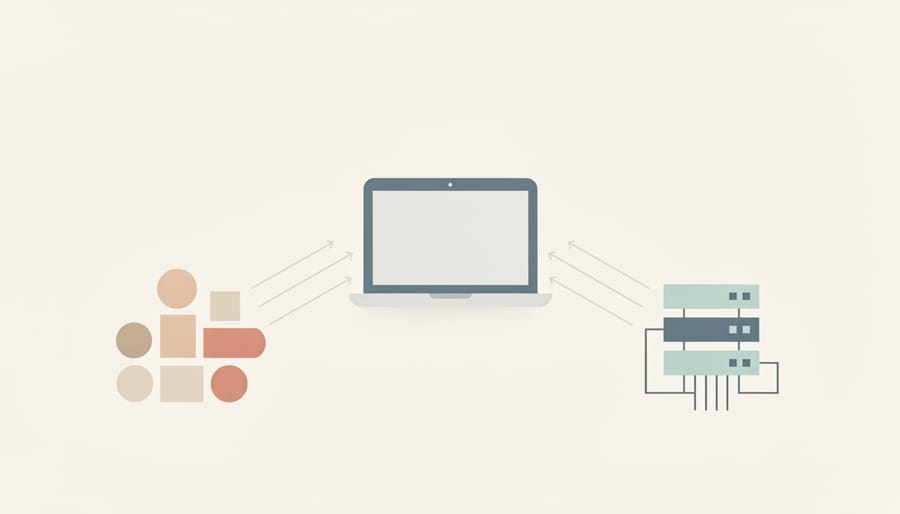
When you hit play on a streaming video, you’re triggering a sophisticated discovery process that happens in milliseconds. It’s similar to how your camera’s autofocus system rapidly evaluates multiple points to lock onto your subject, except here, the system is hunting for the best server to deliver your content.
The process starts with DNS resolution. Your device sends a query asking “where can I find this video?” Think of DNS like checking a photography gear review site to find which retailers stock a specific lens. The DNS server responds with IP addresses, but here’s where it gets interesting: modern streaming platforms use geographic and network-aware DNS systems that return different server addresses based on your location and internet provider. If you’re streaming in Toronto, you’ll get pointed toward servers in Ontario or nearby US states, not a data center in Singapore.
Next comes CDN routing, where the content delivery network makes real-time decisions about which specific server should handle your stream. The CDN evaluates dozens of factors: current server load, network congestion between you and various servers, each server’s recent performance, and even the quality level you’re requesting. A 4K stream needs far more consistent bandwidth than a 720p feed, so the routing algorithm might steer you to a less-crowded server even if it’s slightly farther away. It’s like choosing between a closer lab with a week-long backlog or a slightly more distant one that can process your prints overnight.
Once connected, quality testing begins immediately. The player downloads small chunks of video at different quality levels to measure actual throughput and latency. This isn’t theoretical, it’s testing your real connection to this specific server right now. Based on these results, the system selects an initial quality level and begins streaming.
But the discovery process doesn’t stop. Throughout playback, adaptive bitrate switching continuously monitors performance. If your connection hiccups or the server becomes overloaded, the system may switch to a lower quality, reconnect to a different server entirely, or both. When conditions improve, it scales back up.
Modern players also maintain a buffer, typically 10-30 seconds of pre-loaded video, giving the system time to discover and switch to alternative servers if problems arise before your playback stutters. The entire process runs transparently, constantly optimizing to deliver the highest quality your connection and the available infrastructure can support. What feels like simple streaming is actually continuous server discovery and selection, adapting hundreds of times throughout a single viewing session.
Types of Server Discovery Methods for Video Streaming
Streaming platforms use several distinct methods to connect viewers with the right servers, and each approach offers different advantages depending on the quality and type of content being delivered.
DNS-based discovery represents the simplest approach. When you click play, your device queries a domain name server that returns the IP address of an available streaming server. This method works well for standard definition content but struggles with high-quality streams because it can’t account for real-time network conditions or server load. Think of it like having a single address for a camera shop without knowing if they’re open, busy, or currently stocked with what you need.
Anycast routing improves on basic DNS by directing viewers to the geographically nearest server cluster. Multiple servers share the same IP address, and internet routing protocols automatically send your connection to the closest one. This method significantly benefits 4K streams where latency matters, though it can’t always detect if that nearest server is overloaded. Photographers uploading portfolio videos to platforms using anycast typically experience faster initial connections.
Dynamic server selection adds intelligence to the process. The platform continuously monitors server health, available bandwidth, and current load before making connection decisions. When you request a high-bitrate video, the system evaluates multiple servers in real time and picks the one most likely to maintain quality. This method excels for variable bitrate content like 4K 360 streaming where sustained throughput matters more than initial connection speed.
Peer-assisted delivery distributes some streaming load across viewer devices. While one server sends you the video, your device might also share chunks with other nearby viewers. This approach reduces server burden during popular live streams but requires careful quality management since peer connections vary widely in reliability.
Most major platforms now use hybrid models that combine multiple methods. YouTube, for instance, uses anycast for initial connection, then switches to dynamic selection based on your playback quality. A photographer streaming a live gallery opening might start on a nearby server, then migrate to a more capable one as viewer count grows. These hybrid systems adapt to both content requirements and real-time conditions, making them particularly effective for creators who stream mixed content at different quality levels.
How Players and Viewers Benefit from Quality-Driven Discovery
Quality-driven server discovery operates largely behind the scenes, but its impact on your viewing experience is immediate and tangible. When you click play on a photography tutorial or portfolio showcase, modern discovery systems instantly assess dozens of factors, your location, device capabilities, current network conditions, and available server loads, to connect you with the optimal content source. This happens in milliseconds, before the first frame appears.
The practical benefits transform how photographers and viewers interact with streaming content:
- Reduced buffering through intelligent load distribution across multiple servers
- Faster startup times as discovery systems pre-emptively route to the closest, least-congested server
- Consistent quality across viewing sessions, even during peak hours when demand spikes
- Better mobile experience with discovery algorithms that account for cellular network fluctuations
- Improved live streaming reliability for real-time portfolio reviews and workshop broadcasts
For photographers streaming portfolio reviews, quality-driven discovery ensures that subtle tonal gradations and color accuracy remain intact whether viewers watch on a 4K monitor in London or a tablet in Tokyo. Tutorial creators benefit from maintained bitrate stability, a critical factor when demonstrating nuanced editing techniques where compression artifacts could obscure important details. The system adapts in real time: if your initially assigned server becomes overwhelmed, discovery protocols seamlessly shift you to an alternative without interrupting playback.
Viewers now expect this seamless quality as standard, not luxury. You don’t think about server infrastructure when watching a landscape photography critique; you simply expect crisp detail and accurate color. Quality-driven discovery delivers that expectation by treating video quality as the primary constraint rather than an afterthought. Most platforms handle this automatically, though some offer manual quality controls for viewers on limited bandwidth. The automatic approach works for 95% of situations, intelligently downscaling only when network conditions genuinely require it rather than defaulting to lower quality as a precaution.
What Content Creators Should Know About Server Discovery
When you’re sharing portfolio videos, live-streaming photo critiques, or hosting webinars, your platform’s server infrastructure directly affects whether viewers stay or leave. Most creators focus on resolution and bitrate settings while ignoring the server architecture that delivers their content, but that’s like obsessing over lens sharpness while ignoring camera shake.
Start by testing platforms during peak hours, not at 2 AM when server load is minimal. Upload a sample video in your typical format (whether that’s 1080p for tutorials or 4K for portfolio showcases) and watch it from different locations and devices. If quality drops or buffering increases during evening hours, the platform’s server discovery system isn’t dynamically routing viewers to optimal servers under load.
Monitor three key metrics in your analytics dashboard: initial connection time, rebuffering events, and quality level switches. Connection times above three seconds cost you viewers immediately. Frequent rebuffering (more than once per five minutes) suggests poor server selection or inadequate CDN coverage. Constant quality switching means the platform’s adaptive bitrate algorithm is fighting with insufficient server resources, your 4K upload keeps dropping to 720p because viewers are being routed to overloaded servers.
Quality retention matters more than maximum resolution. A platform that maintains consistent 1080p beats one that promises 4K but delivers frequent drops to 480p. Check whether your chosen platform uses edge servers (distributed locations near viewers) or relies on centralized data centers. Edge servers mean faster discovery and better quality maintenance, especially critical when your audience spans multiple countries.
Consider how video codecs interact with server discovery, platforms optimized for newer codecs like H.265 often have more modern server infrastructure. Similarly, if you’re uploading from network storage ensure your upload bandwidth matches the platform’s ingest requirements to avoid quality degradation before content even reaches their servers.
Common Questions About Streaming Quality and Server Discovery
Can I control which server I connect to when streaming?
Most streaming platforms don’t let you manually choose a specific server because they’re designed to automatically select the optimal one based on your location, connection speed, and current server loads. Some advanced platforms and enterprise tools offer VPN-like routing options or regional preferences, but for standard viewing, the system handles all discovery decisions to ensure you get the best possible quality without manual intervention.
Why does quality vary between different streaming sessions?
Your streaming quality can change session-to-session because the server discovery process evaluates conditions in real-time. Factors like internet congestion at different times of day, server availability in your region, and even weather affecting network infrastructure can all influence which server you’re routed to and what quality it can deliver. The system constantly adapts, which means your Tuesday afternoon stream might connect to a different, better-performing server than your Saturday evening session.
How does server discovery affect my upload speeds as a content creator?
When you’re uploading video content or live streaming, the discovery system works in reverse to find the best ingestion server for your data. A well-optimized platform will route your upload to a server with available bandwidth and low latency to your location, directly impacting how quickly your 4K portfolio video processes or how smoothly your live tutorial streams. Poor server selection can bottleneck your upload speed even if your home connection is fast.
Do all streaming platforms use the same server discovery methods?
No, platforms vary significantly in their approaches. Major services like YouTube and Vimeo use sophisticated multi-layered systems combining DNS routing, CDN networks, and machine learning to optimize delivery. Smaller platforms might rely on simpler geographic routing or single-CDN partnerships. This difference explains why you might upload the same high-quality video to two platforms and experience vastly different playback performance.
What happens when the best available server becomes overloaded?
Modern discovery systems continuously monitor server health and will redirect new connections to the next-best option before performance degrades noticeably. If you’re already connected when a server hits capacity, you might experience temporary buffering or a quality drop as the system switches you to another server mid-stream. Well-designed platforms make this transition seamless, but on smaller services, you might need to refresh your connection manually to trigger a new discovery cycle.
Does using a VPN interfere with quality-optimized server discovery?
Yes, VPNs can confuse the discovery process because they mask your true location, causing the system to route you to servers optimized for wherever your VPN endpoint is rather than your actual position. This might mean connecting to a server three thousand miles away instead of one in your city, adding latency and potentially reducing available quality, particularly for high-bitrate 4K content that’s sensitive to network delays.
These technical realities matter more than ever for photographers and videographers who rely on streaming platforms to showcase their work. Understanding why quality fluctuates helps you make informed decisions about which platforms to trust with your content and when to troubleshoot versus when to accept that network conditions are simply working against you. The discovery process isn’t perfect, but recognizing how it functions gives you better control over the variables you can actually influence, like choosing upload times during off-peak hours or selecting platforms with robust CDN infrastructure in your region.
The evolution from grainy, buffering streams to today’s crystal-clear 4K video didn’t just improve what we watch, it fundamentally transformed how streaming platforms connect us to content. Server discovery has shifted from a simple point-and-click process to a sophisticated dance of quality assessment, network intelligence, and infrastructure coordination. What once required picking the closest server now demands systems that can evaluate dozens of factors in milliseconds, all to ensure your stream maintains the quality you’ve come to expect.
For photographers and videographers sharing work online, this transformation matters more than you might think. The platforms you choose for portfolio videos, tutorials, or client presentations now rely on invisible server discovery mechanisms that directly impact how your work appears to viewers. A platform with smart discovery infrastructure means your carefully color-graded videos reach audiences at the quality you intended, while poor server selection can reduce your 4K masterpiece to a pixelated disappointment.
Looking ahead, the challenge only intensifies. As 8K content becomes standard and VR photography gains traction, server discovery systems will need to handle data volumes that would have seemed impossible a decade ago. The platforms that thrive will be those that master not just delivering high quality, but intelligently connecting viewers to the right servers at the right moment. For content creators, understanding these systems isn’t optional anymore, it’s essential to ensuring your visual work gets the presentation it deserves.





 By
By