 By
By 
3D virtual photography is the practice of creating photographic images within computer-generated three-dimensional environments, either by capturing scenes built entirely in software or by photographing real-world spaces that have been digitally reconstructed. Unlike traditional 360-degree photography, which records everything around a fixed point in reality, 3D virtual photography gives you complete creative control over every element in the frame, from lighting and composition to physics-defying camera angles that would be impossible in the physical world.
This technique has moved far beyond gaming screenshots and architectural renderings. Professional photographers are now using 3D virtual environments to pre-visualize complex shoots, create impossible product photography, and even build entire portfolios without ever picking up a camera. Real estate agencies commission virtual property tours before construction begins. Product designers photograph prototypes that exist only as CAD files. Fashion photographers are shooting collections on digital models in virtual studios, complete with controllable lighting setups that would cost thousands to replicate in reality.
What makes 3D virtual photography particularly relevant in 2026 is its intersection with future camera tech and the growing accessibility of powerful rendering engines. Software that once required dedicated workstations now runs on gaming laptops, and the barrier between virtual and traditional photography continues to blur.
This guide will walk you through what 3D virtual photography actually involves at a technical level, the different approaches you can take (from game engines to specialized photography software), and practical applications that might fit your workflow. Whether you’re curious about adding virtual techniques to your skillset or trying to understand if this emerging field has real professional value, you’ll find a clear roadmap to getting started without the hype.
What 3D Virtual Photography Really Means
At its core, 3D virtual photography means capturing images inside computer-generated worlds using simulated cameras. Instead of photographing real subjects with physical equipment, you’re framing and shooting scenes that exist entirely as digital data, whether that’s a sprawling landscape in a video game, a meticulously constructed 3D model in rendering software, or an immersive VR environment.
This might sound similar to 360-degree photography or CGI rendering, but there are important distinctions. 360-degree photography involves capturing the full sphere around a physical location with specialized real-world cameras, stitching together actual light data from your surroundings. CGI rendering typically refers to artists creating still images or animations through 3D modeling software, often for film, advertising, or product visualization, the final image is the deliverable, not the act of “photographing” within that space.
Virtual photography sits between these approaches. You’re not capturing real light or physical scenes, but you are adopting the photographer’s mindset: scouting locations, waiting for the right moment, adjusting composition, and making creative decisions in real time within a 3D space. Games like Ghost of Tsushima, Horizon Forbidden West, and Cyberpunk 2077 have popularized this through robust photo modes that let players pause the action, move a virtual camera freely, adjust settings like depth of field and focal length, and capture striking images. Communities on platforms like Reddit’s r/VirtualPhotographers and dedicated Discord servers share thousands of these images daily, treating virtual environments as legitimate photographic subjects.
Understanding a few key terms helps clarify what we’re discussing:
- Virtual camera
- A simulated camera within 3D software or games that mimics real camera properties like focal length, aperture, and sensor characteristics without physical hardware.
- Photo mode
- A feature in video games that pauses gameplay and provides camera controls, filters, and composition tools specifically for capturing in-game images.
- Render
- The process of converting 3D scene data into a 2D image file, calculating lighting, textures, and effects to produce the final photograph.
- Virtual environment
- A fully digital 3D space created through game engines, VR applications, or modeling software where virtual photography takes place.
- VR photography
- Capturing images from within virtual reality headsets and experiences, often in social VR platforms or VR art installations.
The photographs themselves are genuine creative works. Virtual photographers spend hours finding unique angles, chasing perfect lighting conditions (many games simulate day-night cycles and dynamic weather), and developing distinctive visual styles, all without leaving their desk.
How 3D Virtual Photography Works
Virtual Camera Controls and Settings
Virtual cameras in 3D environments mirror the controls you already know from physical photography, though they operate through fundamentally different mechanics. When you adjust aperture in a virtual camera, you’re not physically opening a lens diaphragm, the software calculates the depth of field effect you’d expect from that f-stop in real life. Set it to f/1.4 and the background blurs convincingly; dial in f/16 and everything stays sharp.
ISO simulation works similarly. Raising ISO in a virtual environment adds digital noise that mimics film grain or sensor noise, even though no actual sensor sensitivity is changing. Many advanced virtual photography tools let you control the noise pattern and intensity separately from exposure, giving you creative options impossible with real cameras.
Focal length adjustments replicate the field of view and perspective compression of actual lenses. A virtual 24mm lens renders wide-angle distortion; a 200mm telephoto compresses depth just as it would through glass. Some platforms go further, simulating lens aberrations, chromatic fringing, and vignetting specific to real-world lenses.
Composition tools often exceed what physical cameras offer. Grids, golden ratio overlays, and dynamic guides appear in your viewfinder. Advanced systems include focus peaking, live histograms, and the ability to freeze time completely while you perfect your framing, luxuries that make virtual environments surprisingly effective training grounds for understanding how these controls shape your final image.
Rendering and Output Quality
When you press the shutter in a virtual environment, the software renders your composition into a final image file. Unlike a traditional camera sensor that records light, the rendering engine calculates every pixel based on the 3D scene data, geometry, textures, lighting, and your camera settings, then outputs it as a standard image format.
Most modern virtual photography platforms support resolutions from 1080p up to 8K or higher, often exceeding what consumer cameras produce. You’ll typically save images as PNG or JPEG files, though some professional 3D applications offer TIFF, EXR, or RAW-equivalent formats with greater color depth and dynamic range for post-processing.
Quality depends on the rendering engine and scene complexity. High-end software like Unreal Engine can produce photorealistic results indistinguishable from traditional photographs, with accurate light physics and material properties. Game photo modes vary, AAA titles often render at very high quality, while older or less optimized games may show aliasing, texture limitations, or compression artifacts.
The advantage: you control render quality independently of capture time. Want a massive print-ready file? Simply increase the output resolution. No sensor size, lens sharpness, or ISO noise limits your final image quality, only processing power and patience.
Different Approaches to Virtual Photography
In-Game Photo Modes
In-game photo modes have become the most accessible entry point into virtual photography, requiring nothing more than a gaming console or PC and a compatible title. Modern games like Horizon Forbidden West, Ghost of Tsushima, and Forza Horizon 5 include dedicated photography modes that pause gameplay and unlock robust camera controls. These built-in tools typically let you detach the camera from your character, move freely through the frozen scene, and adjust settings that mirror real photography: depth of field, focal length, aperture simulation, exposure compensation, and color grading filters.
Many AAA titles now offer features specifically designed for photographers. You can hide the user interface, adjust lighting intensity and direction, change weather conditions, and even alter the time of day to capture golden hour lighting. Games like Microsoft Flight Simulator and Red Dead Redemption 2 provide such detailed environmental rendering that players regularly capture images indistinguishable from traditional landscape photography at first glance. The creative possibilities extend beyond documentation, photographers stage narrative scenes, experiment with abstract compositions using particle effects, and create impossible perspectives that would require cranes or drones in the physical world.
VR-Native Photography
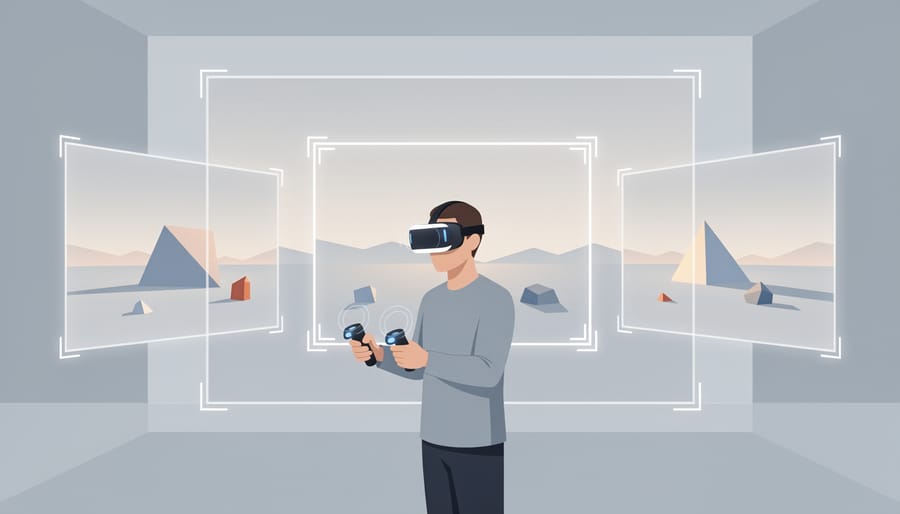
VR-native photography involves capturing images while immersed in virtual reality environments through a headset. Unlike in-game photo modes accessed on a flat screen, you’re physically present in the 3D space, composing shots by moving your body and positioning your viewpoint naturally.
Platforms like VRChat, AltspaceVR, and Horizon Worlds let photographers explore social spaces, art installations, and user-created worlds while capturing images through built-in camera tools. Many VR experiences include screenshot functionality triggered by controller buttons, preserving your exact viewpoint at that moment.
Dedicated VR photography applications take this further. Tilt Brush and Gravity Sketch recordings can be paused and photographed from any angle. Some VR galleries showcase 3D artwork specifically designed to be photographed, with dramatic lighting and composition opportunities impossible in physical spaces.
The immersive nature changes how you approach composition. You can crouch to adjust perspective, lean around objects, or position yourself in ways that feel intuitive but would be awkward when framing through a 2D monitor. The challenge lies in managing headset resolution limitations, current consumer VR headsets typically output lower-resolution images than traditional displays, though quality continues improving with each hardware generation.
3D Rendering Software
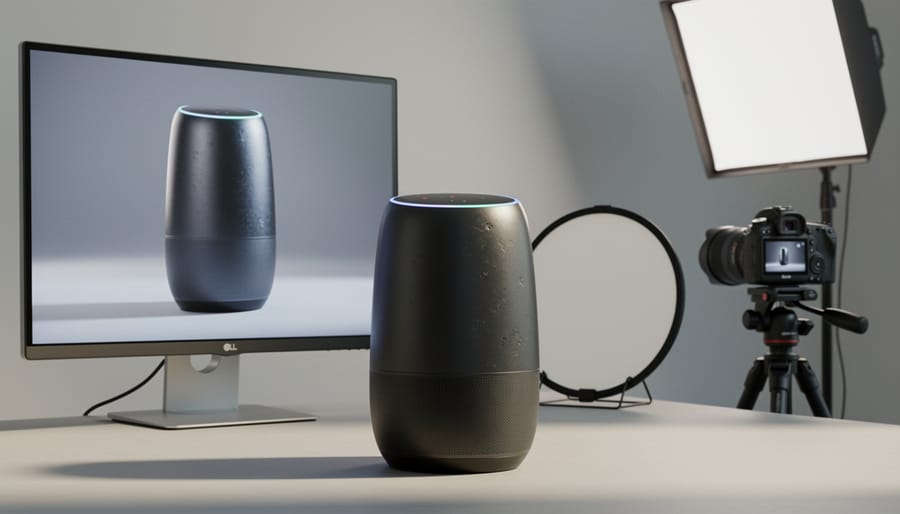
Professional 3D software puts photographers in the director’s seat. Unlike game photo modes or VR platforms, tools like Blender, Unreal Engine, and Unity let you build entire scenes from scratch before clicking the shutter.
With Blender (free and open-source), you model subjects, place lights exactly where you want them, and adjust materials to get the perfect surface quality. Real-world photography principles still apply, you’re positioning key lights, fill lights, and rim lights just as you would in a studio, but walls never get in the way, and gravity is optional.
Unreal Engine and Unity offer real-time rendering, showing you immediate results as you adjust your virtual camera. These game engines excel at creating photorealistic environments with advanced lighting systems that mimic natural light behavior. Many product photographers use them to shoot catalogue images of items that don’t exist yet, saving manufacturers the cost of physical prototypes.
The learning curve is steeper than game photo modes, but the payoff is total creative freedom. You control every pixel of the scene, from the texture on a virtual wall to the exact color temperature of each light source.
Where Virtual Photographers Apply Their Craft
Creative and Artistic Expression
Virtual environments remove the physical and financial constraints that limit traditional photography, opening doors to artistic visions that would be impossible or prohibitively expensive to execute in real life. Photographers can stage elaborate scenes, floating objects in mid-air, impossible lighting setups, surreal landscapes, without rigging equipment or waiting for specific weather conditions.
This freedom has attracted photographers working in conceptual and fine art photography. Instead of spending thousands on sets, props, and locations, they build entire worlds in software like Blender or explore game environments with dramatic architecture and lighting. The ability to rewind time, adjust every element precisely, and revisit scenes allows for experimentation that physical shoots simply can’t accommodate.
Virtual photography also suits photographers exploring themes of isolation, dystopia, or fantasy. Many create narrative series within post-apocalyptic game worlds or sci-fi environments, using these digital spaces as stage sets for storytelling. The medium has developed its own aesthetic vocabulary, with virtual photographers sharing work on dedicated communities and galleries, earning recognition as a legitimate form of photographic art rather than mere screenshots.
Commercial and Professional Uses
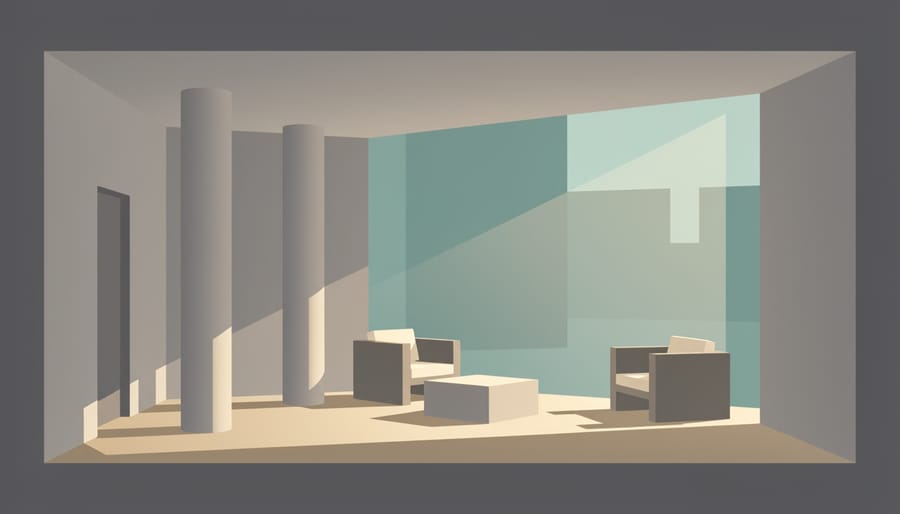
Virtual photography has moved beyond creative hobby into serious commercial territory. Product visualization companies now shoot entire catalogs in 3D environments, controlling every aspect of lighting, background, and composition without shipping physical samples or booking studio time. Fashion brands stage clothing on digital models, automotive manufacturers photograph vehicles that exist only as CAD files, and furniture retailers place pieces in perfectly styled virtual rooms.
The advantages are compelling: no logistics costs, unlimited variations, and the ability to create product shots before manufacturing begins. Real estate developers sell properties using virtual staging that showcases multiple design options from a single 3D model. Advertising agencies build campaign imagery in Unreal Engine, adjusting everything from weather conditions to time of day without reshoots.
This isn’t replacing traditional photography entirely, but it’s solving specific problems where physical photography proves expensive, impractical, or impossible. For photographers with 3D skills, it represents legitimate commercial opportunity rather than speculative tech experimentation.
Learning and Skill Development
Virtual photography transforms expensive trial and error into risk-free experimentation. Beginners can master exposure triangle relationships without burning through batteries or missing shots, adjusting ISO, aperture, and shutter speed instantly to see immediate results. The unlimited do-overs let you test dozens of composition variations in minutes rather than waiting for the right light or weather to return.
Advanced photographers use virtual environments to rehearse complex lighting setups before expensive real-world shoots. You can position virtual lights at any angle, adjust power and color temperature on the fly, and save configurations to reference later. This proves particularly valuable for commercial photographers planning multi-light product shots or portrait setups that would otherwise require costly studio time.
The absence of physical constraints accelerates learning. Want to understand how focal length compression works? Switch from 24mm to 200mm instantly and compare results side-by-side. Curious about golden hour lighting? Scrub through an entire day’s sun positions in seconds. These instant iterations compress weeks of outdoor shooting practice into focused sessions, building intuition about photographic principles that transfer directly to camera work.
Getting Started with Virtual Photography
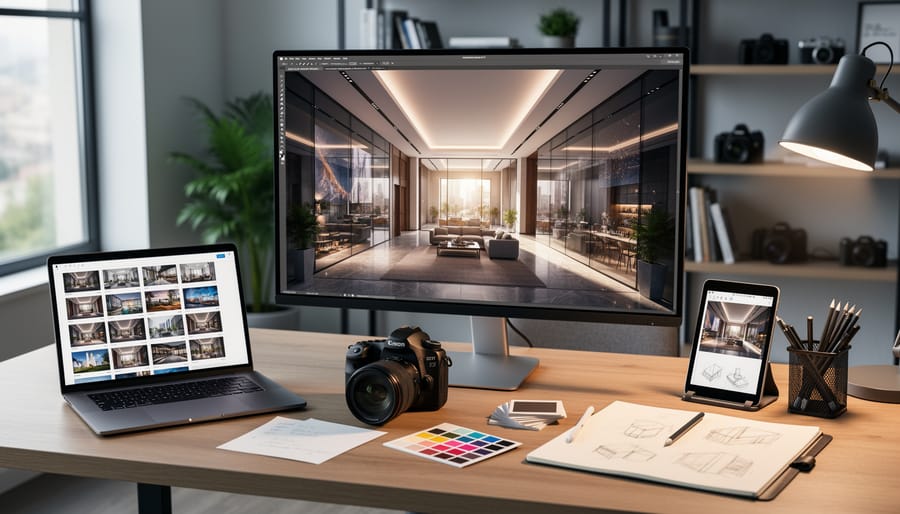
Getting started with virtual photography is remarkably straightforward, you need far less than you’d expect. If you own a gaming PC, PlayStation, or Xbox, you already have everything required to begin. Unlike traditional photography, there’s no need for camera bodies, lenses, tripods, or the usual array of camera accessories. Your first step is simply choosing a game with a robust photo mode.
Start with titles known for strong photography features. Games like Spider-Man (PlayStation), Forza Horizon 5 (Xbox/PC), or Ghost of Tsushima offer intuitive photo modes with depth-of-field controls, filters, and composition tools. These environments let you experiment immediately without learning complex software. Most photo modes pause the action, giving you unlimited time to frame your shot, a luxury real-world street photography rarely affords.
Your existing photography knowledge transfers directly. Composition principles like the rule of thirds, leading lines, and negative space work identically in virtual spaces. Lighting awareness becomes even more valuable since you can often control time of day, weather conditions, and atmospheric effects with a button press. The muscle memory you’ve built for recognizing strong compositions will serve you immediately.
For those wanting deeper control, free software like Unreal Engine 5 or Blender offers complete creative freedom to build and photograph custom scenes. These require steeper learning curves but provide professional-grade results. VR headset owners can explore photography in social VR platforms or dedicated VR photography apps, adding an immersive dimension to the practice.
The beauty of virtual photography as an entry point is its zero-risk experimentation. Test compositions you’d never attempt with expensive gear. Practice lighting scenarios impossible to recreate physically. Shoot in locations you’ll never visit. When you’re ready, the skills you develop translate back to traditional photography, making virtual environments valuable training grounds regardless of where your primary interest lies.
Common Questions About 3D Virtual Photography
Virtual photography raises practical questions, particularly for photographers weighing whether it’s worth their time. Here are the most common concerns addressed.
Is virtual photography considered “real” photography?
Virtual photography applies the same fundamental principles of composition, lighting, and visual storytelling as traditional photography, just in digital environments rather than physical ones. Whether it’s “real” depends less on the medium and more on the creative intent and skill involved in creating immersive 3D images.
Do I need expensive equipment to start?
No. Many games with photo modes run on standard gaming PCs or consoles you may already own, and some free 3D software works on mid-range computers. A VR headset opens additional possibilities but isn’t required for most virtual photography.
Can I sell or publish virtual photographs commercially?
That depends on the platform’s terms of service and copyright. Some games explicitly allow commercial use of screenshots, others restrict it, and a few require permission from the developer. Always check the specific game or software’s licensing terms before selling virtual images.
Do traditional photography skills transfer to virtual environments?
Absolutely. Understanding composition, color theory, the rule of thirds, leading lines, and light direction all apply directly in virtual spaces. Your existing photography knowledge gives you a significant advantage when working with virtual cameras.
The copyright question trips up many photographers new to virtual work. Even if you composed and captured an image, the underlying 3D assets, characters, environments, objects, belong to someone else. This creates a unique hybrid ownership situation that doesn’t exist in traditional photography, where you own what you shoot (subject to model releases and property rights). Some game developers embrace the free publicity virtual photographers generate, while others maintain strict control over their intellectual property.
The skills question matters for another reason: virtual photography serves as an excellent training ground. You can experiment with lighting ratios, extreme focal lengths, or risky compositions without worrying about missed moments, equipment damage, or location access. The lessons learned translate directly back to your physical camera work.
3D virtual photography isn’t going to replace your DSLR or mirrorless camera. What it does is open up creative territory that traditional photography can’t easily reach. You can photograph scenes that don’t exist in physical reality, experiment with lighting setups that would be impossible or prohibitively expensive to build, and practice composition techniques without worrying about equipment costs or location access.
The barrier to entry has dropped remarkably low. Many virtual photography options require nothing more than a gaming console or a PC you already own. You can start tonight in a game you’ve been playing for entertainment and discover legitimate photography principles at work in those virtual spaces. The camera controls mirror real equipment closely enough that skills developed in virtual environments transfer directly to physical photography, and vice versa.
What makes virtual photography particularly valuable in 2026 is how it integrates with the broader virtual reality photography landscape. As VR headsets become more accessible and virtual environments grow more sophisticated, the distinction between capturing images in game engines and photographing immersive VR experiences continues to blur. Both approaches give photographers new tools for visual storytelling.
Whether you’re a professional looking to expand your service offerings, a student learning composition fundamentals, or an enthusiast exploring creative expression, virtual photography deserves consideration. It complements your existing skills rather than demanding you abandon them. The camera principles remain the same. Only the world in front of your lens has changed.
 By
By