 By
By 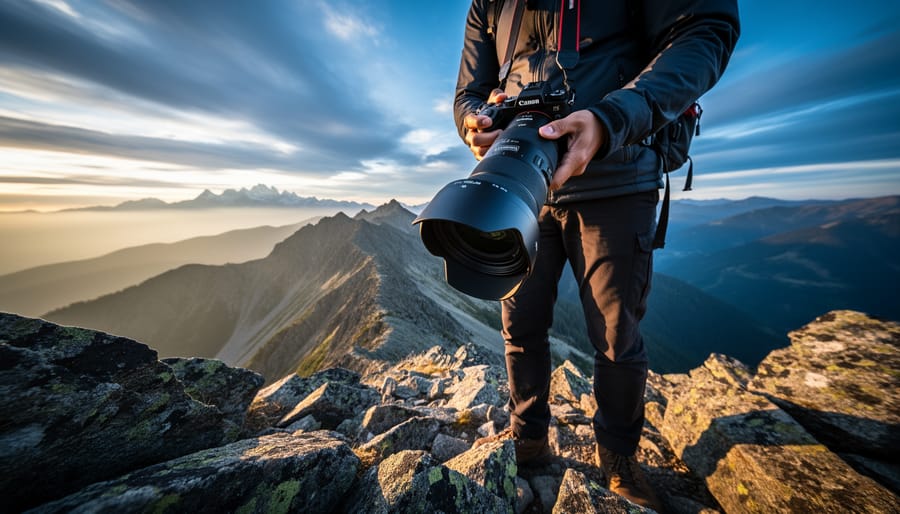
A good wide angle lens for Canon is one that offers a focal length between 10mm and 35mm (on full-frame cameras), delivers sharp edge-to-edge image quality, and matches your specific Canon mount type, whether that’s RF for mirrorless bodies or EF/EF-S for DSLRs. The difference between an average wide angle and a truly good one comes down to three factors: optical performance across the frame, build quality that holds up to real-world shooting, and Canon lens compatibility with your camera’s sensor format.
Understanding what makes a wide angle lens good matters because these lenses expand your creative possibilities. They let you capture sweeping landscapes that show the full grandeur of a mountain range, squeeze entire building interiors into a single frame for real estate photography, or create dynamic compositions in tight spaces where you can’t simply step back. But not all wide angles perform equally. A mediocre lens might give you the field of view you need while introducing distortion that bends straight lines into curves, vignetting that darkens corners, or soft edges that lack detail.
This guide walks you through the technical foundations of wide angle photography for Canon shooters, explains the different types available in 2026, and provides practical criteria for evaluating which lens suits your specific shooting style and budget.
What Wide Angle Lenses Actually Are
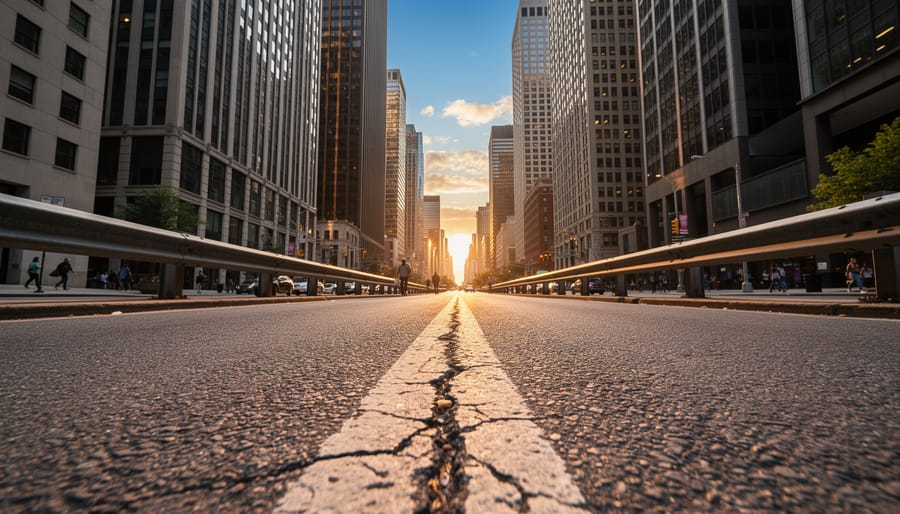
A wide angle lens is any lens with a focal length shorter than about 35mm on a full-frame camera, delivering a broader field of view than what our eyes typically perceive in sharp focus. These lenses let you capture more of a scene, more sky, more foreground, more of the room, without stepping back.
The “wide angle” label comes from the angle of view the lens covers. A 24mm lens on a full-frame Canon body sees roughly 84 degrees horizontally, while a 50mm lens (considered “normal” or “standard”) sees just 46 degrees. Go wider to 16mm and you’re looking at around 107 degrees, suddenly you’re fitting an entire cathedral interior or a vast landscape into one frame. Telephoto lenses work the opposite way: longer focal lengths (85mm, 200mm) narrow the angle of view, magnifying distant subjects instead of expanding the scene.
Here’s where it gets crucial for Canon shooters: focal length alone doesn’t tell the whole story. If you’re shooting with a Canon APS-C camera (like the EOS R7 or older Rebels), the smaller sensor effectively crops the image, which changes how lenses behave. A 24mm lens on APS-C produces a field of view closer to 38mm on full-frame, not quite as wide as you’d expect. This is because crop factor affects field of view multiplying the stated focal length by roughly 1.6× on Canon’s crop sensors.
- Focal length
- The distance (in millimeters) from the lens’s optical center to the sensor when focused at infinity; shorter focal lengths produce wider fields of view.
- Angle of view
- The width of the scene the lens can capture, measured in degrees; wide angles exceed 60-65 degrees horizontally.
- Full-frame equivalent
- The focal length on a 35mm full-frame sensor that would produce the same field of view as a given lens on a crop sensor.
- Crop factor
- The multiplier (1.6× for Canon APS-C) applied to a lens’s focal length to determine its effective field of view on a smaller sensor.
- Rectilinear vs. fisheye
- Rectilinear lenses keep straight lines straight, while fisheyes embrace extreme barrel distortion for ultra-wide coverage (often 180 degrees or more).
When you see a lens marketed as 10-18mm for Canon APS-C, it’s designed specifically for that smaller sensor. Mount it on a crop body and you get genuine wide angle coverage (equivalent to roughly 16-29mm full-frame). That same lens wouldn’t cover a full-frame sensor properly, you’d see dark corners. Conversely, an EF 16-35mm designed for full-frame works on crop sensors but delivers a narrower view than the numbers suggest.
How Wide Angle Lenses Work Differently
Wide angle lenses bend light more aggressively than their standard or telephoto counterparts, which creates both their signature look and their engineering challenges. To project a wider field of view onto the same sensor size, the lens must spread incoming light rays across a broader angle. This requires a complex arrangement of glass elements, often 12 to 16 or more, with some elements deeply curved to gather and redirect light from the periphery of the scene.
That aggressive light-bending introduces optical distortions. Barrel distortion makes straight lines bow outward near the frame edges, particularly pronounced in ultra-wide designs. Good wide angles minimize this through aspherical elements (non-spherical lens surfaces that correct aberrations) and sophisticated computer modeling during design. Canon’s premium wide lenses use multiple aspherical elements and specialized coatings to keep straight lines relatively straight, which matters enormously for architecture work.
Chromatic aberration, color fringing where high-contrast edges meet, also intensifies at wider angles because different wavelengths of light refract at different rates through curved glass. Canon addresses this with low-dispersion (UD and Super UD) glass elements that bring wavelengths back into alignment before they hit the sensor.
Wide angles exhibit exaggerated depth of field compared to longer lenses at the same aperture. Shoot at f/8 with a 16mm lens and nearly everything from a few feet to infinity stays sharp, which makes them forgiving for landscapes but tricky for selective focus work. The flip side: even wide apertures like f/2.8 don’t produce the shallow depth you’d get from an 85mm at the same f-stop.
Canon’s RF mount wide angles leverage the shorter flange distance (20mm versus 44mm on EF) to position rear elements closer to the sensor. This allows simpler, lighter optical formulas without sacrificing edge sharpness, a tangible advantage over adapted EF glass. The larger diameter also accommodates faster maximum apertures without ballooning size, which explains why RF 15-35mm f/2.8 variants perform so well across the frame.
Types of Wide Angle Lenses for Canon Cameras
Ultra-Wide Primes (14mm, 24mm)
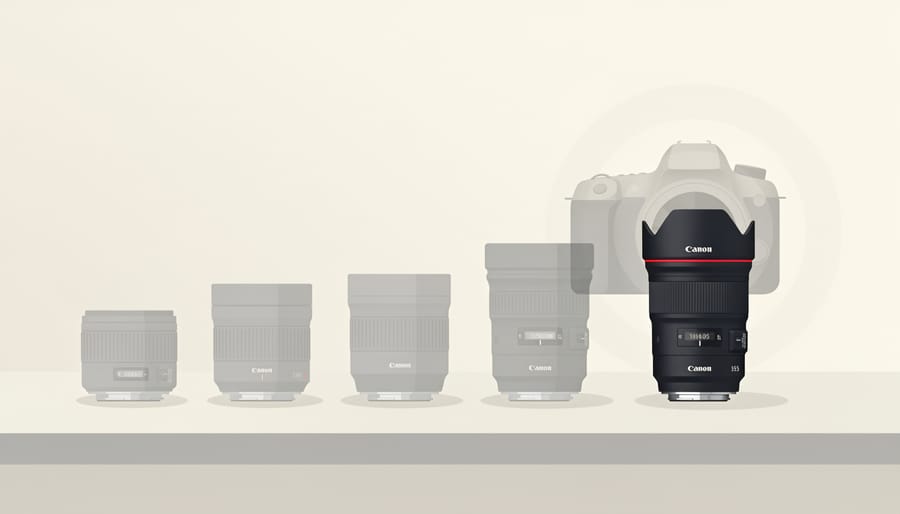
Ultra-wide primes in the 14mm to 24mm range offer the most dramatic perspective and typically deliver superior optical performance compared to their zoom counterparts. At these focal lengths, you’re capturing roughly 114° to 84° of view on a full-frame Canon body, enough to encompass expansive landscapes, entire room interiors, or dramatic foreground-to-background relationships that pull viewers into the scene.
What sets a good ultra-wide prime apart is optical excellence across the entire frame. You want edge-to-edge sharpness without the corner softness that plagues lesser wide angles, minimal vignetting even at wide apertures, and well-controlled distortion. The best examples for Canon maintain their sharpness from f/2.8 or faster apertures, giving you low-light capability that zooms can’t match at these focal lengths.
Fixed focal length excels when you need maximum image quality and speed. Astrophotographers favor fast ultra-wides like a 14mm f/1.8 or 20mm f/1.4 because gathering light matters more than framing flexibility when shooting the Milky Way. Architectural photographers working with a 24mm prime get minimal distortion for critical verticals. Landscape shooters appreciate the razor-sharp corners when they need f/8 to f/11 depth of field.
The trade-off is obvious: you zoom with your feet. But that constraint forces compositional discipline. When you know exactly how 20mm renders a scene on your Canon body, you develop an intuitive sense of where to stand and what fits in the frame.
Standard Wide Angle Primes (24mm, 35mm)
The 24mm to 35mm range sits at the intersection of wide perspective and everyday practicality. These focal lengths capture noticeably more than what your eye sees naturally, yet they avoid the dramatic distortion that can make ultra-wides tricky to work with. A 24mm f/1.4 or 35mm f/1.8 on a full-frame Canon body delivers just enough environmental context for storytelling without overwhelming the subject, critical for documentary work where place matters as much as person.
Street photographers gravitate here because these lenses let you get physically close while still showing the scene. You’re part of the action, not a distant observer. The compact size of most 35mm primes means your camera setup stays unobtrusive, and fast maximum apertures (f/1.4 to f/2) give you flexibility in changing light without switching lenses constantly.
For environmental portraits, the 24-35mm range shows people in their surroundings without the unflattering face distortion of ultra-wides. Stand three to five feet from your subject and you’ll capture context, a craftsperson’s workshop, a musician’s rehearsal space, while keeping proportions natural. Many pros building out all-purpose Canon lenses add a 35mm prime first precisely because it works across so many scenarios. The sweet spot designation isn’t hype, it reflects genuine versatility between width and workability.
Wide Angle Zooms
Wide angle zooms give you compositional flexibility that primes can’t match. Instead of moving your feet or swapping lenses, you zoom from 16mm to 35mm and fine-tune framing on the fly. For Canon shooters, this typically means full-frame options like 16-35mm f/2.8 or f/4, or crop-sensor ranges like 10-24mm and 10-18mm that deliver equivalent coverage on APS-C bodies.
The convenience comes with trade-offs. Wide zooms are optically complex, requiring more glass elements to correct distortion across the entire zoom range. This usually means they’re larger, heavier, and more expensive than comparable primes. You’ll also sacrifice some maximum aperture; while an f/2.8 wide zoom exists, it weighs substantially more and costs significantly more than an f/1.8 or f/2 prime at the same focal length.
That said, a good wide zoom minimizes these compromises. Look for consistent sharpness from corner to corner throughout the zoom range, not just at one focal length. Check reviews for how well it controls barrel distortion at the wide end and manages vignetting wide open. Weather sealing matters if you shoot landscapes or events where conditions change quickly.
The zoom’s versatility shines when you can’t move freely. Shooting from a fixed position in a crowded room, working quickly at events, or hiking where every lens swap risks dust on your sensor, these situations favor zooms over carrying multiple primes.
Fisheye and Specialty Wide Lenses
Fisheye and specialty wide lenses occupy a niche beyond conventional wide angle photography, serving specific creative and technical purposes where extreme perspective or controlled distortion becomes an advantage rather than a limitation.
Fisheye lenses create dramatic barrel distortion across the entire frame, producing a spherical “bulging” effect. Canon offers two distinct types: circular fisheyes like the EF 8-15mm project a round image onto the sensor with black corners, delivering approximately 180° coverage in all directions, popular for artistic effects and scientific documentation where complete hemispherical capture matters. Full-frame fisheyes such as Canon’s EF 15mm f/2.8 fill the entire rectangular sensor with curved perspective while maintaining 180° diagonal coverage, making them more practical for skateboarding, extreme sports, and immersive environmental shots where you want dramatic distortion without the circular border.
Tilt-shift lenses represent the architectural photographer’s precision tool. Canon’s TS-E 17mm f/4L allows independent movements of the lens plane, tilting controls depth of field planes for selective focus effects, while shifting corrects converging verticals when photographing buildings. You can keep the camera level and shift the lens upward to include a building’s top without the leaning perspective distortion that plagues standard wide angles pointed skyward. These movements make tilt-shift lenses indispensable for commercial architecture, product photography, and any work demanding geometric accuracy.
Both categories command premium prices and serve specialized needs rather than everyday shooting. Most Canon photographers never require either, but for their intended applications, nothing else delivers comparable results.
What to Look for in a Good Wide Angle Lens
Shopping for a wide angle lens means juggling optical performance, build quality, and compatibility with your specific Canon body. Start with the mount: EF lenses fit both full-frame and APS-C DSLRs, EF-S lenses only work on crop sensor DSLRs, and RF lenses are designed exclusively for Canon’s mirrorless system. Using an EF-S lens on a full-frame body will produce heavy vignetting because the image circle doesn’t cover the entire sensor. If you own or plan to upgrade to full-frame, stick with EF or RF glass rather than investing in EF-S models.
Sensor format dramatically changes the effective field of view. A 24mm lens behaves like a 38mm on an APS-C body due to the 1.6× crop factor, which means you need genuinely wider glass to achieve the same perspective. For crop sensor shooters, that often means looking at 10-18mm or 10-24mm zooms instead of the 16-35mm options full-frame photographers favour.
Beyond compatibility, evaluate these performance characteristics before committing:
- Corner-to-corner sharpness: Wide angles expose optical weaknesses at the frame edges more than any other lens type
- Distortion control: Barrel distortion is normal but should be manageable without heavy post-processing correction
- Chromatic aberration: Look for minimal purple or green fringing along high-contrast edges, especially in corners
- Maximum aperture: f/2.8 or faster helps in low light and for astrophotography, though f/4 zooms offer size and cost advantages
- Build quality and weight: Metal barrels last longer but add heft; consider whether you’ll carry this lens on long hikes
- Weather sealing: Critical if you shoot outdoors frequently, especially in damp or dusty conditions
- Autofocus speed and accuracy: Fast AF matters for street work and events, less so for landscapes on a tripod
- Price-to-performance ratio: Third-party options from Sigma and Tamron often deliver 90% of Canon’s optical quality at 60% of the cost
Test or research how a lens handles flare and contrast when shooting into bright light. Wide angles frequently face the sun or strong light sources, so coatings matter. Always use a lens hood to minimize flare and protect the front element. Finally, consider which essential lens accessories you’ll need: circular polarizers for controlling reflections and deepening skies, and neutral density filters for long exposures work particularly well with wide angle glass. A good wide angle lens isn’t necessarily the most expensive one; it’s the one that fits your Canon system, matches your shooting style, and delivers consistent optical performance where you need it most.
How Wide Angle Lenses Are Used in Real Photography
Landscape and Nature Photography
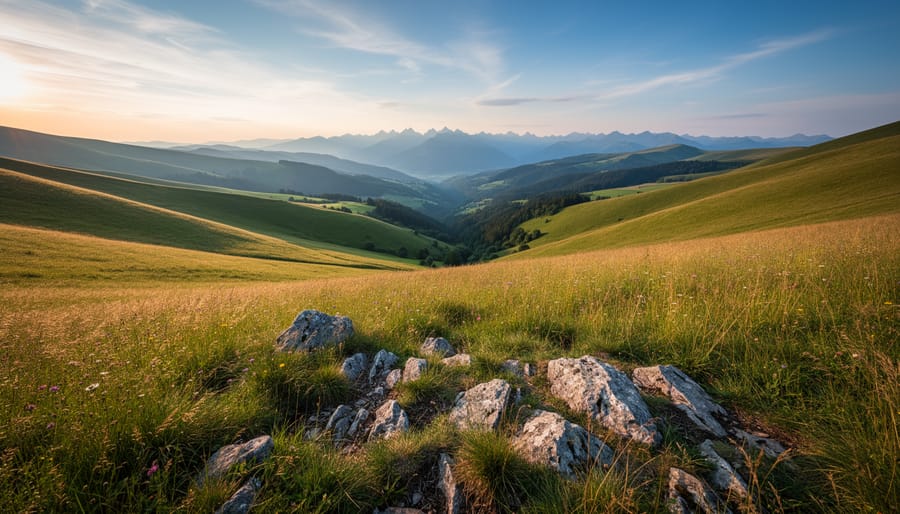
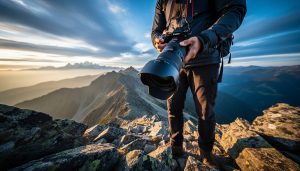
Wide angle lenses excel at landscape work because they let you include dramatic foreground elements while keeping distant mountains or horizons sharp. A good wide angle for Canon landscape shooters typically sits between 16mm and 24mm, offering enough breathing room to compose layered scenes without the extreme distortion of ultra-wides. Stopping down to f/8 or f/11 maximizes depth of field, ensuring sharpness from foreground rocks to far ridgelines, a hallmark of compelling landscape images. When paired with other landscape gear essentials like sturdy tripods and filters, these lenses capture the scale and grandeur that standard focal lengths can’t convey, pulling viewers into the scene rather than simply showing them a distant view.
Architecture and Interior Work
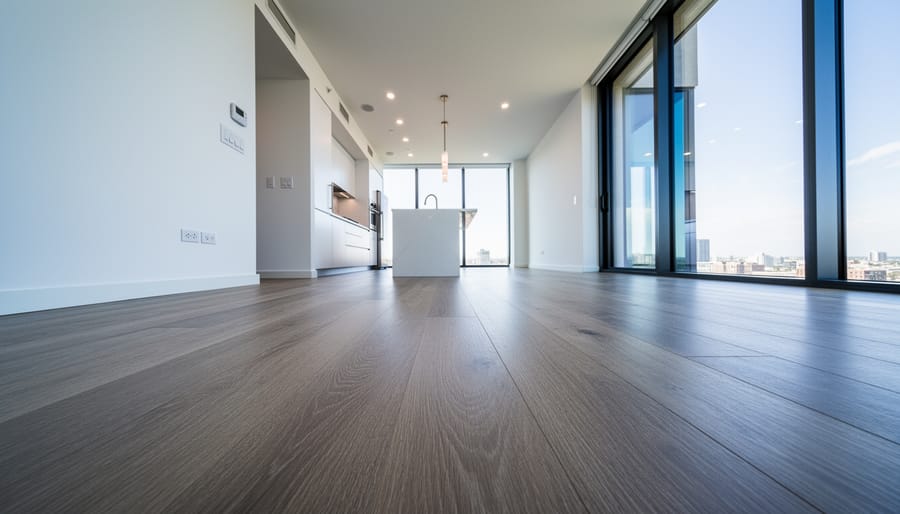
Wide angle lenses solve the fundamental problem of architectural photography: showing entire spaces when you can’t back up far enough. In tight interiors or narrow streets, a 16mm or 24mm lens captures the full room where a 50mm would show only fragments. The challenge is controlling perspective distortion, vertical lines tilting inward make buildings look like they’re falling backward. A good rectilinear wide angle (as opposed to a fisheye) keeps straight lines straight across the frame, essential for real estate, architectural documentation, or any work where accuracy matters.
Tilt-shift lenses like Canon’s TS-E series correct perspective by shifting the optical axis, letting you photograph tall buildings without tilting the camera upward. For most interior work, though, a quality rectilinear zoom handles the job well enough, especially if you’re shooting level and correcting minor distortion in post. Choose fisheye only when the circular or heavily distorted look serves a creative purpose, the exaggerated curves undermine the geometric precision architectural subjects demand.
Street and Documentary Photography
Wide angle lenses put you inside the story rather than observing from a distance. A 24mm or 28mm lens on a full-frame Canon lets you work close to your subjects while capturing their surroundings, essential when documenting street life, events, or human environments. The expansive field of view means you can shoot in cramped interiors, crowded markets, or narrow alleyways without backing into walls.
This proximity creates visual intimacy. Your viewer experiences the scene from where you stood, not through a telephoto’s compressed detachment. Context matters in documentary work: that coffee shop counter, the posters behind a subject, the depth of a workspace all contribute to the narrative.
The trade-off? You must get physically close, which requires confidence and awareness. A good wide angle for street work balances speed (f/2.8 or faster for low light), discretion (compact primes draw less attention than zooms), and sharp rendering across the frame.
Astrophotography and Low-Light Shooting
Fast apertures matter most here. An f/2.8 or faster lens gathers enough light for Milky Way shots without excessive ISO noise or star trailing. Canon shooters chasing night skies should prioritize maximum aperture over zoom range, look for coma correction at the frame edges where stars smear, and verify the lens works well wide open since you’ll rarely stop down. Manual focus aids like focus peaking help nail infinity in darkness.
Frequently Asked Questions
Is 24mm wide enough for landscape photography?
On full-frame Canon cameras, 24mm is moderately wide and works well for landscapes that include strong foreground elements or when you want a more natural perspective. For truly expansive scenes or dramatic foreground emphasis, 16-20mm offers more impact, though 24mm remains versatile enough for most shooters.
What’s the difference between EF and RF wide angle lenses?
EF lenses fit Canon’s older DSLR mount and work on mirrorless R-series bodies with an adapter, while RF lenses are designed specifically for Canon’s mirrorless system with a shorter flange distance that enables better optical performance. RF wide angles typically deliver sharper corners and better correction, but EF options remain excellent and often cost less on the used market.
Are third-party wide angle lenses good for Canon cameras?
Quality varies, but manufacturers like Sigma and Tamron produce excellent wide angles that match or exceed Canon’s performance at lower prices. Third-party options sometimes lack weather sealing or autofocus speed compared to Canon glass, but many photographers find the trade-off worthwhile for the cost savings.
Do I need f/2.8 or is f/4 enough for a wide angle zoom?
For landscape work in good light, f/4 is perfectly adequate and you’ll often shoot at f/8 anyway for depth of field. If you shoot astrophotography, low-light interiors, or handheld in dim conditions, f/2.8 becomes much more valuable despite the added weight and cost.
What’s a good budget wide angle for Canon APS-C cameras?
The Canon EF-S 10-18mm f/4.5-5.6 IS STM delivers surprisingly sharp results and image stabilization for around half the price of premium options. It covers the ultra-wide range on crop sensors and handles landscapes, architecture, and travel photography without breaking the bank.
These questions come up repeatedly because choosing a wide angle involves balancing focal length, aperture, and budget against your actual shooting needs. Canon shooters benefit from a deep lineup of both first-party and third-party glass, which creates real options but also real decisions. The right choice depends less on abstract “best” rankings and more on how the lens fits your specific camera body, subjects, and lighting conditions. A landscape photographer on a budget prioritizes different qualities than an architectural shooter who needs tilt-shift capability or an astrophotographer chasing maximum aperture.
Choosing a good wide angle lens for your Canon camera ultimately comes down to three factors: the sensor format you’re shooting on, the type of photography you do most, and what you’re willing to spend. There’s no single “best” option that works for everyone.
That said, any quality wide angle lens shares certain characteristics. Look for excellent corner-to-corner sharpness, well-controlled distortion (unless you’re deliberately shooting fisheye), solid build quality, and proper compatibility with your Canon mount and sensor size. These fundamentals matter more than chasing the widest aperture or the most extreme focal length.
The photographers who get the most from their wide angle glass are those who match the lens to their actual shooting needs. A landscape shooter benefits from different features than someone doing documentary work or real estate photography. Consider how you’ll use the lens in practice, not just how impressive the specs look on paper.
Start with your most common scenarios, identify which focal lengths and features genuinely serve those uses, and choose accordingly. Your Canon system has excellent wide angle options across every price point and purpose.


 By
By