 By
By 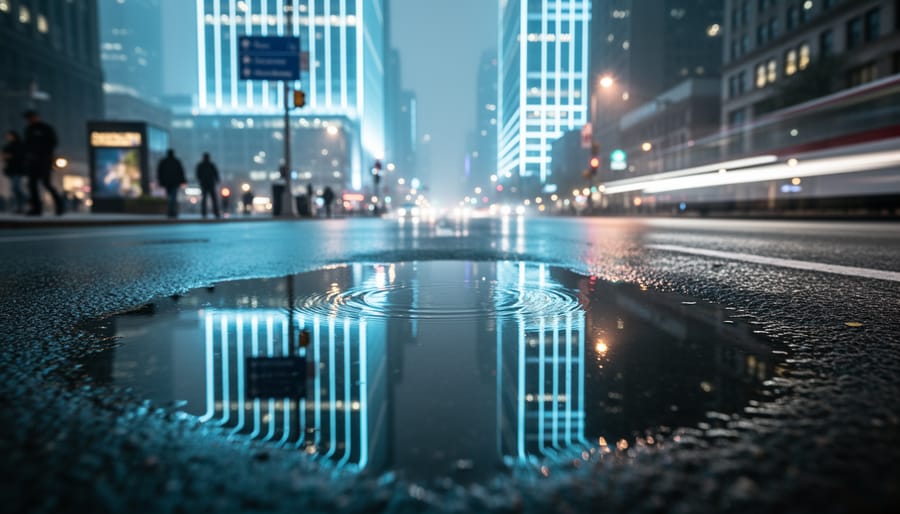
Photography reflections are images captured when light bounces off a surface like water, glass, metal, or polished stone and redirects into your camera lens. This optical phenomenon creates mirror-like duplicates, distortions, or abstract interpretations of a scene, offering photographers a way to add depth, symmetry, and visual intrigue to their work.
Reflections matter because they transform ordinary compositions into layered narratives. A puddle on a city street can frame towering skyscrapers in ways that comment on urban density. A storefront window might overlay pedestrians with mannequins, creating juxtapositions that speak to consumer culture. These aren’t accidents. When you understand how reflections work optically and how to control them compositionally, you unlock a tool that documentary and street photographers have used for decades to tell stories about place, identity, and change.
The rise of glass architecture in global cities has made reflections more prevalent than ever. Reflective surfaces now dominate urban environments, turning every facade into a potential canvas. For photographers interested in global visual storytelling reflections offer a visual language that captures the tension between physical space and its mirrored double, between what is real and what is perceived.
This article explains the optical mechanics behind reflections, the different types you’ll encounter in the field, and how to apply them in practice. You’ll learn when to embrace perfect mirror symmetry, when to seek out distorted abstracts, and how to use angle, polarization, and timing to control what the reflection reveals or hides. Whether you’re shooting a rain-soaked alley or a sleek corporate lobby, the techniques covered here will help you see reflections not as obstacles but as opportunities.
What Photography Reflections Really Mean
Photography reflections are images formed when light bounces off a smooth or semi-smooth surface and reaches your camera sensor, creating a mirrored or distorted version of the scene. The reflective surface acts as a secondary subject, capturing whatever sits in front of it, buildings, people, sky, streets, and folding that reality back into your frame. Water puddles, glass windows, polished metal, mirrors, and even wet pavement all create these doubled worlds.
The visual effect is immediate and striking. Reflections introduce symmetry that draws the eye, often splitting the composition into mirrored halves. A skyscraper reflected in a rain-soaked sidewalk creates a vertical echo; a mountain mirrored in a still lake doubles the landscape. But reflections rarely deliver perfect copies. Ripples in water distort the image, glass adds overlapping layers of interior and exterior scenes, and curved metal bends reality into abstraction. These distortions are part of the appeal, turning familiar subjects into something more ambiguous and interpretive.
Reflections also add compositional depth. Instead of a single plane, you now have at least two: the real scene and its reflection. This layering creates visual complexity, inviting viewers to parse what belongs to the original subject and what belongs to the mirrored version. A street photographer shooting through a café window might capture both the person inside and the traffic reflected in the glass, merging two moments into one frame.
The physics behind this is straightforward. Light travels in straight lines until it hits a reflective surface, where it bounces back at an equal angle. The smoother the surface, the clearer the reflection on polished surfaces. Understanding a few core terms helps clarify how different surfaces behave:
- Specular Reflection
- Light bouncing off a smooth, mirror-like surface at a consistent angle, producing a clear, sharp reflection. Glass, calm water, and polished metal create specular reflections.
- Diffuse Reflection
- Light scattering off a rough or textured surface, resulting in a soft, unclear reflection. Rippled water, frosted glass, and brushed metal produce diffuse reflections.
- Mirror Image
- A reversed copy of the original subject, flipped along the reflective plane. The reflection appears spatially inverted but recognizable.
- Symmetry
- The visual balance created when a reflection mirrors the subject across a dividing line. Symmetry anchors composition and creates order within the frame.
- Composite Scene
- A photograph where the reflection and the real subject both contribute equally to the image, creating a layered or merged composition. Urban glass facades and wet streets often produce composite scenes.
This interplay between real and reflected, clarity and distortion, is what makes reflections so versatile. They turn ordinary surfaces into compositional tools, adding visual intrigue and narrative ambiguity to otherwise straightforward scenes.
How Reflections Work in Photography
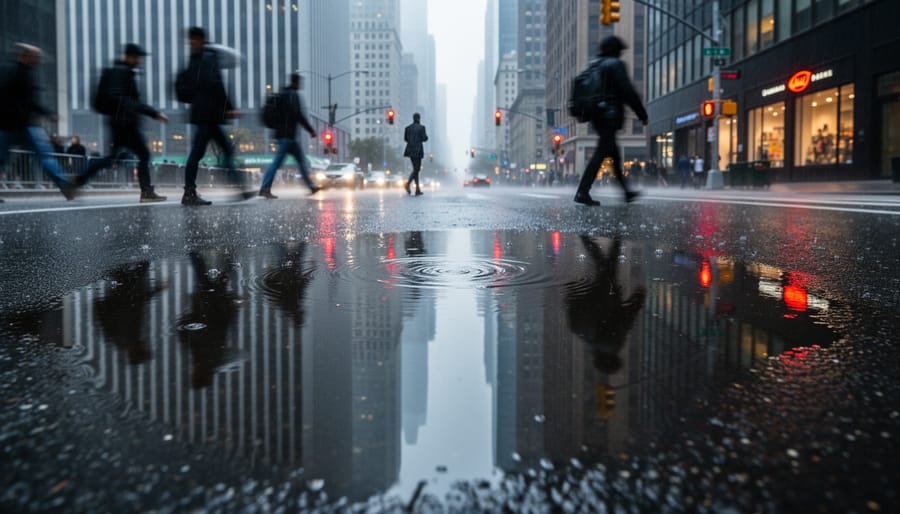
Understanding how reflections work starts with a simple principle: when light hits a reflective surface, it bounces back at the same angle it arrived. This is called the angle of incidence. If light strikes a window at 45 degrees, it reflects at 45 degrees on the opposite side of an imaginary perpendicular line. Your camera’s position relative to this angle determines what you see in the reflection. Stand too far to one side, and the reflection vanishes. Move to the sweet spot, and both the subject and its mirrored twin align perfectly in your viewfinder.
Surface texture dramatically changes how reflections appear. A perfectly still lake acts like a mirror, creating crisp, symmetrical reflections of the shoreline and sky. Introduce ripples, and that same reflection fragments into abstract patterns and soft colour washes. Glass works similarly. Clean, flat storefront windows deliver sharp reflections of the street scene, while textured or rain-streaked glass distorts and diffuses the image. The physical principle is that surface smoothness affects reflection quality: smooth surfaces produce specular reflections (clear and defined), while rough surfaces scatter light in multiple directions, creating diffuse reflections.
Your camera captures reflections as a layered composition. The reflected image sits on the same focal plane as the reflective surface itself, not at the apparent distance of the subject being mirrored. If you’re photographing a building reflected in a puddle three metres away, focus on the puddle’s surface at three metres, not the building at thirty. This matters when setting depth of field. A wide aperture might blur either the reflection or the surrounding pavement. Stop down to f/8 or f/11, and you can render both the puddle, its reflection, and nearby foreground elements sharply.
Distance and focal length change the relationship between subject and reflection. Step closer with a wide lens, and the reflection dominates the frame while the actual subject shrinks toward the horizon. Use a longer lens from farther back, and you compress the scene, making the reflected and real elements appear more balanced in scale. Shifting your height alters the reflection too. Crouch low near water, and you maximize the mirrored area. Stand tall, and the reflection becomes a thin strip. These aren’t fixed rules but variables you adjust in real time, watching through your viewfinder as the composition shifts with every step and angle change.
Types of Reflections You Can Photograph
Water Reflections

Water reflections are among the most accessible and versatile types in photography. You’ll find them everywhere: puddles on city sidewalks after a rainstorm, calm lakes mirroring mountain ranges, slow-moving rivers doubling tree lines, and rain-soaked streets reflecting neon signs at night.
The key variable is stillness versus movement. Perfectly still water acts like a mirror, producing sharp, symmetrical reflections that can create striking compositions, especially when you flip the camera upside down and the viewer can’t immediately tell which half is real. Even a light breeze ripples the surface and transforms a crisp reflection into impressionistic streaks of color and light. Faster-moving water breaks reflections into fragmented patterns, which works well for abstract or experimental shots.
Urban photographers love puddles because they’re spontaneous and frame-within-a-frame opportunities: a shallow pool on asphalt can reflect an entire building or a passing figure. Landscape photographers seek out lakes at dawn or dusk when the water is still and the light is soft, doubling the drama of skies and landforms. In both contexts, getting low, kneeling or lying down, exaggerates the reflection and minimizes distracting foreground elements.
Glass and Window Reflections
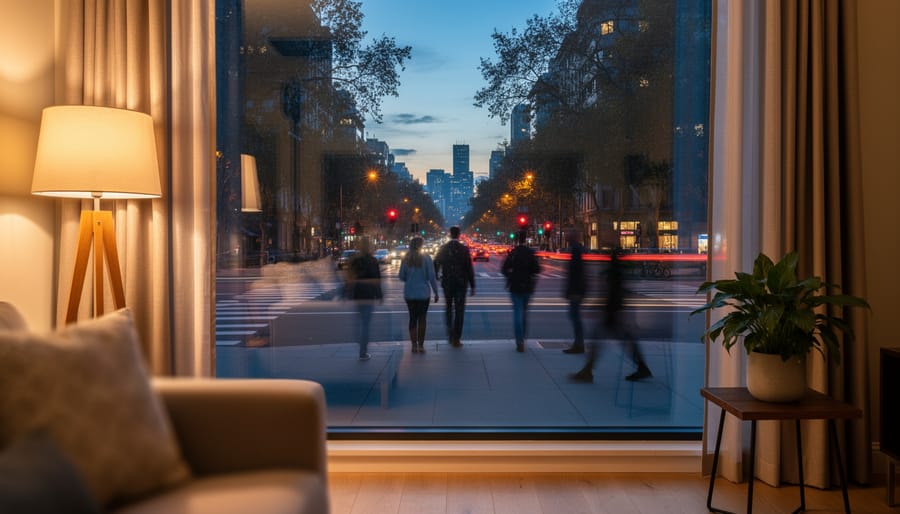
Glass and window reflections turn urban environments into natural compositing tools. Storefronts layer mannequins, products, and interior lighting with passing pedestrians and street scenes outside. Skyscraper facades mirror entire city blocks, clouds, and neighboring buildings, creating dense visual collages that compress architectural space. Car windows capture fragments, a driver’s profile blended with reflected street signs or tree branches.
The challenge with glass is controlling what shows through versus what reflects. Clean windows in bright light act as strong mirrors, but if the interior is brighter than the exterior, the glass becomes transparent and the reflection weakens. Polarizing filters help manage this balance by reducing glare and intensifying reflections, though rotating the filter changes which elements dominate the frame.
Angle matters significantly. Shooting perpendicular to glass minimizes reflections and reveals what’s behind it; shooting at 30-45 degrees maximizes mirror-like effects. Position yourself carefully to avoid your own reflection, or embrace it as part of the composition.
Window reflections excel at showing urban density and juxtaposition, a historic church mirrored in a modern tower’s glass, or shoppers reflected across a display window. They reveal how cities layer multiple realities in a single surface.
Metallic and Polished Surface Reflections
Chrome bumpers, stainless steel facades, polished marble lobbies, and mirrored elevator doors turn reflections into warped, abstract compositions that feel distinctly urban and modern. Unlike water, these surfaces often distort what they reflect, curves compress or stretch the scene, flat mirrors double it with mechanical precision, and brushed metal diffuses it into soft suggestion.
That distortion is the creative opportunity. A polished building clad in curved metal panels can bend an entire street into ribbons of color and shape, transforming recognizable architecture into something surreal. Mirrors in public spaces layer people, signage, and structure in ways that challenge spatial logic, creating images that feel more conceptual than documentary.
Shoot metallic surfaces when the light is interesting but not harsh, direct sun can blow out chrome to pure white, losing detail. Overcast skies or golden hour work well, keeping contrast manageable. Watch your own reflection: you’ll often appear in the frame unless you angle carefully or use it intentionally as part of the composition.
Polished floors in transit hubs, galleries, or malls offer symmetrical reflections with a futuristic edge, especially at night when artificial light dominates. These surfaces reward a lower shooting angle and attention to what’s reflected, sometimes the mirrored version of the scene is stronger than the direct view.
Natural Reflections
Natural environments often surprise photographers with reflective surfaces that feel less obvious than urban glass and metal. Frozen lakes and rivers produce mirror-like surfaces when ice forms smoothly, especially in still conditions before snow accumulates. These icy planes can reflect mountains, trees, and skies with startling clarity, though cracks and surface texture add unique patterns that glass can’t replicate.
Wet sand at low tide creates temporary mirrors along coastlines. The thin film of water left behind catches the sky, clouds, and anyone walking across it, but only for a brief window before the sand dries or waves return. The effect works best in soft, even light, harsh midday sun often washes out the reflection’s contrast.
Polished stone, whether naturally smooth river rocks or rain-slicked granite, reflects surrounding foliage and light in more abstract, fragmented ways. Unlike the clean symmetry of still water, stone surfaces distort and scatter the image, creating impressionistic rather than literal reflections.
These natural reflections demand patience and timing. A calm morning before wind disturbs the water, the golden hour when wet surfaces glow, or the moment after rain when everything temporarily gleams, these narrow windows reward photographers who plan around weather and light rather than expecting reflections to simply appear.
How Reflections Are Used in Photography

Documenting Cities and Globalization
Reflections in urban environments do more than create striking compositions, they reveal the fractured, overlapping identity of modern cities. A glass façade reflecting a centuries-old church beside a neon-lit billboard captures globalization in a single frame: past and present, local heritage and imported brands, all compressed into one visual plane. These layered images document how cities absorb and display multiple influences simultaneously, making them powerful tools for photographers exploring contemporary urban life.
Transit hubs and commercial districts amplify this effect. A subway station’s polished walls might reflect commuters from a dozen countries, while a department store window layers luxury goods over street vendors outside. These reflections become accidental collages of economic disparity, cultural exchange, and architectural contradiction. Documentary photographers use them to tell stories that parallel migration photography or studies of gender across cultures capturing how globalization reshapes not just buildings, but the human experience within them.
The technique works because reflections compress distance and context. A single shot can hold both the steel tower representing global capital and the family-run shop it reflects, illustrating coexistence or tension without staging. You’re not just photographing surfaces; you’re documenting the visual grammar of urbanization itself.
Practical Tips for Capturing Strong Reflection Photos
Getting the best reflection shots takes more than spotting a shiny surface. You need to control your position, light, and settings to turn what you see into a compelling image.
Start with your shooting angle. Crouch low to emphasize puddle reflections or shoot from above to compress the distance between subject and reflected image. Small changes in your position dramatically alter what appears in the reflection and how much of the scene it occupies. Move side to side, not just up and down, to shift the alignment between real objects and their mirrored counterparts.
Watch the light direction. Early morning and late afternoon give you long shadows and warm tones that make reflections more dramatic. Overcast days work well for glass and water because harsh sunlight creates glare that washes out detail. If you’re shooting metal or polished surfaces, diffused light prevents hot spots that blow out highlights.
Choose the right aperture for your intent. A wide aperture like f/2.8 isolates the reflection while blurring the original subject, creating abstraction. A narrow aperture like f/11 or f/16 keeps both the subject and its reflection sharp, which works when you want layered storytelling, useful when documenting how cultural diaspora reshapes city streets or how architecture mirrors broader shifts like theatre globalization. Test both to see which serves the story you’re telling.
Manage your shutter speed based on surface movement. Still water needs no special consideration, but rippled surfaces require faster speeds (1/250s or quicker) to freeze the distortion patterns. If you want a dreamy, blurred reflection in moving water, slow down to 1/15s or longer and use a tripod.
Use a polarizing filter selectively. Polarizers reduce glare and can deepen reflections on water, but they can also eliminate reflections entirely if rotated too far. Rotate slowly while looking through the viewfinder to find the sweet spot. Skip the polarizer when shooting glass if you want to capture both the reflection and what’s behind the glass in a single layered composition.
Focus on the reflection, not the subject. Your camera will often try to focus on the physical object rather than its mirrored image. Switch to manual focus or use a single focus point placed directly on the reflection to ensure sharpness where it matters.
Check your histogram. Reflections on water and glass often include bright sky or lights that can trick your meter. Expose for the reflection itself, not the surrounding scene, and recover shadows in post if needed. Underexposing by half a stop preserves highlight detail in bright reflective areas.
Shoot raw. Reflections compress a wide tonal range into a single frame. Raw files give you flexibility to balance exposure, recover blown highlights, and adjust color temperature without degrading the image. The extra latitude matters when you’re working with complex lighting conditions inherent to reflective surfaces.
Common Questions About Photography Reflections
Reflection photography raises recurring questions, especially around technical challenges that can make or break a shot. Here are answers to the most common issues photographers face when working with reflective surfaces.
What’s the best time of day to photograph reflections?
Early morning and late afternoon offer softer, directional light that enhances contrast between the reflected image and its surroundings. These times also deliver dramatic skies and golden tones that create visually compelling reflections in water and glass.
How do I avoid unwanted glare and hotspots?
Change your shooting angle relative to the light source, moving slightly to the left, right, or higher can eliminate harsh reflections. A lens hood helps block stray light, and shooting during overcast conditions naturally diffuses bright spots.
Should I use a polarizing filter for reflections?
It depends on your intent. A circular polarizer can reduce or eliminate reflections on glass and water, which is useful when you want to see through a window or clear the surface of a lake. However, if the reflection itself is your subject, avoid the polarizer or rotate it carefully to control rather than remove the effect.
Do I focus on the reflection or the actual subject?
Focus on the reflection if it’s your primary compositional element. For layered scenes where both the reflected and real elements matter, use a smaller aperture (f/8 to f/16) to increase depth of field and keep both in acceptable sharpness.
When editing reflection photos, subtle adjustments often work best. Boost clarity and contrast to sharpen the reflected details without overdoing it. If the reflection appears dim compared to the rest of the frame, use localized exposure adjustments or graduated filters in your editing software to balance the tones. Desaturating slightly can emphasize form and line over color, which suits abstract reflection work.
Watch your histogram while shooting, especially with bright sky reflections. Overexposed highlights in water or glass lose detail permanently, so expose to protect those bright areas and lift shadows in post-processing if needed. Reflections in puddles or wet pavement benefit from a slightly underexposed raw file, which preserves the richness of both the mirrored scene and the surrounding textures.
If your reflection looks muddy or lacks punch, check the surface condition. Dusty glass, rippled water, or a textured floor diffuses the image and softens contrast. Waiting for calmer water, finding cleaner glass, or wiping down a reflective surface can transform a mediocre shot into a striking one. Small practical adjustments on location save significant editing effort later.
Reflections transform ordinary scenes into layered visual stories. Whether you’re shooting a puddle on a city street or the glass facade of a skyscraper, you’re capturing more than a mirrored image. You’re documenting how light, architecture, and human activity intersect in a single frame.
The technique works across every photographic genre. Street photographers use storefronts to reveal overlapping worlds. Landscape artists turn calm lakes into perfect symmetry. Documentary shooters frame reflections in transit hubs and commercial districts to show how cities blend old and new, local and global. Each approach taps into the same fundamental appeal: reflections add depth, abstraction, and a sense of discovery to your work.
Start simple. Look for water after rain, polished surfaces in public spaces, or windows that layer interior and exterior scenes. Pay attention to your angle, the quality of light, and what the reflection adds to your composition. Experiment with different surfaces and times of day. The more you practice, the more naturally you’ll spot opportunities.
Reflections connect you to the visual rhythm of modern life. They show cities as living, changing environments where architecture mirrors culture and globalization reshapes skylines. Every reflection photograph is a small record of how we build, move through, and experience the spaces around us. Keep your camera ready and your perspective flexible.




 By
By