 By
By 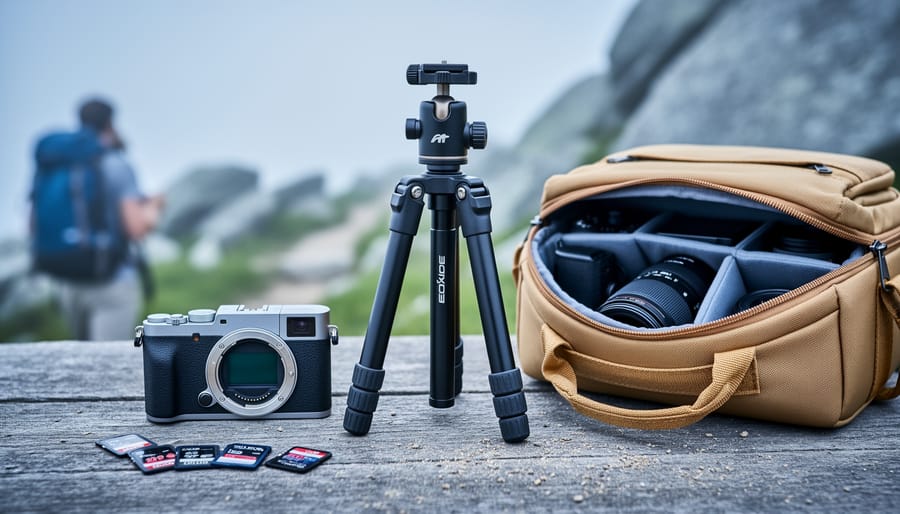
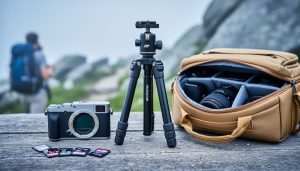
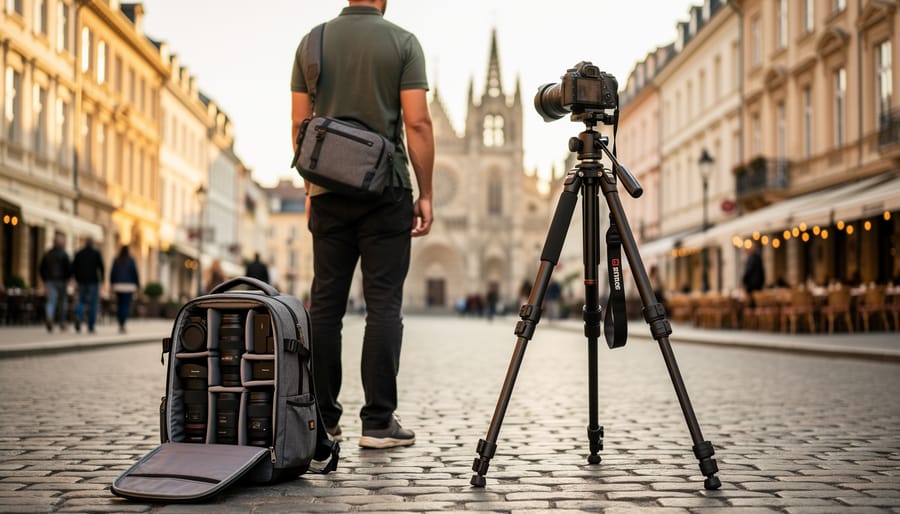
You need three accessory categories to work reliably in the field: fast memory cards that keep pace with your camera’s burst mode and video specs, a stable tripod that adapts to your shooting style, and a bag that protects your kit without slowing you down. These supporting tools matter as much as the glass you mount, because a dropped frame, a missed long-exposure, or a scratched lens will cost you the shot no matter how capable your camera body is.
The accessories market in 2026 is overwhelming. Memory card speeds now range from barely adequate to overkill for most workflows, tripods span $20 smartphone clips to $500 professional rigs, and camera bags come in so many configurations that choosing feels paralyzing. This guide cuts through the noise by presenting eight specific products across memory cards, tripods, and bags, each selected for a distinct use case. You’ll see budget and professional-grade memory cards that match real-world camera demands, convertible tripods that pull double duty as monopods, dedicated smartphone support for hybrid shooters, and bags designed for different carry styles and protection levels.
The selection criteria are simple: each product solves a concrete problem for a defined photographer. A weekend hobbyist shooting with a Canon R50 doesn’t need the same card speed as someone recording 8K on a Canon R5 II, and a travel photographer hiking with a Fujifilm X100VI has different bag priorities than a studio shooter hauling multiple bodies and lenses. The recommendations reflect how photographers actually work in 2026, whether you’re managing hybrid phone and mirrorless setups, prioritizing portability for long trips, or building a professional kit that performs under deadline pressure.
How We Selected These Essential Accessories
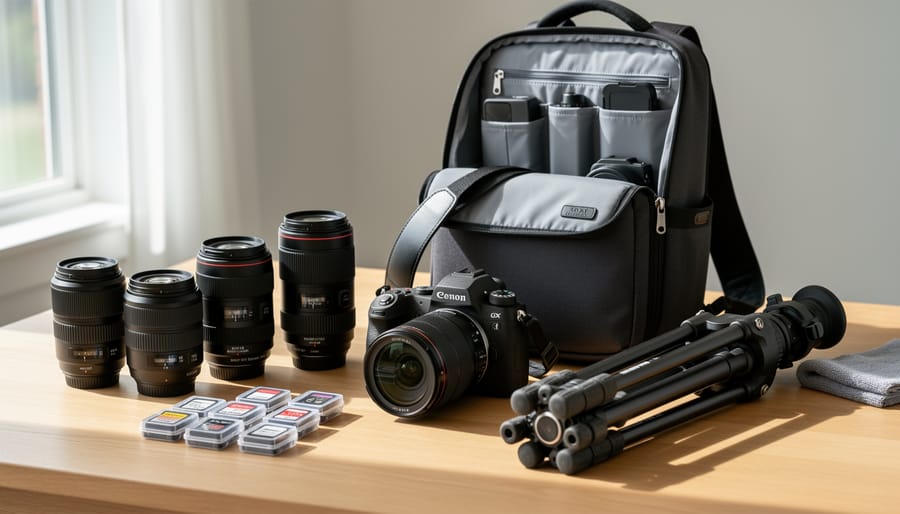
We didn’t pick these camera accessories by scrolling through sponsored “best of” lists or chasing the latest gear releases. Every product here earned its place through a combination of rigorous testing and real-world validation. Our selection process balanced several critical factors:
- Proven reliability across extended field use, not just spec-sheet promises
- Genuine value for money at both budget and professional price points
- Broad compatibility with current camera systems, from the Canon R50 to the R5 II
- Consistently high user ratings backed by thousands of verified customer reviews
- Hands-on testing with gear like the Atlas Adventure backpack during actual shoots
We update this guide annually to keep pace with the 2026 photography landscape, vetting new products against established favorites. Each pick serves a specific photographer profile, whether you’re a hobbyist building your first complete kit or a working professional who can’t afford equipment failure on a paid shoot. The memory cards range from budget 32GB options for casual shooters to 128GB professional-grade cards that handle the massive files from cameras like the Canon R5 II. The tripods and bags similarly span the spectrum, from smartphone-focused solutions to convertible systems for hybrid workflows. You’ll find an option that matches both your shooting style and your budget, all backed by the kind of user feedback that comes from photographers actually using this gear in the field.
1. SANDISK 128GB Extreme PRO SD Memory Card

When you’re shooting high-resolution stills with a Canon R5 II or recording 8K video in the field, the last thing you want is a bottleneck between your camera and your computer. The SanDisk 128GB Extreme PRO SD Memory Card delivers 250MB/s read speeds that keep pace with demanding workflows, fast enough to clear a burst sequence off the card quickly and transfer a day’s worth of RAW files without waiting around. That speed matters when you’re shooting professionally and time is billable.
This card’s UHS-I compatibility means it works across virtually every modern camera system, from Canon and Sony to Nikon and Fujifilm bodies. The 128GB capacity strikes the right balance for working photographers: enough room for a full wedding ceremony or a day of landscape shooting without constant card swaps, but not so large that losing one card means losing an entire assignment. Spreading your files across two or three 128GB cards is smarter risk management than putting everything on a single 512GB.
With a 4.8 out of 5 rating from 1,325 customer ratings, the Extreme PRO has earned trust from thousands of photographers who need reliability on critical shoots. When you’re capturing once-in-a-lifetime moments, whether that’s a client’s wedding day or wildlife behavior that won’t repeat, you need gear that survives real-world pressure. The Extreme PRO’s build quality and error correction handle heat, humidity, and the constant write cycles of video recording better than budget alternatives.
For 4K and 8K video workflows, the sustained write speeds support the data rates modern cameras generate without dropped frames. This is the never-let-you-down option working photographers reach for when failure isn’t acceptable.
2. SANDISK 64GB Ultra SD Memory Card

Not every photographer needs blazing 250MB/s transfer speeds. The SanDisk 64GB Ultra offers a more practical balance for hobbyists and casual shooters: 140MB/s read speeds handle burst sequences and full-resolution JPEGs without bottlenecks, UHS-I compatibility works in every modern camera, and the price leaves room in your budget for backup cards or additional lenses. With a 4.6 out of 5 rating from nearly 91,000 customers, this is one of the most trusted memory cards on the market, proven reliable across thousands of real-world shoots rather than lab benchmarks alone.
Who benefits most from this card? Beginners working with cameras like the Canon R50, where the body’s buffer and sensor resolution don’t demand extreme write speeds. Weekend photographers shooting family events, travel snapshots, or casual landscapes where you’re not firing 20 frames per second. Anyone building a multi-card rotation for redundancy, since buying three of these costs less than a single pro card while spreading your risk across multiple storage devices.
Speed matters less than you think for typical photography. Unless you’re shooting 8K video or RAW bursts that fill the buffer in seconds, 140MB/s clears files fast enough that you won’t notice lag during normal shooting or when transferring a day’s work to your laptop. The real value here is capacity and reliability at a price that encourages smart workflow habits: keep one card in the camera, one in your bag as immediate backup, and rotate them between shoots. For secondary slots in dual-card bodies, this card provides redundant storage without the premium cost of matching your primary card’s speed, perfect for writing JPEGs to the second slot while RAWs go to the faster card.
3. Kodak 32GB Class 10 UHS-I U1 SDHC/XC Premium Performance Memory Card

The Kodak 32GB card proves that entry-level doesn’t mean unreliable. With a 4.6 out of 5 rating from over 5,400 users, this Class 10 UHS-I card delivers the essentials, full HD video recording and stable performance, without the premium price tag of faster options. That combination makes it ideal for photographers who need multiple cards rather than one flagship model.
Why does a 32GB card still matter in 2026? Three practical reasons. First, it’s the perfect travel backup: tuck two or three in your bag for emergency storage when your primary cards fill up on a multi-day shoot. Second, dedicated 1080p video projects don’t need the speed of a 250MB/s card, so you can reserve this for video work and save your faster cards for high-resolution stills. Third, new photographers building their first kit benefit from spreading their budget across several reliable cards instead of putting all their storage in one expensive unit.
The compatibility story here is straightforward, this card works with all devices supporting SDHC and SDXC standards. That means it’ll run in your Canon R50, your friend’s older DSLR, or that backup point-and-shoot you keep in your car. The Kodak brand name carries weight, too; photographers remember their film roots and trust the quality control behind the logo.
The real advantage is the capacity-to-affordability ratio. Instead of one 128GB card, you could build a rotation of four 32GB cards, reducing the risk of losing an entire shoot to a single card failure. That’s smart redundancy for working photographers.
4. Patriot Memory 64GB LX Series Micro SD Card

The Patriot Memory 64GB LX Series Micro SD Card earns its place on this list not for traditional camera use, but for the growing ecosystem of devices photographers carry in 2026. With a solid 4.5 out of 5 rating from over 1,300 users, this card addresses a specific need: compact storage for action cameras, drones, and other specialty gear that complements your main rig.
The Micro SD format is purpose-built for devices where space matters. If you’re capturing aerial photography with a DJI drone, mounting a GoPro-style action cam to a helmet or chest rig, or running a dashcam to document road trips between photo locations, this card fits where standard SD cards can’t. The included adapter lets you use it in any SDHC/SDXC slot when you need to transfer files to your laptop or read them in a camera that accepts full-size cards.
Real-world photographers increasingly work across multiple devices. You might shoot landscapes with your Canon R5 II, then launch a drone for overhead perspectives, or document a hiking approach with an action cam before switching to your Sony A7C II for the final images. Each device needs reliable storage, and the Patriot LX handles that surveillance and action camera workload without the premium you’d pay for pro-grade speed in applications where 4K is sufficient.
This isn’t your primary camera’s card, but it rounds out a multi-device workflow for photographers who’ve moved beyond single-camera shooting.
5. SmallRig 71″/180cm Aluminum Camera Tripod & Monopod

The SmallRig CT-10 solves a dilemma many photographers face: pack both a tripod and monopod for maximum flexibility, or choose one and compromise? This 71-inch aluminum convertible delivers both tools in a single piece of kit that weighs less than carrying two dedicated units. The center column detaches to become a monopod in seconds, transforming your three-legged support into a single-pole stabilizer without tools or complicated mechanisms. At full extension, the 180cm height puts your viewfinder at eye level for most photographers, eliminating the neck strain that comes from stooping over shorter tripods during long landscape sessions.
The ball head enables quick adjustments between horizontal and vertical orientations, critical when you’re switching from wide-angle landscapes to telephoto wildlife shots. Aluminum construction strikes the practical middle ground: lighter than steel for hiking into remote locations, more rigid than carbon fiber at this price point, and durable enough for years of field use. The 4.1 out of 5 rating from 1,592 customer ratings reflects real-world satisfaction from photographers who value this adaptability over specialized performance.
This design excels for landscape photographers who occasionally track wildlife along trails, travel shooters building a minimal kit around cameras like the Sony A7C II, or hybrid event photographers who need tripod stability for group portraits and monopod mobility for ceremony coverage. The convertible approach means you’re never caught without support options, whether you’re planting legs for a long-exposure waterfall shot or quickly extending the monopod to follow birds in flight. You sacrifice some absolute stability compared to a dedicated tripod with thicker legs and a wider stance, but gain the freedom to adapt your support to the moment without carrying redundant gear.
6. K&F CONCEPT 75″ Camera Compact Tripod

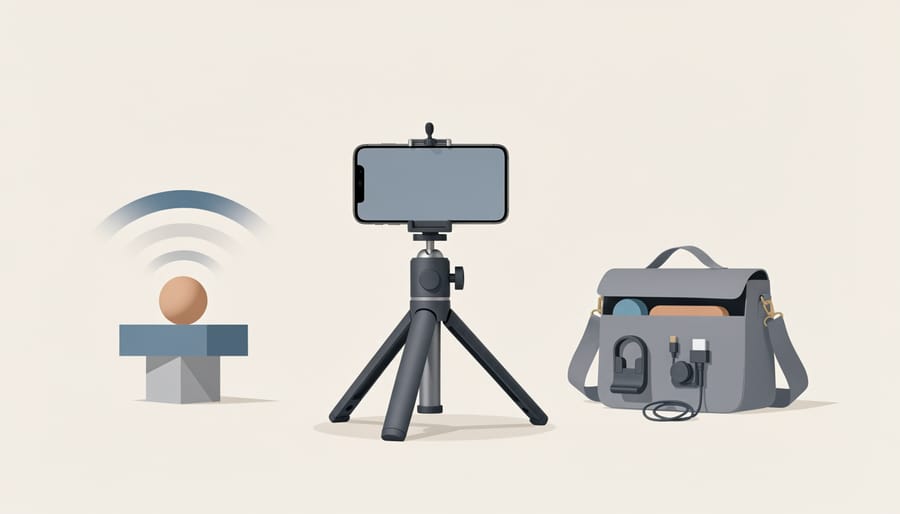
The K&F CONCEPT 75″ Camera Compact Tripod delivers surprising versatility for photographers who split their time between mirrorless cameras and smartphones. At 75 inches fully extended, it provides eye-level framing without the back strain that comes with shorter travel tripods, while folding down compact enough for weekend trips or urban shoots. The included remote, phone holder, and pan head transform this from a simple camera support into a complete mobile content creation station.
What sets this tripod apart is how naturally it serves hybrid workflows. Mount your Sony A7C II for product shots, then swap in your phone using the included holder to capture behind-the-scenes process videos for Instagram. The pan head handles smooth horizontal sweeps for panoramas or video clips, and the Bluetooth remote lets you trigger shutter releases without touching either device, eliminating camera shake for long exposures or group photos where you’re in the frame.
The 4.4 out of 5 rating from over 3,000 customers reflects real-world reliability across different shooting scenarios. Content creators appreciate the multi-device flexibility: you can film yourself working with the phone while your main camera sits ready on a separate support, or use interval timer apps on your mounted phone to document time-lapses while shooting handheld. Beginners benefit from having one tripod that grows with their gear as they add a mirrorless body to their smartphone kit.
This tripod makes the most sense for photographers who actively use both phone and camera rather than one or the other. If you’re shooting a Canon R50 for client work but need quick social media content from the same session, the quick-swap capability between devices saves the time and weight of carrying dedicated supports for each.
7. Vimose 66″ Tripod for iPhone

Mobile photography has evolved far beyond snapshots, and serious phone shooters deserve stable support that matches their ambitions. The Vimose 66″ Tripod for iPhone delivers exactly that: a smartphone-specific stand engineered for the weight and balance characteristics of phones rather than forcing you to adapt camera gear. At 66 inches fully extended, it brings your phone to eye level for comfortable framing whether you’re filming product demos, capturing self-portraits, or setting up interval timer sequences.
The included remote shutter release transforms how you work with your phone. Group shots no longer require sprint-and-pose races against a timer. Self-portraits gain deliberate composition. Content creators can trigger recording starts from across the room without relying on voice commands or camera automation quirks. The 4.6 out of 5 rating from over 2,000 users speaks to real-world reliability, this isn’t fragile tech that fails during critical moments.
In 2026, phones genuinely rival dedicated cameras for many applications. Social media creators build entire businesses shooting and editing on one device. Online sellers photograph products with phones that handle focus stacking and RAW capture. Traveling photographers pack the Fujifilm X100VI as their main camera but rely on their iPhone for behind-the-scenes stories, quick edits, and instant sharing. This tripod acknowledges that dual workflow: your phone isn’t just a backup or a communication tool, it’s legitimate image-making equipment that deserves proper stabilization. The compact, lightweight design travels easily, taking up minimal pack space while enabling sharp long exposures, steady video, and composed portraits your hands alone can’t deliver.
8. K&F CONCEPT 2 in 1 Camera Sling Bag Photography Crossbody Camera

The K&F CONCEPT 2 in 1 Camera Sling Bag solves a problem every active photographer faces: you need quick access to your gear without the bulk of a full backpack. This versatile carry solution switches between sling and crossbody configurations depending on your shooting style, letting you swing it from back to front in seconds when the moment demands. The 4.2 out of 5 rating from over 3,100 users reflects its real-world utility for photographers who move fast and shoot often.
The design distributes weight across one shoulder and your torso, making it comfortable for all-day urban shooting without the committed bulk of a two-strap backpack. Wedding photographers appreciate the speed, swing the bag forward between ceremony and reception moments, grab a second lens, and you’re shooting again before the moment passes. Street photographers value the stealth factor: a sling bag looks less conspactus than a photographer’s backpack, and you can access your camera while walking without stopping to set anything down. If you’re shooting with a compact system like the Sony A7C II plus two or three lenses, this bag holds your kit without excess space rattling around.
The organization features keep essentials separated, memory cards in quick-access pockets, a WiFi smart camera body in the padded main compartment, lenses in adjustable dividers. This complements rather than replaces the Atlas Adventure backpack mentioned earlier. Think of it this way: the sling handles city days, events, and quick shoots where you’re constantly reaching for your camera; the backpack tackles hiking trips and travel days when you’re carrying your full kit plus personal items for hours.
- Choose a sling when you’re shooting events, weddings, or street photography that demands constant camera access
- Opt for a backpack when carrying a full kit for travel, hiking, or multi-day shoots with extra gear and personal items
- Consider a sling if your typical load is one body and two to three lenses rather than a complete system
- Pick a sling for comfort during active shooting days; switch to a backpack when you need even weight distribution across both shoulders for long carries
The crossbody configuration works well when you’re navigating crowds or tight spaces, keeping the bag secure against your body. The single-strap design won’t replace a proper backpack for hauling heavy loads across airports or up mountain trails, but it excels at what it’s designed for: giving working photographers fast, comfortable access to essential gear during active shooting days.
Building Your Complete Kit: Beyond the Camera Body
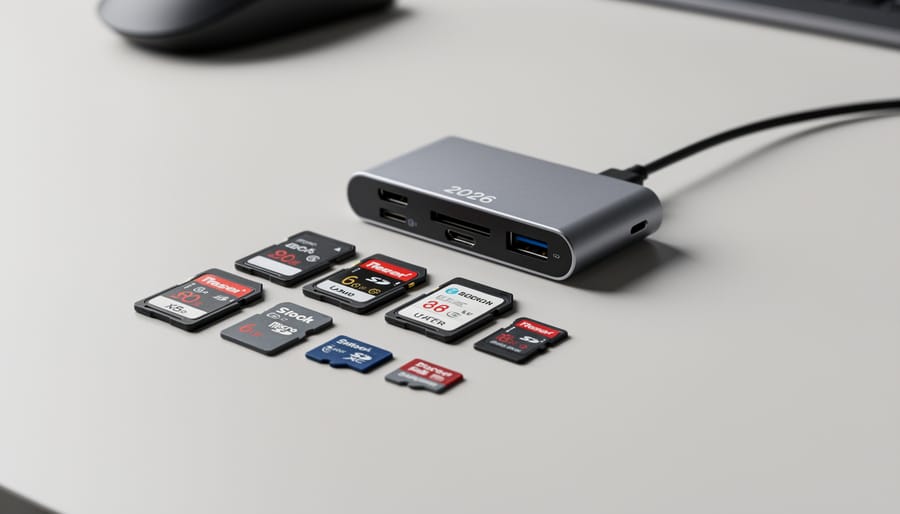
Your camera body matters, but it’s these eight accessories that determine whether you can actually work when opportunity strikes. The Canon R5 II, Sony A7C II, Canon R50, or Fujifilm X100VI will capture stunning images, but only if you have fast memory cards to record them, stable support when light gets low, and a bag that gets everything to the location intact.
Start with memory cards. They’re non-negotiable and relatively affordable compared to lenses or bodies. A single SanDisk Extreme Pro card prevents missed shots from buffer overruns and protects your work from corruption. Buy at least two quality cards before you upgrade anything else. You need backups.
Tripods come next, matched to what you actually shoot. Landscape and long-exposure work demands stability. Wildlife and event coverage might never use one. Street photography with the X100VI needs mobility, not legs. Choose based on your calendar, not hypothetical scenarios.
Camera bags deserve the same thought. The K&F Concept sling works for quick urban sessions with minimal gear. The Atlas Adventure backpack handles hiking trips with the R5 II and three lenses. Match capacity and access speed to your shooting frequency and kit size, not aspirations.
These accessories integrate with your AI workflow and backup systems to form a complete toolkit. The traveling photographer’s essential list, camera, lenses, laptop, memory cards, bag, comes together with these picks. Build your kit around what you use every week, not what sounds comprehensive.
Frequently Asked Questions
How many memory cards should you own? Plan for at least three: one in your camera, one backup, and one in post-production rotation. Professionals shooting weddings or critical events often carry four to six cards, rotating them to spread risk, if one fails, you haven’t lost an entire shoot. For casual photographers, two 64GB cards cover most situations, while serious hobbyists benefit from a mix of capacities and speeds for different shooting scenarios.
What’s the difference between UHS-I and UHS-II cards?
UHS-I cards have a single row of pins and typically max out around 104MB/s bus speed, while UHS-II cards feature two rows of pins for theoretical speeds up to 312MB/s. For most photographers using cameras like the Canon R50 or Sony A7C II, UHS-I cards like the SanDisk Extreme Pro provide plenty of speed; UHS-II becomes essential for 8K video or cameras with very high burst rates.
Do I need both a tripod and a monopod?
Most photographers start with a tripod and add a monopod only when their shooting style demands it, sports, wildlife, or long telephoto work where mobility matters. The SmallRig convertible option eliminates this choice by serving both roles, making it ideal for versatile shooters who don’t want to carry separate supports.
How do I choose between a sling bag and a backpack?
Sling bags excel for urban shooting where you need constant camera access, street photography, events, quick day trips with minimal gear. Backpacks like the Atlas Adventure suit hiking, travel, and larger kits where comfort over hours matters more than instant access. Many photographers own both and choose based on the day’s shooting style and gear volume.
Can I use the same memory card in different cameras?
Yes, as long as both cameras support the same card format and speed class. SD cards work across any SD-compatible camera, so your SanDisk Extreme Pro will function in a Canon R5 II, Sony A7C II, or Fujifilm X100VI. Just format the card in the camera you’re currently using before each shoot to avoid file system conflicts.
Think about your actual shooting habits rather than theoretical needs. A landscape photographer working deliberately from a tripod has different accessory requirements than a wedding shooter moving constantly through a venue. Start with the memory card speed your camera can utilize, the support your longest lens demands, and the bag size your typical kit fills. You can always add specialized accessories as your style develops, but these core categories, reliable storage, stable support, and smart carry solutions, form the foundation every photographer builds on.
Full transparency: this article contains affiliate links. We may be paid a commission if you make a purchase. As an Amazon Associate I earn from qualifying purchases.


 By
By